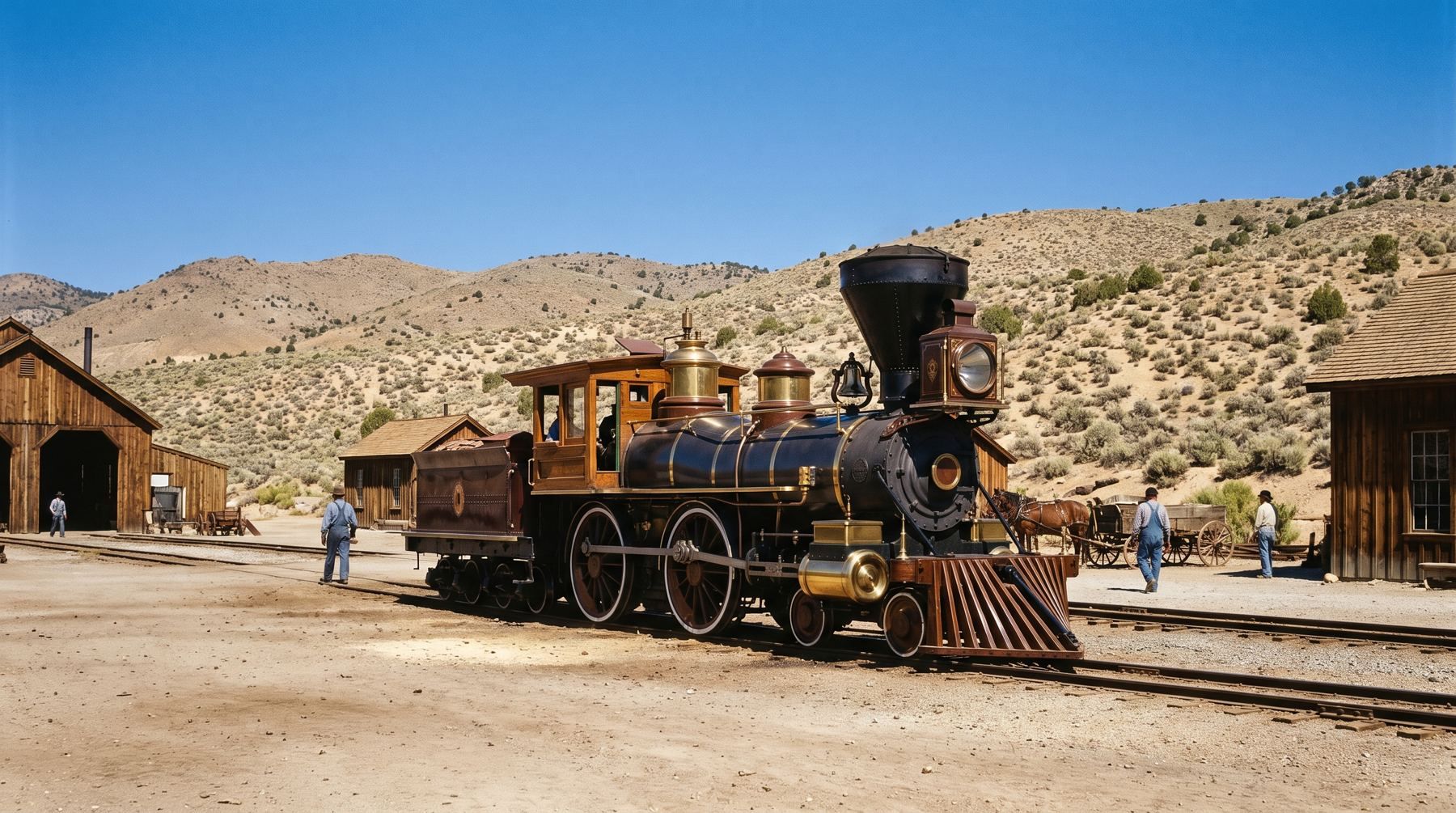
In 1878, a six-ton steam coin press inside the Carson City Mint fractured its cast-iron frame during heavy coining operations. Shipping the press back to the manufacturer in Philadelphia meant months of lost production, so mint officials turned to local industry. Engineers at the Virginia & Truckee Railroad shops, located just two blocks away, repaired the break and bolted a custom iron plate over the crack.
Before returning the machine to service, the railroad machinists signed their repair work on the metal plate. Eight decades later, when federal authorities slated the obsolete press for the scrap yard, a observant San Franciscan spotted that V&T plate and recognized its origins. That single repair plate preserved one of the most famous pieces of coinage machinery in American history.
Building a Mint for the Comstock Lode
The discovery of the Comstock Lode Built San Francisco and Paid for a War in 1859 poured millions of dollars in raw silver and gold out of Storey County. Moving raw metal over the Sierra Nevada mountains to the San Francisco Mint was slow, expensive, and vulnerable to theft. Congress responded on March 3, 1862, by passing a bill to establish a branch mint in Nevada. A subsequent 1863 Act of Congress formally authorized the facility in Carson City.
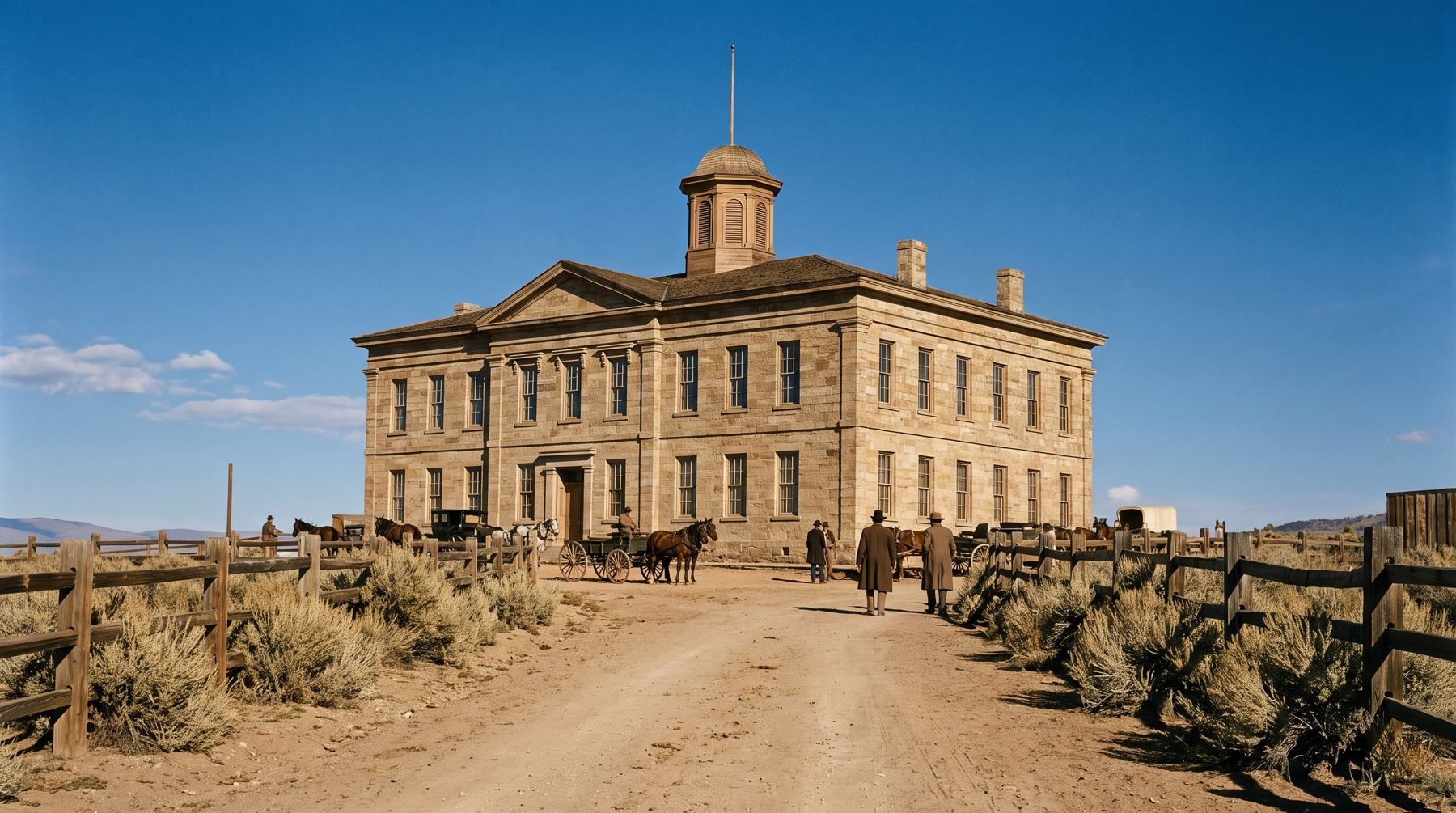
Civil War demands and congressional funding delays pushed construction back to 1867. Treasury Department architect A. B. Mullett designed a symmetrical, two-story structure with a central cupola. Laborers built the walls using sandstone blocks quarried directly at the Nevada State Prison site. Workers finished the structure in 1869.
To equip the building, federal authorities ordered a brand-new, steam-powered coin press from machine builders Morgan & Orr in Philadelphia. Completed in 1869, the six-ton machine traveled by sea to Panama, crossed the Isthmus of Panama by railroad before a canal existed, and sailed up the Pacific Coast to San Francisco. The Central Pacific Railroad carried the press to Reno, where teamsters loaded the heavy machinery onto freight wagons for the final leg to Carson City.
Coin Press No. 1 arrived as the facility's sole press. It struck the Carson City Mint's first coin in February 1870, a Seated Liberty silver dollar bearing the new "CC" mint mark. A few days later, the press minted its first $20 Gold Liberty coin.
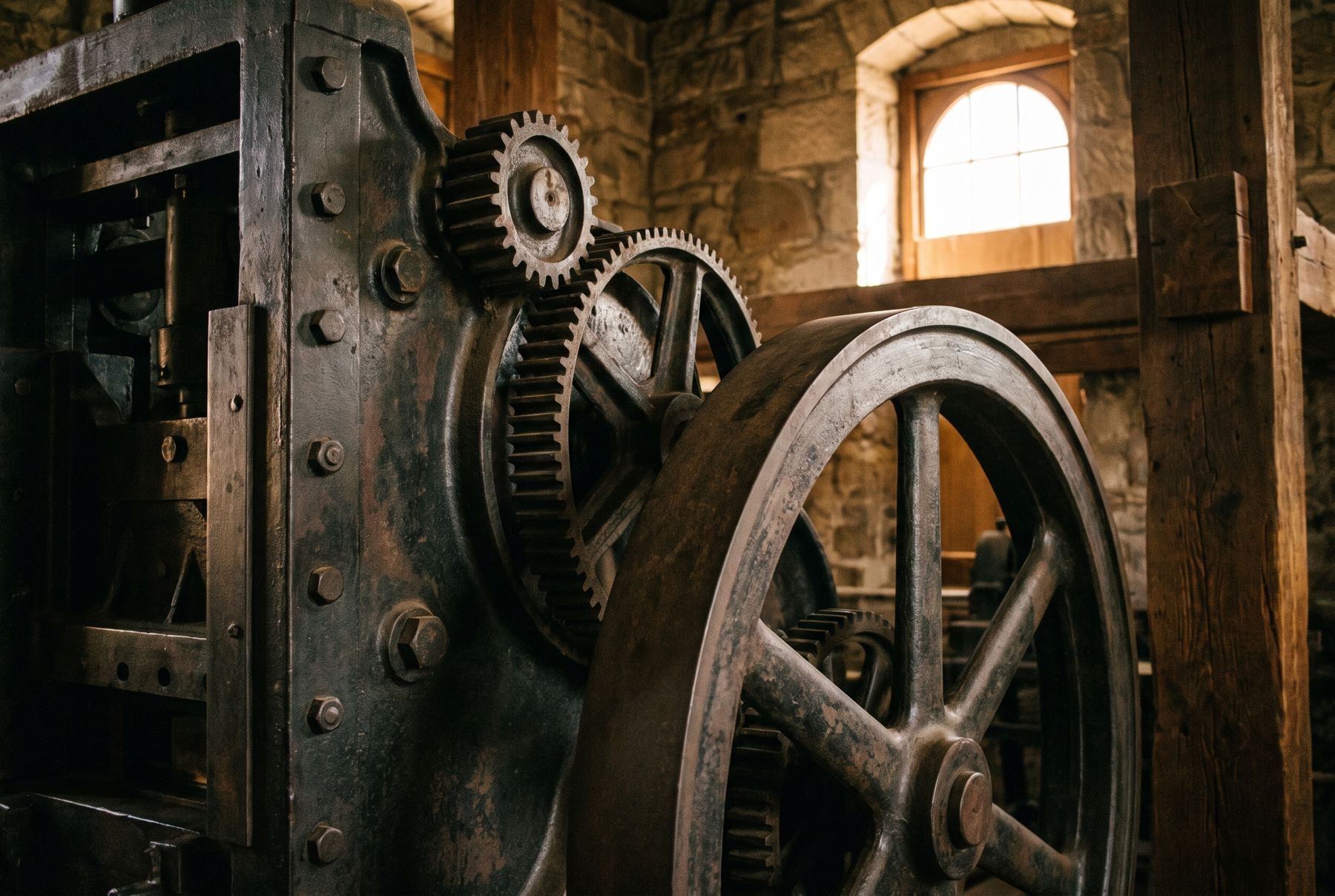
Silver Dollars and the V&T Repair
Coin Press No. 1 operated at a rate of 100 coins per minute. An operator stood beside the press, feeding blank metal planchets through a vertical supply tube to maintain continuous production. Women played essential roles in the mint's operations, working as press operators and as adjusters who manually checked coin weight and surface quality.
For five years, Coin Press No. 1 remained the only press operating in the building. Congress awarded full United States Mint status to Carson City in 1874, putting it on equal footing with main mint facilities in Philadelphia, San Francisco, and New Orleans. Two additional presses were eventually installed to increase output.
When the main frame cracked in 1878, engineers from the nearby Hollywood's Favorite Locomotives Came from Carson City shops replaced the original Morgan & Orr brass maker's plate with their own custom iron plate. The inscription detailed the V&T shop name, location, and date of the repair. From 1878 until 1893, Coin Press No. 1 exclusively struck Morgan Silver Dollars.
During its 23 years of minting operations, the Carson City Mint struck 56,636,119 gold and silver coins across eight denominations and more than 50 coin types. Total face value reached $49,274,434.30. Rare Carson City issues became legend among collectors. An 1873 dime without arrows—the only known surviving specimen—sold at auction for $1.8 million in 2012.
From Philadelphia to San Francisco to Scrap
A severe decline in mining production along the Comstock Lode forced coin operations to cease in 1893. The federal government officially withdrew mint status in 1899, converting the building into an assay office that functioned until 1933.
Worker crews dismantled Coin Press No. 1 and shipped it back to Philadelphia, where technicians converted its steam mechanism to electric power. The machine remained in Philadelphia through World War II until 1945, when federal officials reassigned it to the San Francisco Mint.
By the 1950s, the U.S. Mint began replacing older equipment with high-speed machinery. San Francisco supervisors condemned Coin Press No. 1 for scrap iron. Before the press went to the furnace, a San Franciscan noticed the 1878 V&T repair plate. Recognizing its Nevada heritage, he notified the board of directors at the Nevada State Museum.
Nevada bought its original six-ton coin press back from federal scrap in 1959 for $225.
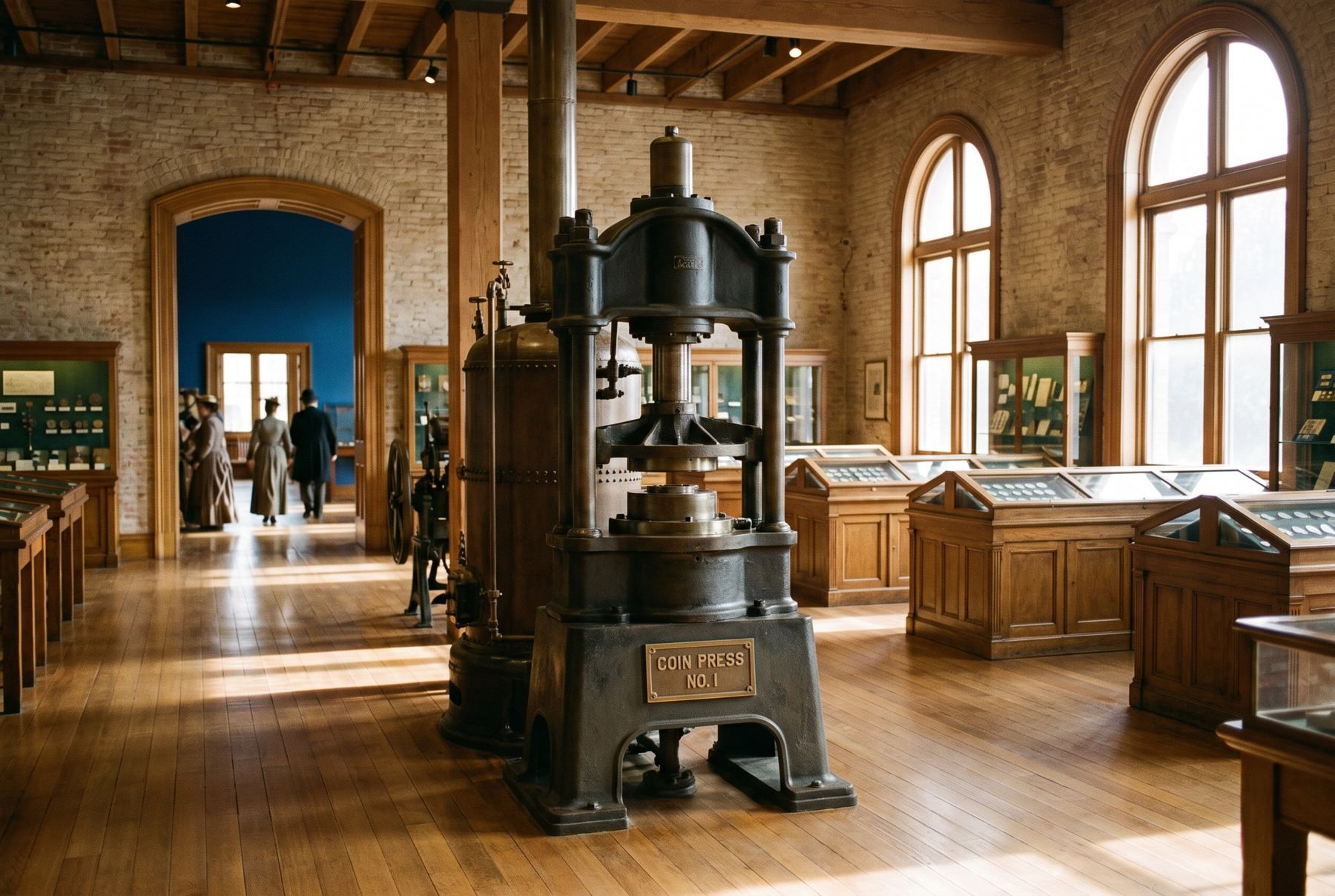
The museum board contacted the San Francisco Mint and purchased the historic press back for $225. The six-ton press returned to Carson City in 1959, where workers placed it on display.
Modernizing for the Denver Mint
The retirement of Coin Press No. 1 did not last long. During the Kennedy administration, a nationwide shortage of circulating coins threatened the retail economy. Eva Adams, director of the United States Mint and a native Nevadan, remembered the working condition of the Carson City machine.
Adams asked the museum board if the federal government could borrow Coin Press No. 1. The board agreed, and workers shipped the press to Colorado for installation at the Denver Mint. Federal technicians modernized the machine once again, placing it into high-volume production alongside modern equipment.
Coin Press No. 1 operated in Denver for four years, striking 118 million total coins to alleviate the national shortage. Its output included 50 million Lincoln pennies, along with nickels and dimes. That emergency run made Press No. 1 unique in mint history, having struck everything from 19th-century silver dollars to modern alloy pennies. The press finally returned home to Carson City in 1975.
Visiting the Carson City Mint Today
The original sandstone mint building opened to the public as the Nevada State Museum in October 1941. It stands in downtown Carson City at 600 North Carson Street, located 25 miles from Reno in a straight line.
Visitors taking a Carson City Day Trip From Reno: Routes, Museums, and Parks can view Coin Press No. 1 on the museum's first floor. It remains the only operational coin press of its era, regularly striking commemorative silver medallions for museum visitors and historical groups.
The museum is open daily from 8:30 a.m. to 4:30 p.m. Admission is $10 for adults, while museum members and children ages 17 and under enter free. Free visitor parking is located in the public lot west of Curry Street behind the museum, with two-hour street parking available nearby. The museum exhibits are part of the wide range of historical Things to do around Reno and Tahoe listed across the region in Nevada stories.