In 1859, placer miners working the Great Basin made two strikes of silver and gold ore in the Virginia Range. That discovery, the Comstock Lode, was the first major silver strike in the United States.
Over the next two decades, the mountainside yielded nearly seven million tons of ore. The extraction helped build San Francisco, bankrolled the Union Army during the Civil War, and drove Nevada Territory into statehood.
The Annoying Blue Stuff
Gold prospectors had worked the area since Abner Blackburn made a find near Dayton in July 1849. Between 1850 and 1859, from 100 to 180 miners worked Gold Canyon, taking out roughly two-thirds of $1 million in gold. That haul would equal nearly $26 million in modern currency.
Those miners repeatedly cursed a heavy, dark sand that clogged their rocker boxes and slowed recovery. They threw away the sticky material as waste. That "annoying blue stuff" turned out to be a rich concentrate of silver worth thousands of dollars per ton.
Brothers Hosea B. and E. Allen Grosh, sons of a Pennsylvania minister, were among the few who suspected the rock held silver. They had left Pennsylvania in 1849 at ages 22 and 24, sailing to Tampico, Mexico, before crossing overland toward Mexico City and sailing up to San Francisco. By July 1853, after years of illness and poverty in California, they crossed the Sierra Nevada to Mormon Station, later known as Genoa, and moved to Gold Canyon.
Unlike traditional placer miners, the Grosh brothers tracked solid veins into the hillsides. They found what they described to their father as "a perfect monster" of a vein. But they never profited from it. In August 1857, Hosea struck his foot with a pickax, and the infection killed him. Later that year, Allen tried to cross the Sierra in a blizzard, spent four days half-buried in snow, and died on December 19, 1857, from severe frostbite. Two years later, the great strike broke wide open.
An Industrial City on the Range
The Comstock deposit was not a simple creekbed operation. The high-grade ore deposit stretched 2½ miles between Virginia City and Silver Hill. It required heavy capital and industrial machinery. By 1862, eighty mills were crushing ore across the district, only three years after the strike.
Almost seven million tons of ore were extracted and milled between 1860 and 1880, producing what today equals approximately $700 million in profits.
Virginia City grew at a breakneck pace. In 1862, the combined population of Virginia City and neighboring Gold Hill was 4,000. By 1874, the population reached 25,000. Development formed an unbroken line running south four miles through Gold Hill to Silver City. The urban center supported 25 theaters, five police precincts, multiple large hotels, over 100 saloons, several fire companies, and the first Miner's Union in the nation.
Immigrants arrived from across the United States and abroad. Chinese laborers had first come to the region in 1855 to dig the Rose Ditch, a canal built to carry water from the Carson River to Gold Canyon. Many stayed to work placer claims at the canyon mouth, founding a settlement called Chinatown, renamed Dayton in 1861. By the 1870s, an urban Chinatown east of Virginia City's downtown held between 1,500 and 2,000 residents across several blocks of wooden laundries, noodle parlors, and shops.
Building San Francisco and the Union
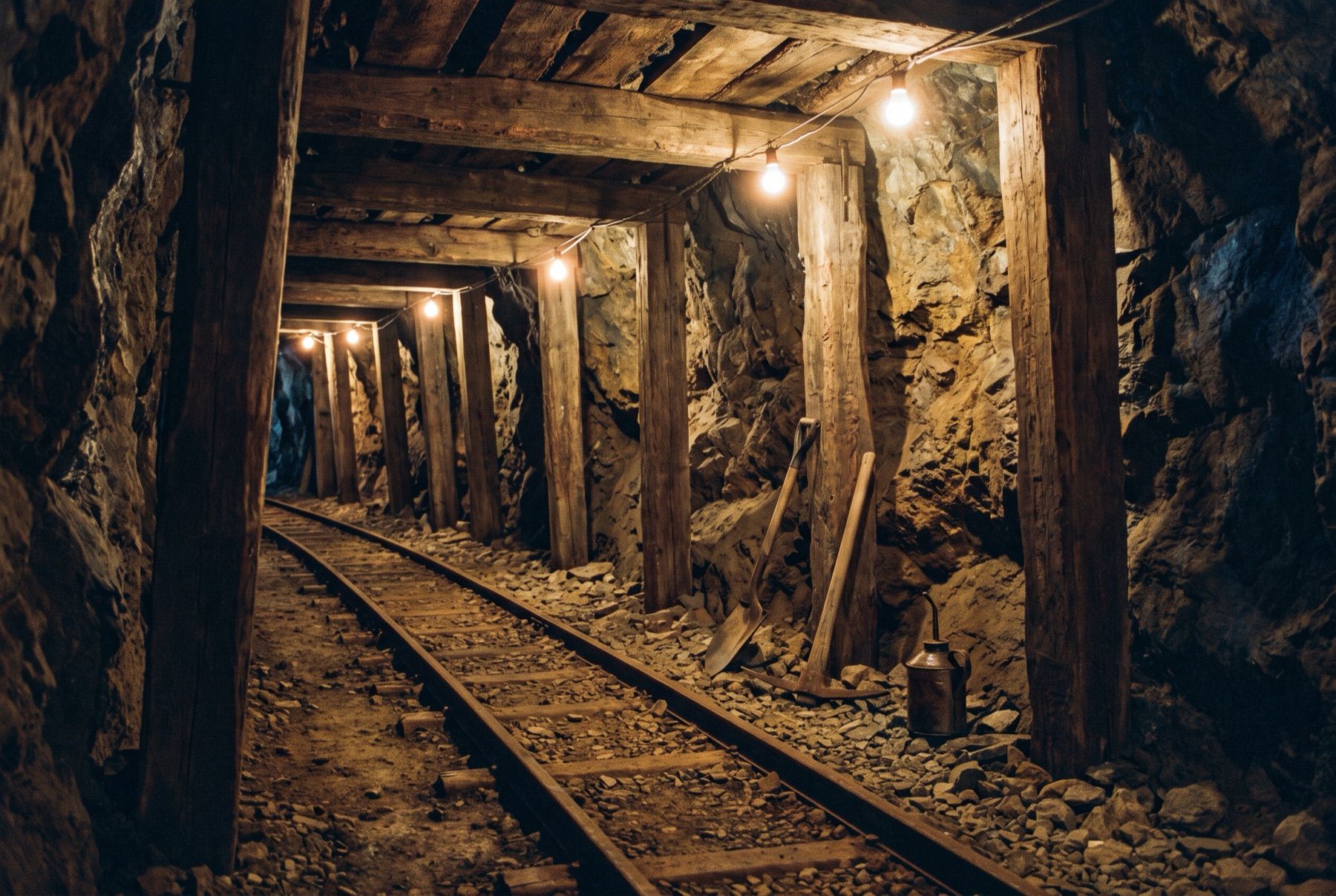
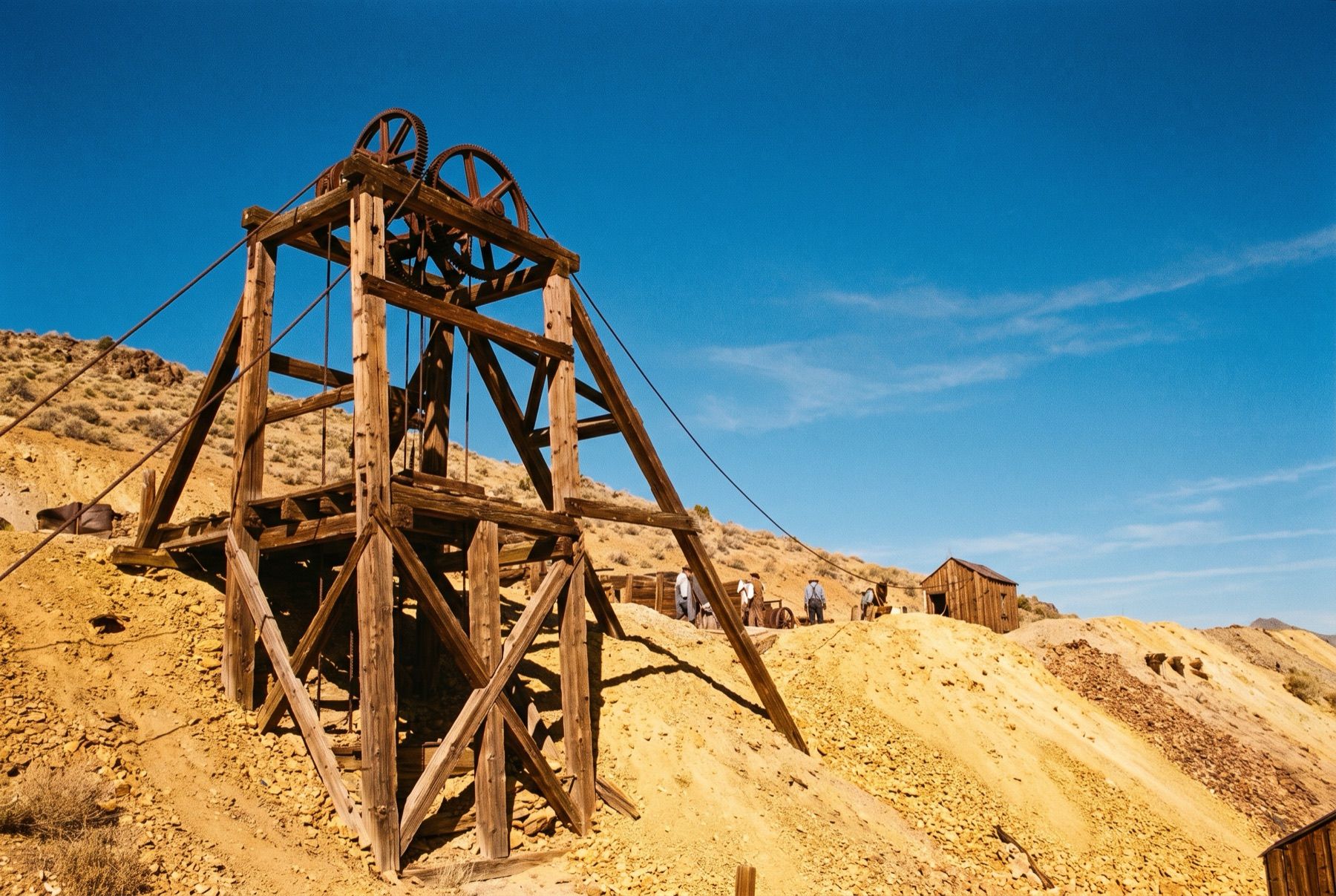
Deep mining demanded solutions that altered Western industry. To reach the ore, miners drove horizontal tunnels called adits to access drifts along the veins, while vertical shafts hoisted rock to the surface. In 1863, Andrew S. Hallidie of San Francisco developed wire rope cables to pull ore buckets up Comstock shafts; he later adapted that cable technology to build the San Francisco Cable Cars.
The capital flow ran directly through the San Francisco Stock and Exchange Board and the Bank of California. Comstock profits transformed the Bay Area into a dominant financial hub. Simultaneously, the immense production helped fund the Union during the Civil War. That wealth fueled the push for Nevada's admission as a state in 1864. Explore other regional histories in Nevada stories and Things to do around Reno and Tahoe.
By the mid-1870s, the boom faltered. Incorrect ore estimates in two major mines, the 1875 collapse of the Bank of California, the 1875 crash of the San Francisco stock market, and major fires in 1875 and 1876 battered the district. In 1878, miners rushed away toward a new strike in Bodie, California. By 1881, the Comstock Lode was exhausted, with production hitting its lowest mark in 20 years.
The Mountain Today
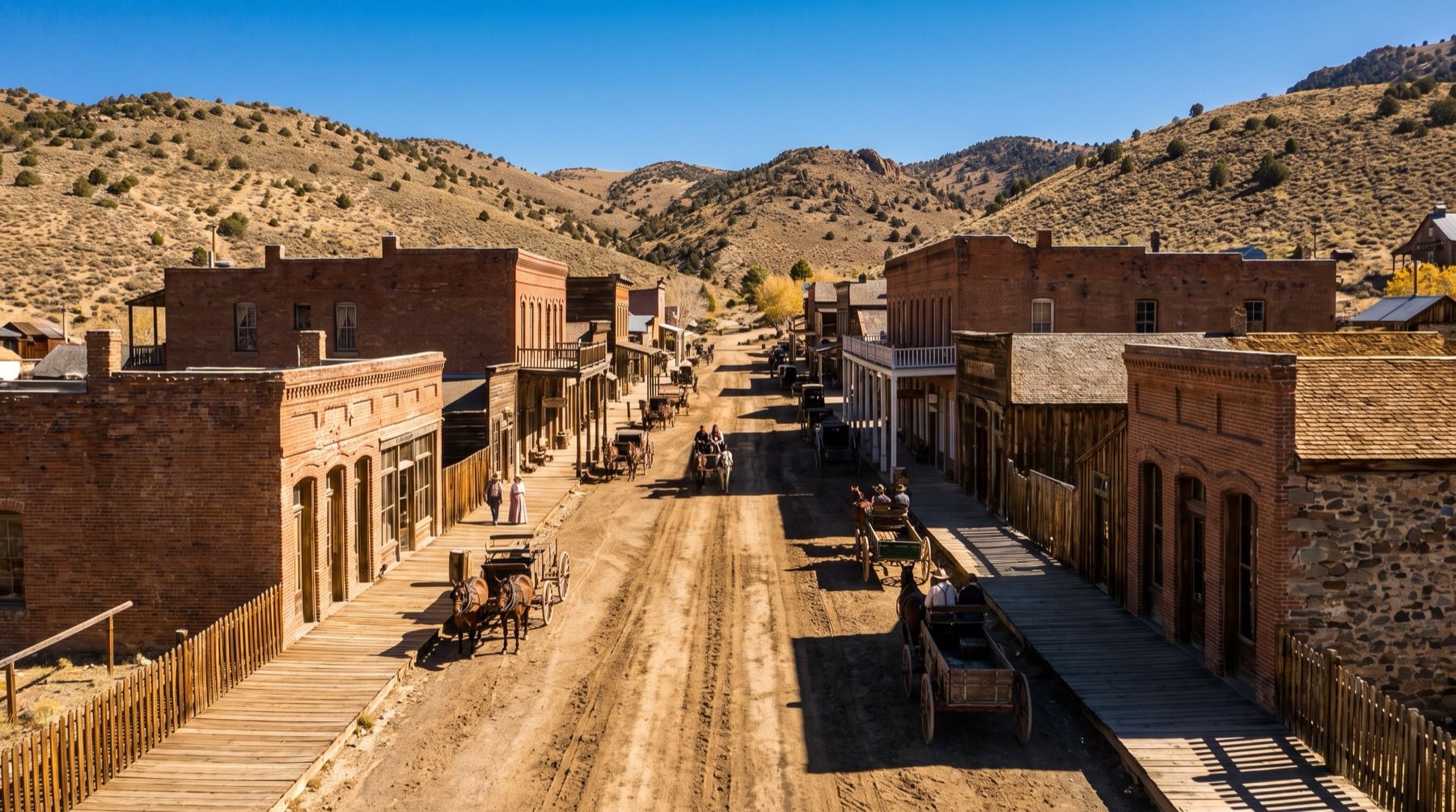
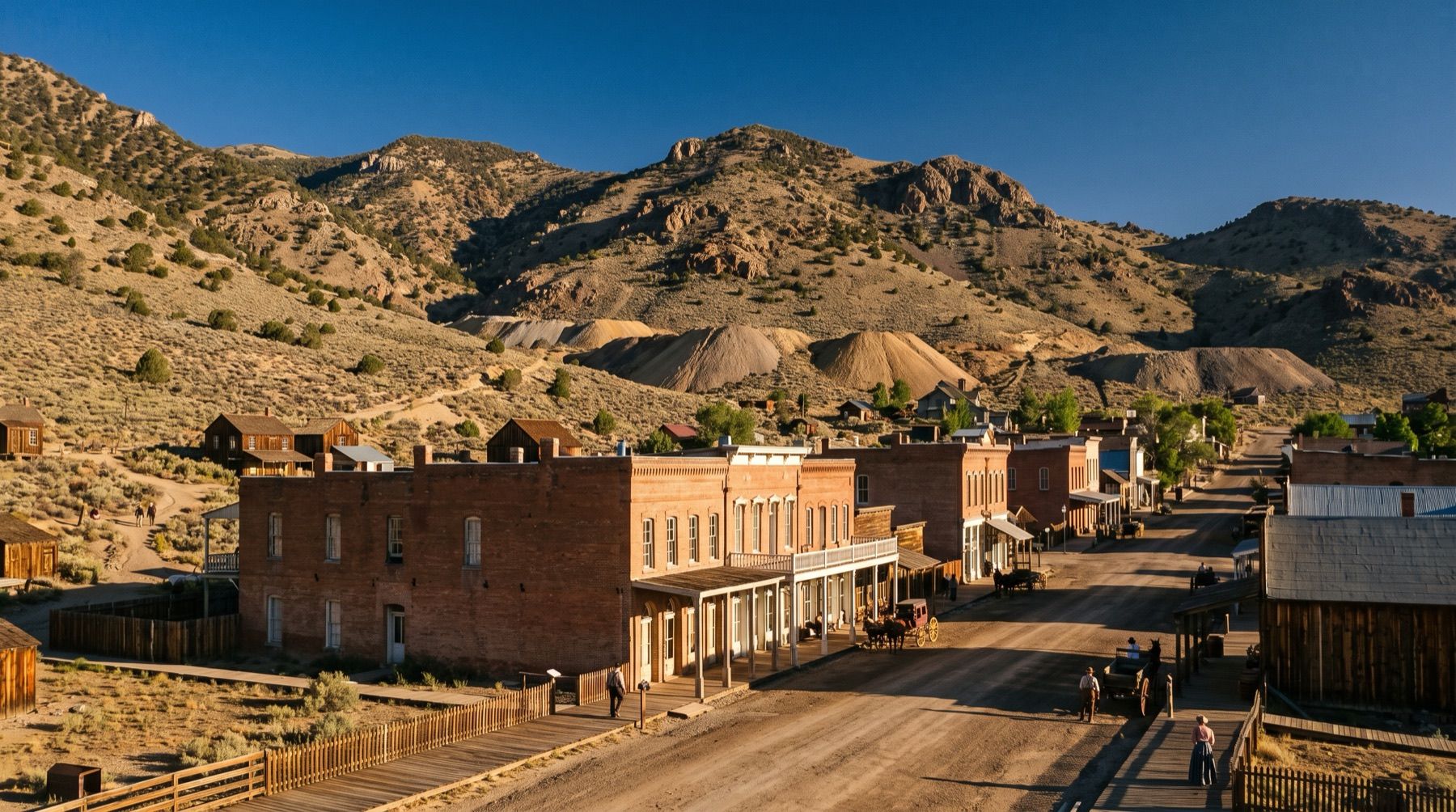
Today, Virginia City holds about 1,000 residents, down from its peak of 25,000, yet its historic core remains intact. The Virginia City Historic District is a National Historic Landmark spanning 14,750 acres across Virginia City, Gold Hill, Silver City, and Dayton. The district preserves over 400 buildings dating to the 19th century.
Visitors can trace the underground workings on the Ponderosa Mine Tour, which covers 300 antique mining artifacts, or walk 400 feet into an old tunnel at the Chollar Mine, where crews extracted $17 million in gold and silver. The Virginia & Truckee Railroad runs passenger cars south to Gold Hill, passing 17 historic mine sites along the line.
Virginia City sits 18 miles from Reno in a straight line, perched on the mountainside of the Virginia Range. Drivers reach the town by climbing the Geiger Grade southeast from Reno, gaining nearly two thousand feet of elevation in about 40 minutes. Current travel routes between Virginia City and Dayton still trace the historic roads. Before traveling, check Road conditions and cameras for local alerts.