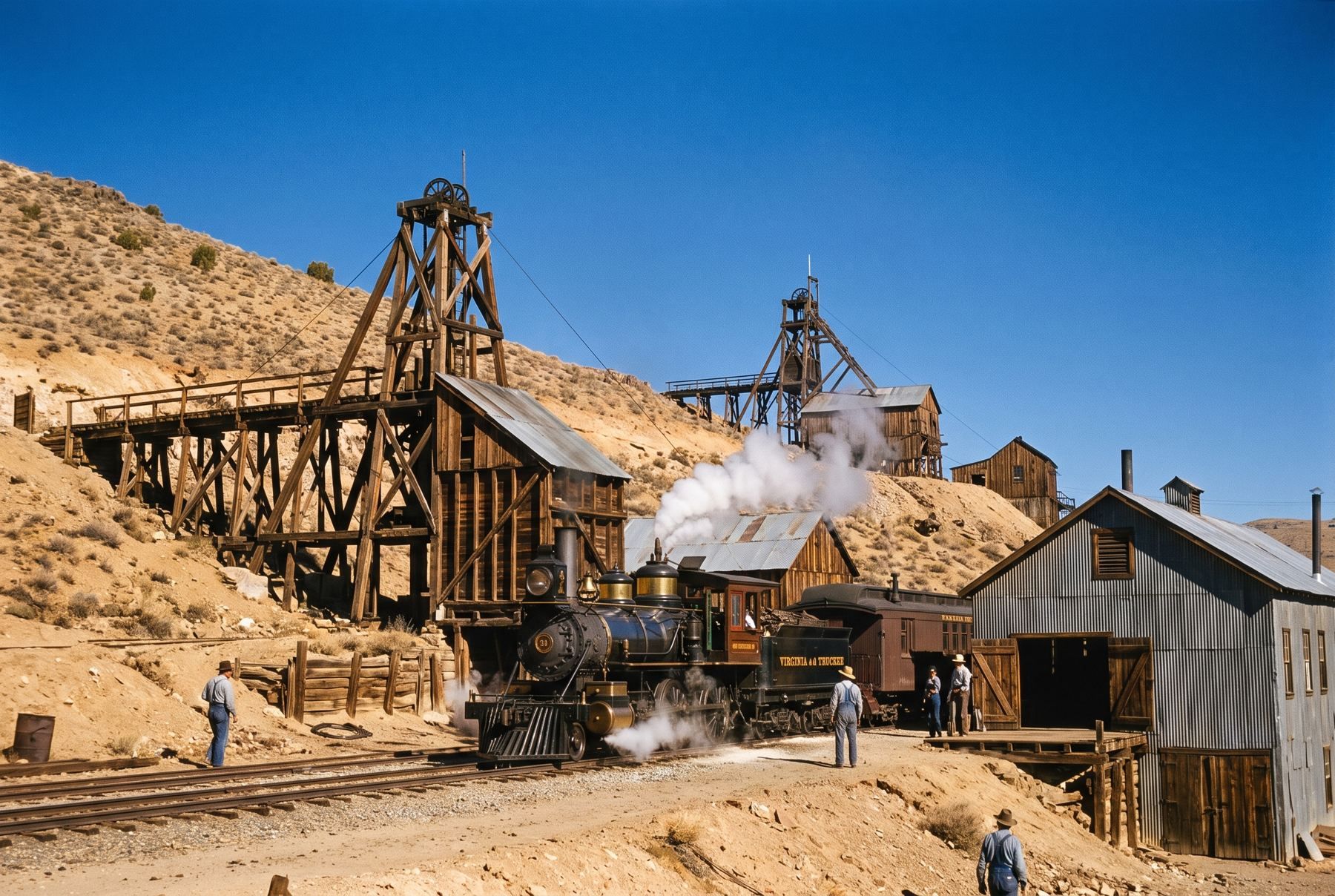
When the Virginia and Truckee Railroad shut down on May 31, 1950, its antique rolling stock did not head for scrap yards. Instead, the engines and passenger coaches went south to Paramount Studios in Hollywood.
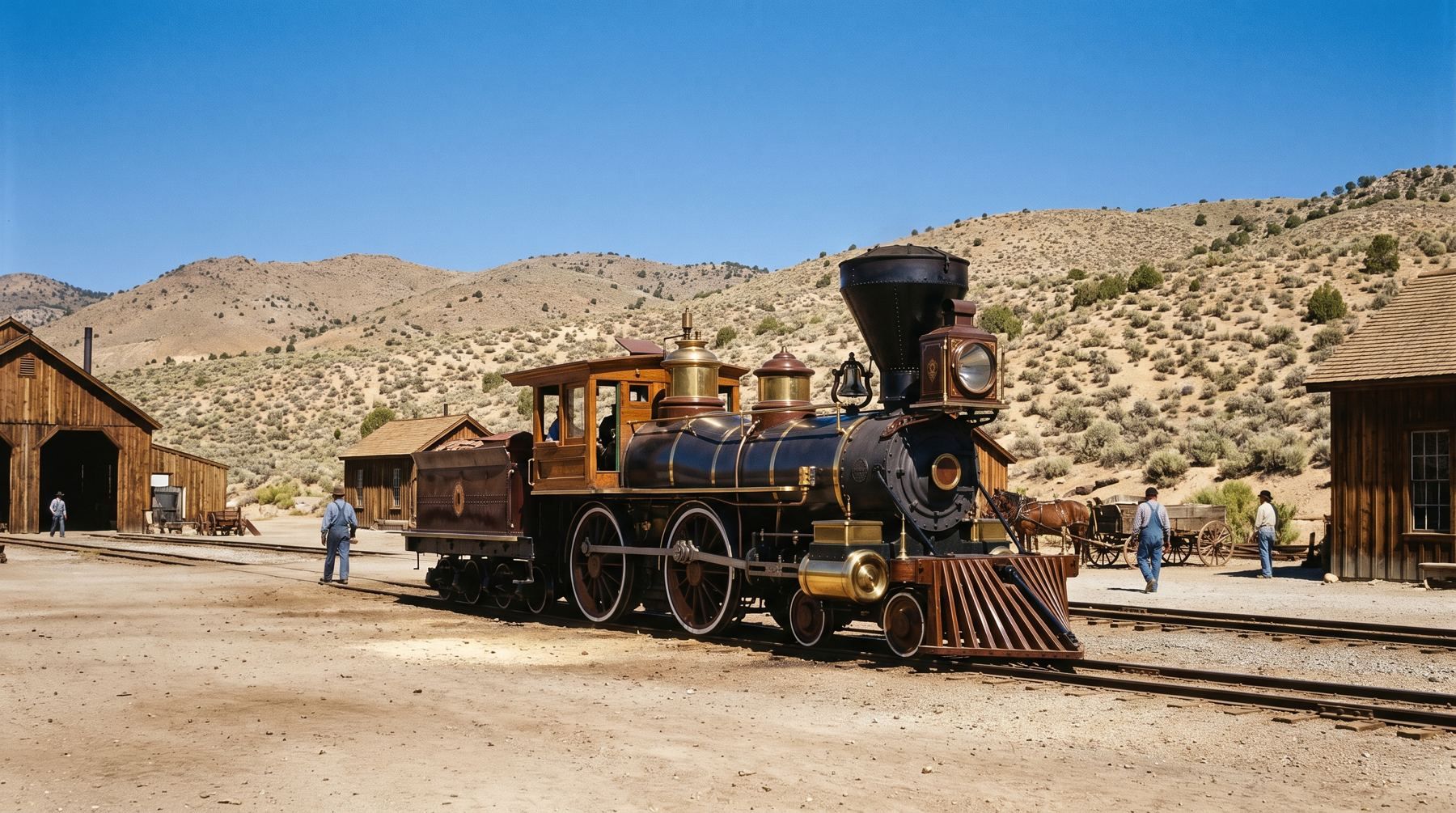
For decades, movie cameras filmed the 1875 Baldwin locomotive Inyo and its sister cars across 29 Western films and television series like The Wild Wild West. Decades later, the state bought the historic fleet back, moving the equipment into the Nevada State Railroad Museum in Carson City.
Seventeen complete circles down the canyon
The line began on March 5, 1868, incorporated by William Sharon and his Bank of California associates to move rich silver and gold ore from The Comstock Lode Built San Francisco and Paid for a War. Heavy wagons were too expensive, and mills along the Carson River required constant deliveries of rock. Mining furnaces and underground shafts also demanded massive timber supplies brought in from the Lake Tahoe basin.
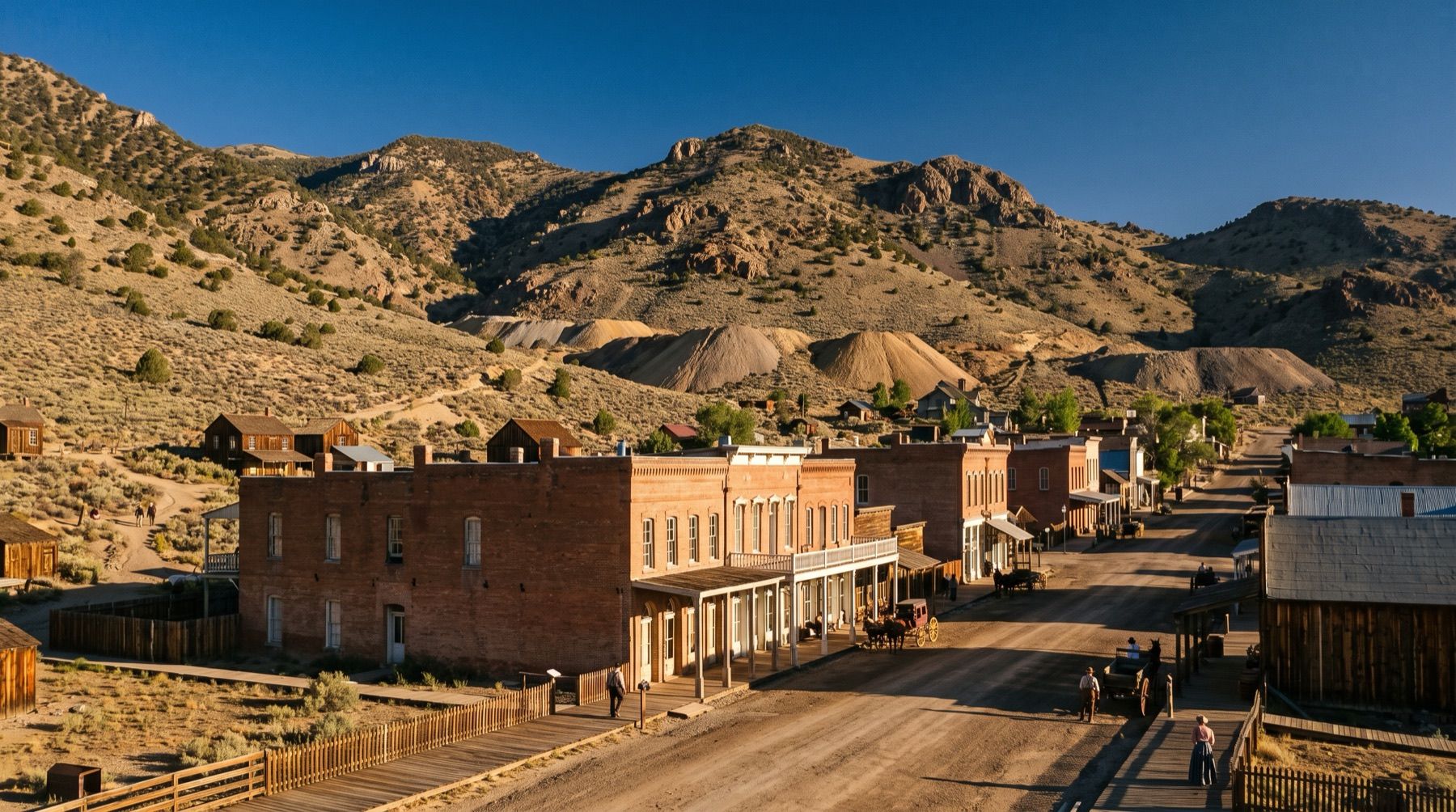
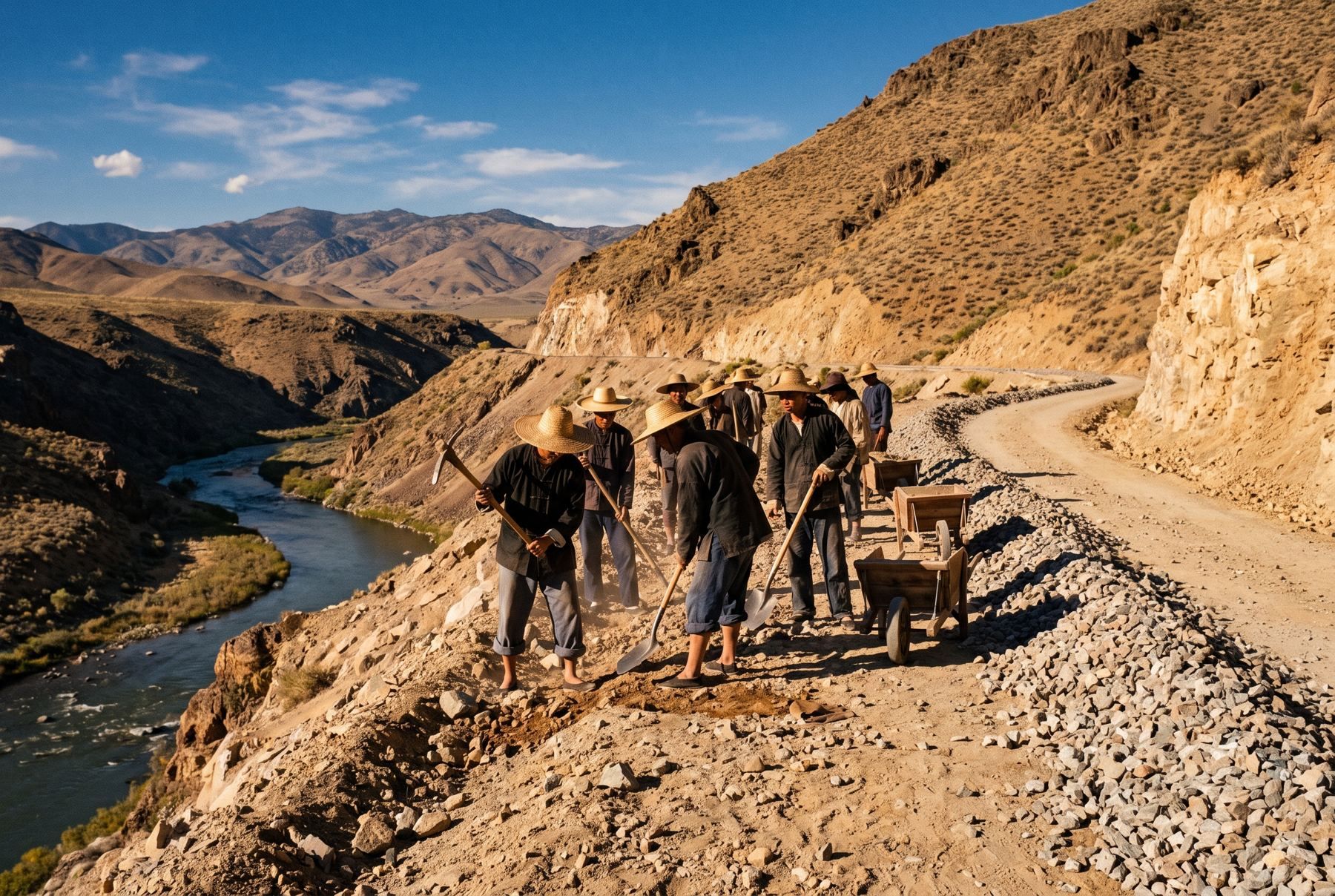
Surveyor Isaac "Ike" James engineered a route down difficult mountain terrain starting in February 1869. The line descended 1,600 feet in just 13.5 miles from Virginia City to reach the mills. James kept the grade to a maximum of 2.2 percent by forcing the tracks to make the equivalent of 17 full circles. Chinese laborers completed the grading and track work, finishing the first 21 miles between Virginia City and Carson City on November 29, 1869.
Forty trains a day on a single line
Crews began pushing the rails north toward Reno in the summer of 1871. Track gangs reached Steamboat Springs by late October. Superintendent Henry M. Yerington drove the final spike 1 mile west of Carson City on August 24, 1872. The 52-mile line linked the mines to the transcontinental Central Pacific Railroad, running its first through train on September 1, 1872.
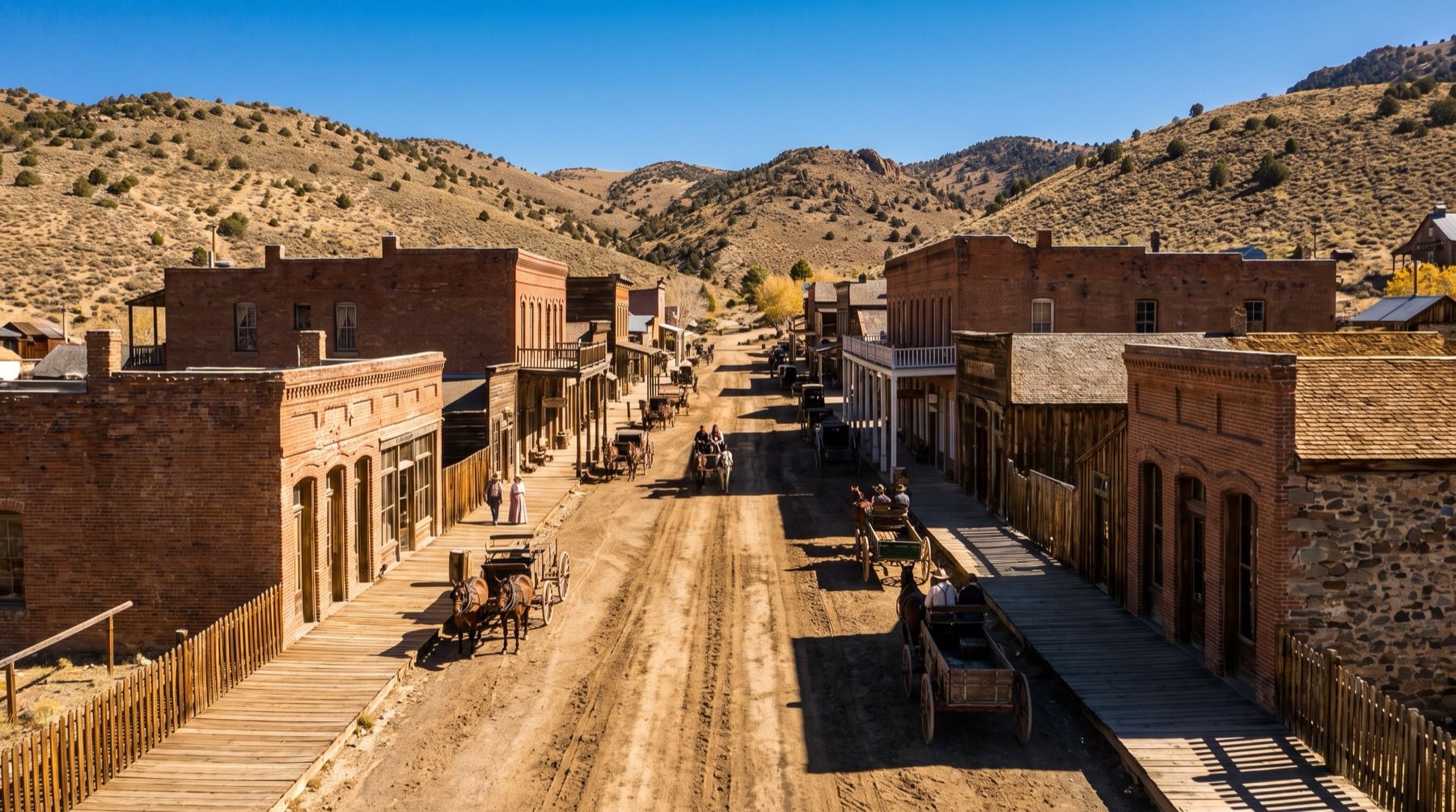
Following the 1873 Big Bonanza discovery, traffic surged on the 55-mile network. The short line ran 24 locomotives and operated 30 to 45 trains daily on single-track lines, earning the nickname "Very Crooked and Terribly Rough Railroad." By 1878, peak production ended. The owners incorporated the 293-mile Carson and Colorado Railroad in 1880 from Mound House toward Keeler, California, later selling it to the Southern Pacific in 1900.
In the mid-1870s, the Virginia and Truckee ran up to 45 trains a day across a twisting mountain line.
Bankruptcy, Hollywood, and rebirth
In 1906, the company built a 15-mile extension south from Carson City to Minden, shifting from ore transport to hauling agricultural freight. Regular passenger service between Virginia City and Reno ended in 1929, the same year the company issued its last dividend. Ogden Livingston Mills covered operating deficits until his death in 1937, after which the railroad entered bankruptcy in 1938.
The original line between Virginia City and Carson City stopped running in 1938. Equipment sales to Hollywood studios helped keep remaining tracks open until the final run on May 31, 1950. In 1972, rail fan Robert Gray bought portions of the right-of-way and laid the first new railroad tie in 1974. He resumed tourist runs three years later, routing tracks around collapsed Tunnel 3 to provide panoramic views over Gold Hill.
Seeing the fleet in Carson City today
Public agencies joined the restoration effort in the 1990s, creating the Nevada Commission for the Reconstruction of the V&T Railway for an estimated $25 million rebuild. In 2005, the Nevada Department of Transportation issued a $3.8 million contract to fill the Overman Pit south of Gold Hill. Today, modern excursion trains run a 24-mile round trip between Carson City's Eastgate Depot and Virginia City from Mother's Day weekend through October, pulled by a 1916 Baldwin 2-8-0 steam locomotive.
The historic original engines remain preserved at the Nevada State Railroad Museum, located at 2180 South Carson Street in Carson City. The facility holds 65 locomotives and cars, including 40 built before 1900 and 31 that worked the Virginia & Truckee. The collection includes the 1875 Inyo, the Lake Tahoe lumber engine Glenbrook, and a 1910 McKeen motor car designated a National Historic Landmark in 2012.
The museum sits 27 miles from Reno in a straight line, making an easy destination alongside a Carson City Day Trip From Reno: Routes, Museums, and Parks or a wider tour of Nevada stories. Motorists traveling south can verify highway conditions on US-395 conditions and cameras or plan a mountain loop using Virginia City Day Trip from Reno: The Drive and the Town. The museum operates Thursday through Monday from 9:00 a.m. to 4:30 p.m., with regular $10 adult admission and free entry for children 17 and under.