A persistent myth claims men remain buried inside Hoover Dam. Tour guides at the Arizona border answer the question daily. The physics of 1930s engineering make that impossible.
Six Companies Incorporated built the structure in Black Canyon between April 1931 and March 1936. Every section relied on slow bucket drops and constant inspection. Not a single body rests inside the concrete.
The Concrete Myth and the Block System
The dam holds 3,250,335 cubic yards of concrete in its main wall. The entire project required 4,360,000 cubic yards. Pouring that mass as one piece was impossible. Chemical heat would have taken centuries to cool and crack the structure.
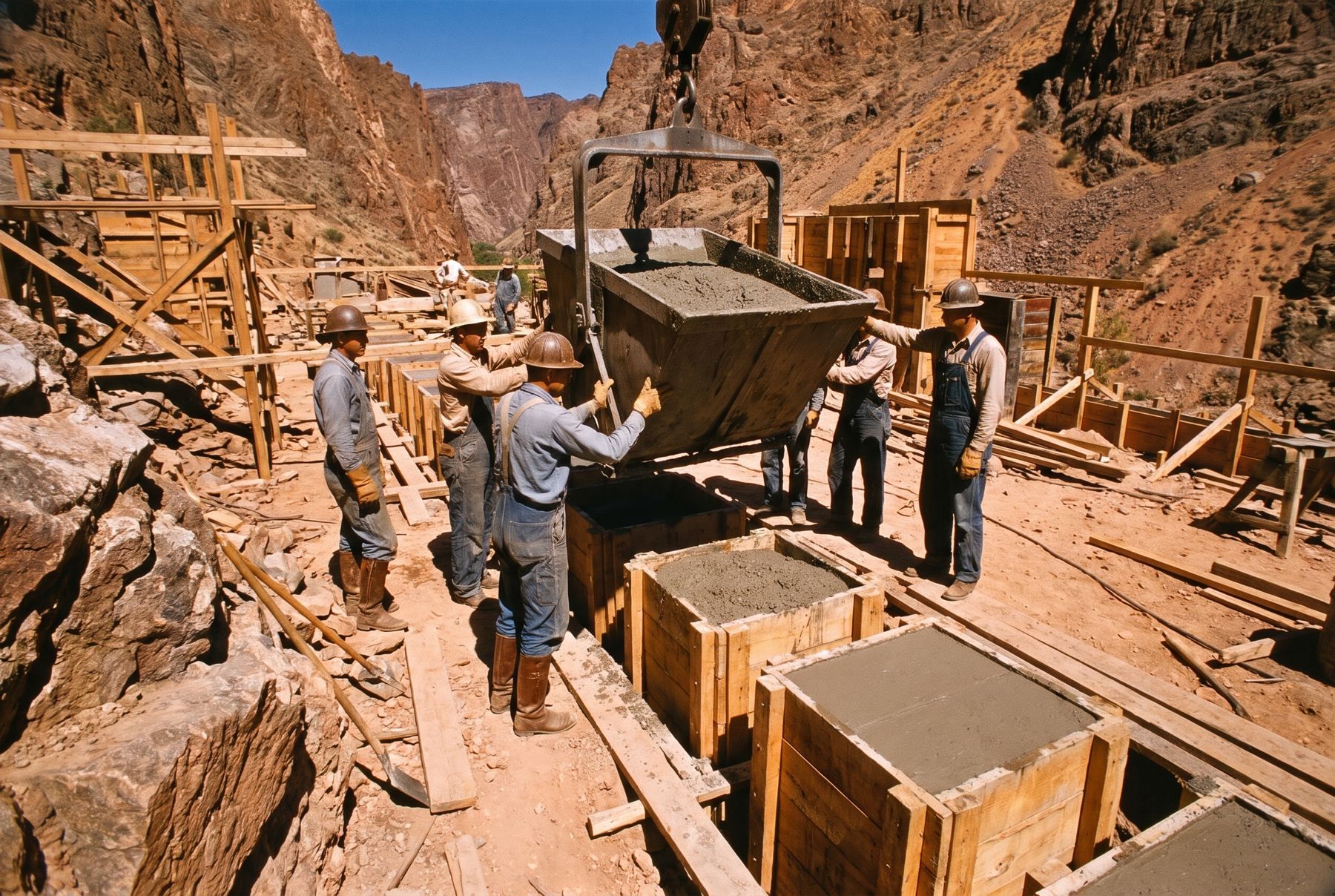
Engineers divided the dam into vertical columns of interlocking blocks. The smallest blocks measured 25 feet by 25 feet square. The largest reached 25 feet by 60 feet. Concrete arrived by cableway buckets carrying eight cubic yards at a time.
On each block, five or six men called puddlers worked the material. They stamped and vibrated each drop to pack out air pockets. Each eight-yard bucket raised the surface by two to six inches.
Each bucket raised the concrete by only two to six inches, making it impossible for anyone to be buried inside the dam.
With men constantly standing on the fresh lift, nobody could sink unnoticed. Workers placed the first concrete on June 6, 1933. They finished the last pour on May 29, 1935.
To cool the setting cement, crews embedded 582 miles of 1-inch steel pipe. A specialized refrigeration plant produced 1,000 tons of ice every 24 hours to circulate ice water through the grid.
The True Cost of Black Canyon
If nobody lies inside the dam, many men died creating it. The total death toll depends on which official records you consult. The official Bureau of Reclamation industrial count stands at 96 men.
These 96 workers died directly from site hazards. Causes included drownings, dynamite blasts, rockslides, falls, heavy equipment strikes, and truck crashes. Industrial figures exclude deaths from heat prostration, heart failure, or disease.
Popular accounts often state that 112 men died on the project. That higher figure includes pre-construction accidents. In 1922, surveyors J.G. Tierney and Harold Connelly drowned in the Colorado River from survey barges. That occurred six years before Congress authorized the dam.
Reclamation's full project history records 213 total deaths from all causes. Between 1931 and 1935, natural causes claimed dozens of workers and residents. Pneumonia killed 42 people in Boulder City and the canyon camps. Heat prostration killed 16 workers, including 13 directly on the job.
High Scalers and Hard-Boiled Hats
Before concrete pours began, workers stripped loose rock from the gorge. Weather had cracked the canyon walls over millions of years. Falling rock was the leading hazard in Black Canyon.
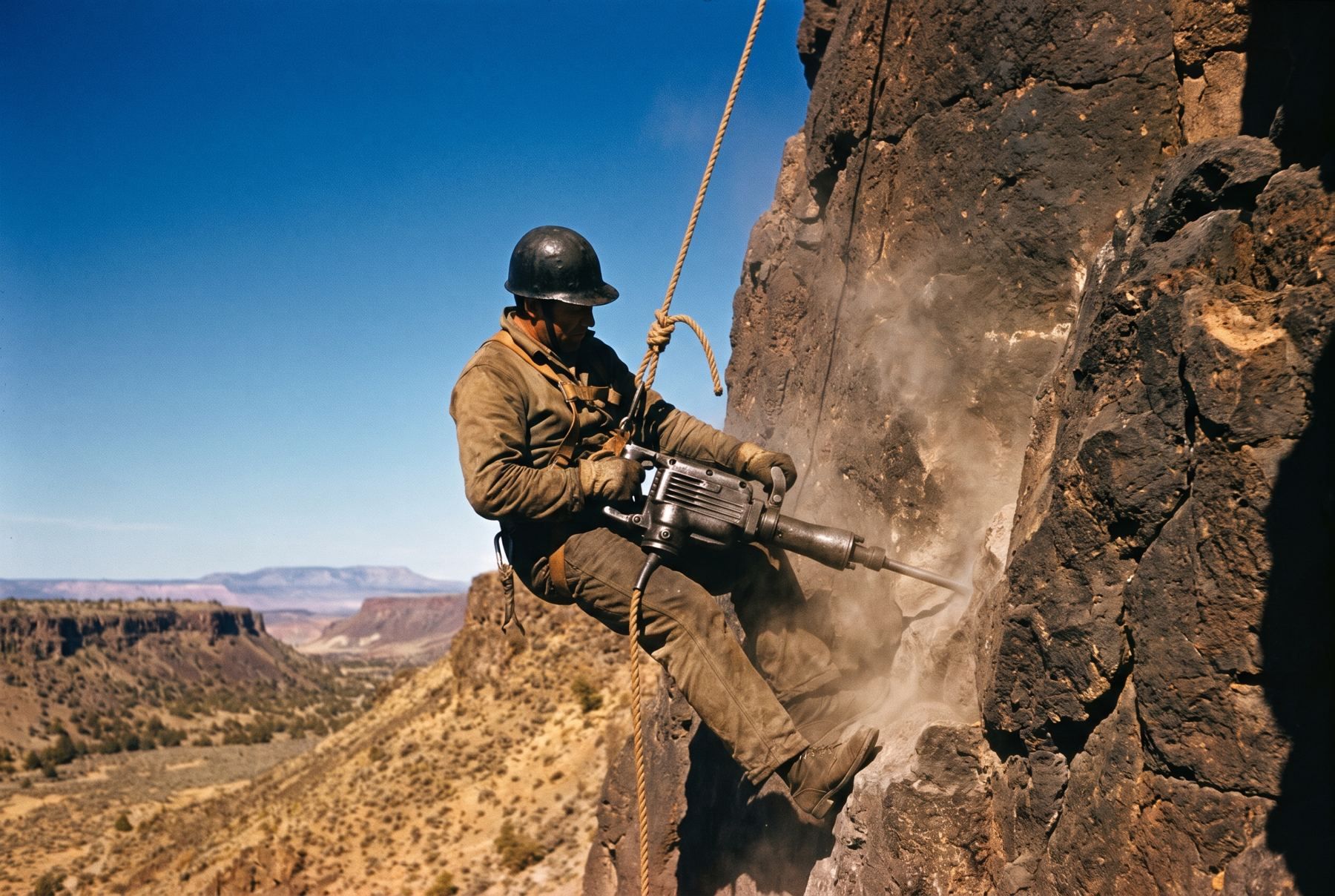
Agile workers called high scalers lowered themselves down cliffs on ropes. They carried 44-pound jackhammers and dynamite packages. High scalers included former sailors, circus acrobats, and American Indians. They swung over empty air to drill powder holes into the volcanic rock.
To protect their heads from falling stone, high scalers invented their own safety gear. They coated ordinary cloth caps with coal tar and let them harden. These crude "hard-boiled hats" absorbed severe impacts. Rocks broke men's jawbones without fracturing their skulls.
Six Companies saw the results and bought commercial hard hats for the entire workforce. The mandatory helmets dramatically reduced fatal head injuries. High scalers became famous for acrobatic stunts above the gorge.
Scaler Louis Fagan earned the nickname "The Human Pendulum." For weeks, Fagan carried shift workers around a rock outcrop on the Arizona wall. Workers wrapped their legs around his waist, gripped his rope, and leaped into space. High scalers Oliver Cowan and Arnold Parks once caught engineer Burl R. Rutledge in midair after Rutledge fell from the canyon rim.
Building a Wonder Ahead of Schedule
The federal contract awarded on March 11, 1931, totaled $48,890,995.50. It was the largest government labor contract let up to that time. Six Companies had seven years to finish, starting April 20, 1931.
First, crews drove four diversion tunnels through the canyon walls. They excavated 1,500,000 cubic yards of rock to divert the Colorado River. Then they built earthen cofferdams to clear the riverbed. Total excavation across all project sites reached 5,500,000 cubic yards.
Peak employment reached 5,218 daily workers in June 1934. The project averaged 3,500 workers on a $500,000 monthly payroll. Single men paid $1.60 a day for room and board in Boulder City dormitories. The mess halls served meat shipped in 20,000-pound lots from Reno.
To provide fresh dairy, the contractor bought a 160-acre farm in Mesquite, Nevada. Two hundred cows supplied milk and butter to Boulder City. Meanwhile, workers off shift visited the legal casinos that opened in Las Vegas in 1931.
Visiting Hoover Dam Today
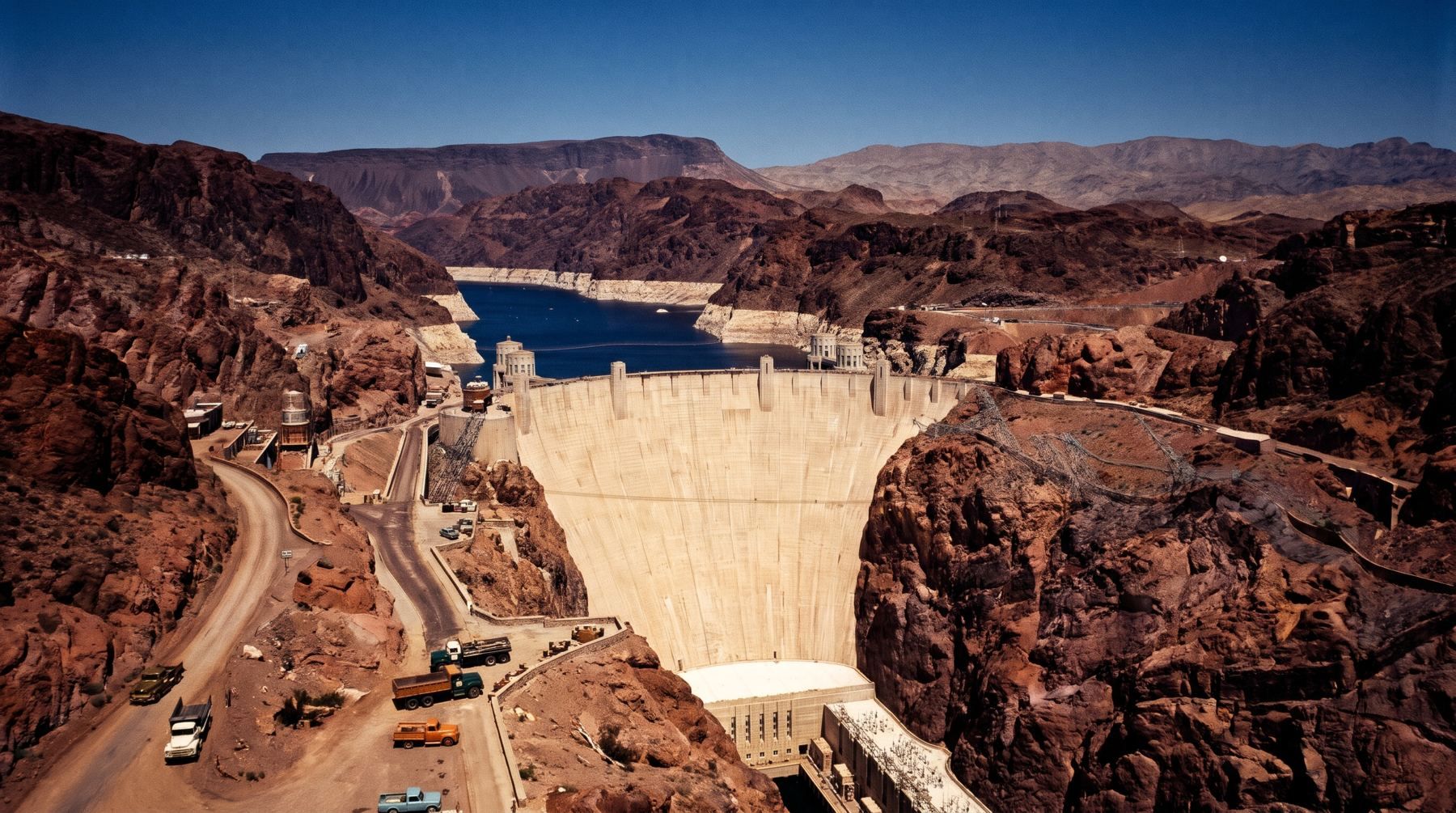
Nevada stories from the 1930s shaped the modern desert. All project features were finished on March 1, 1936, two years ahead of schedule. Today, Hoover Dam stands 726.4 feet tall from foundation rock to crest.
The base measures 660 feet thick, anchoring 6.6 million tons of structure. Water pressure at the base reaches 45,000 pounds per square foot. The dam impounds Lake Mead, holding back the Colorado River 30 miles southeast of Las Vegas.
Drivers making the Reno to Las Vegas Drive via US-95 can reach the dam site via Highway 93. Hoover Dam is 368 miles from Reno in a straight line. Check Road conditions and cameras before traveling across southern Nevada highways. You can explore more Things to do around Reno and Tahoe on your journey.