During the 1950s, silent flashes brighter than the sun pierced the dawn sky north of Las Vegas. Rising plumes of crimson smoke followed, sending rolling shockwaves across the valley.
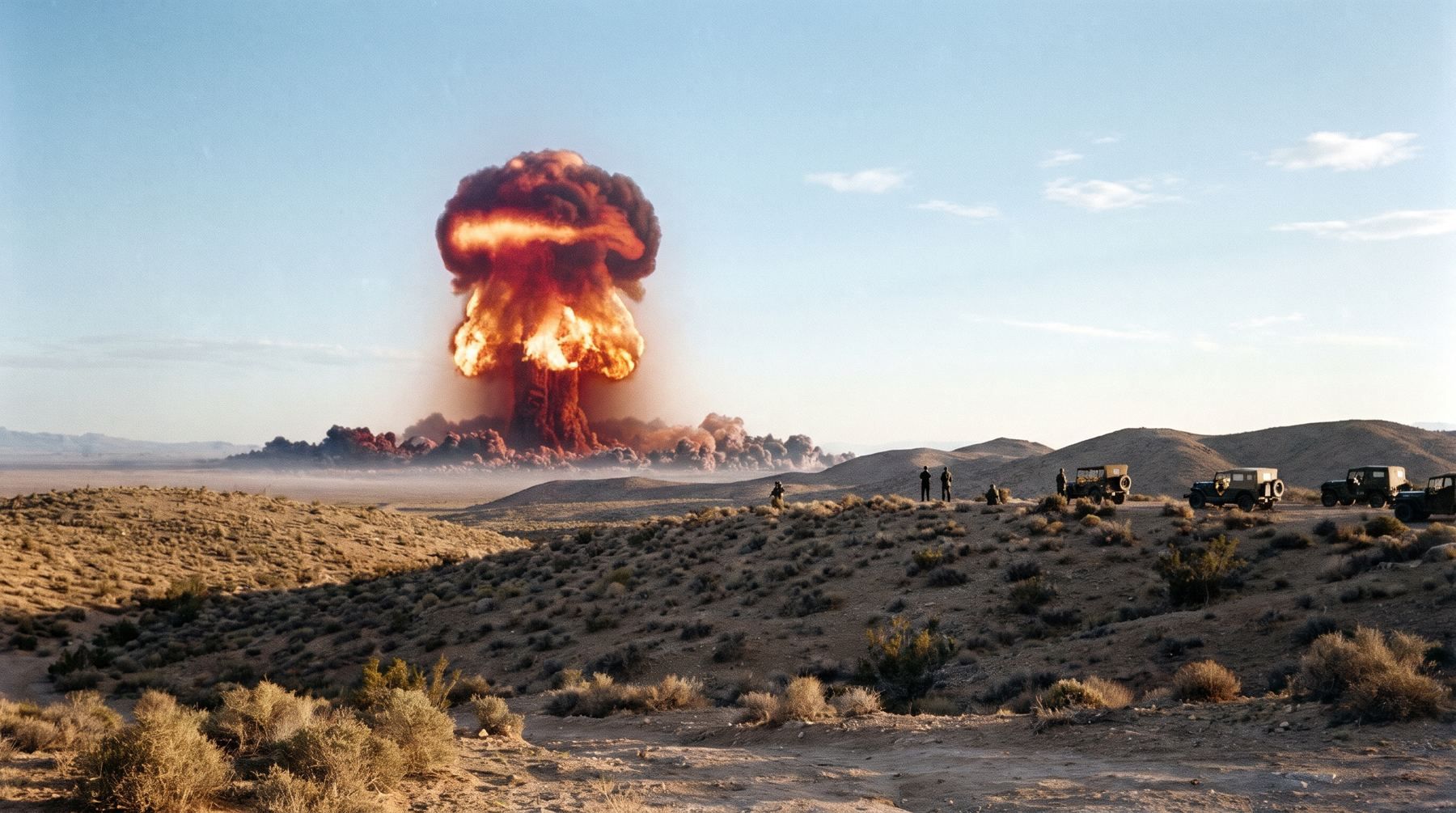
Between 1951 and July 1962, the federal government detonated 100 atmospheric nuclear tests at the Nevada Test Site. The towering mushroom clouds could be seen for almost 100 miles, turning Cold War weapons testing into an unlikely desert spectacle.
Casinos, Cocktails, and Dawn Flashes
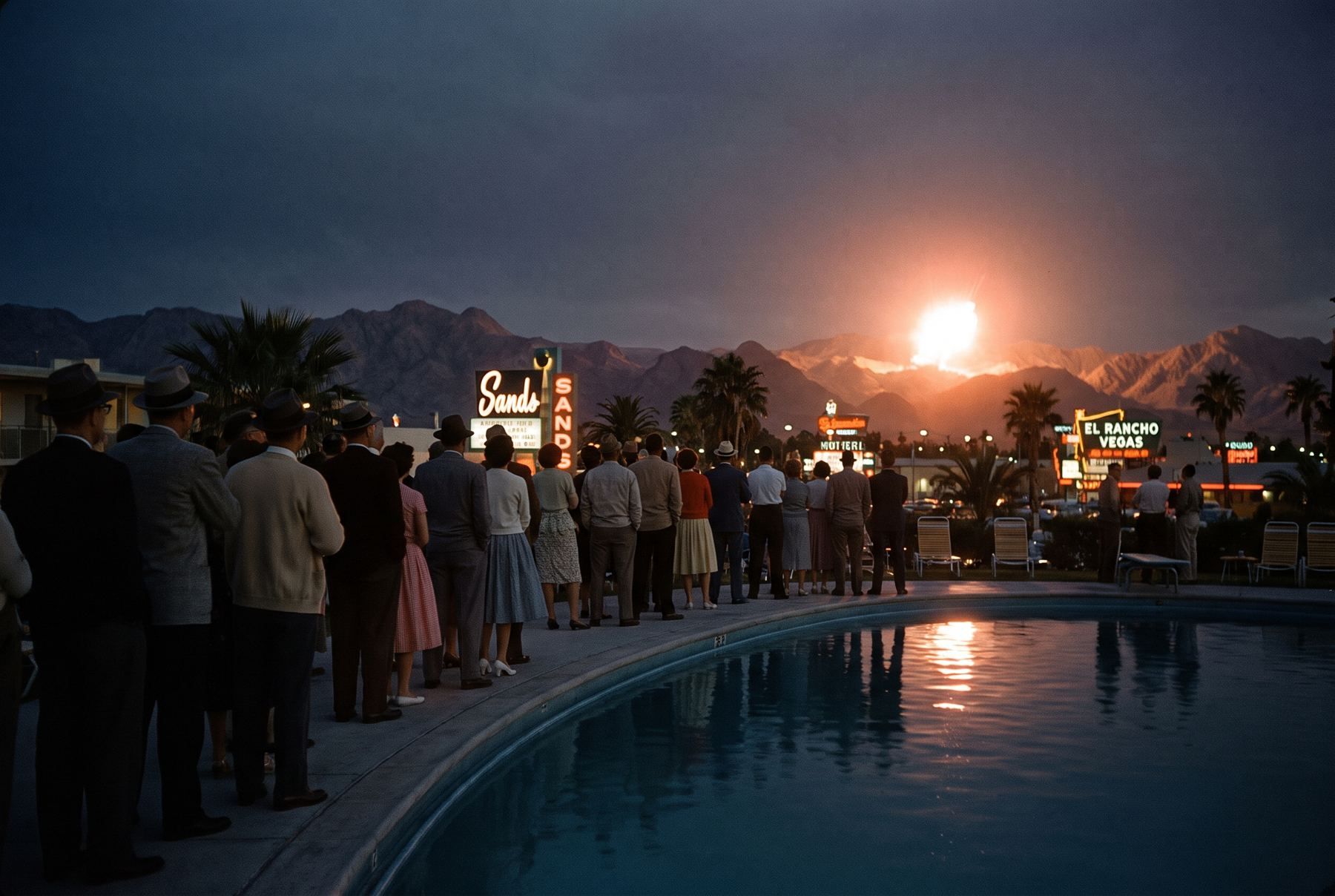
In downtown Las Vegas, the distant detonations became an immediate public attraction. Visitors and residents gathered on casino rooftops and patio decks to watch the northern horizon light up before breakfast.
Resort managers capitalized on the blasts with bomb-watching parties. Crowds ordered drinks and stayed up through the night to catch the early morning flash. Seismic tremors rattled casino chandeliers and shook hotel windows.
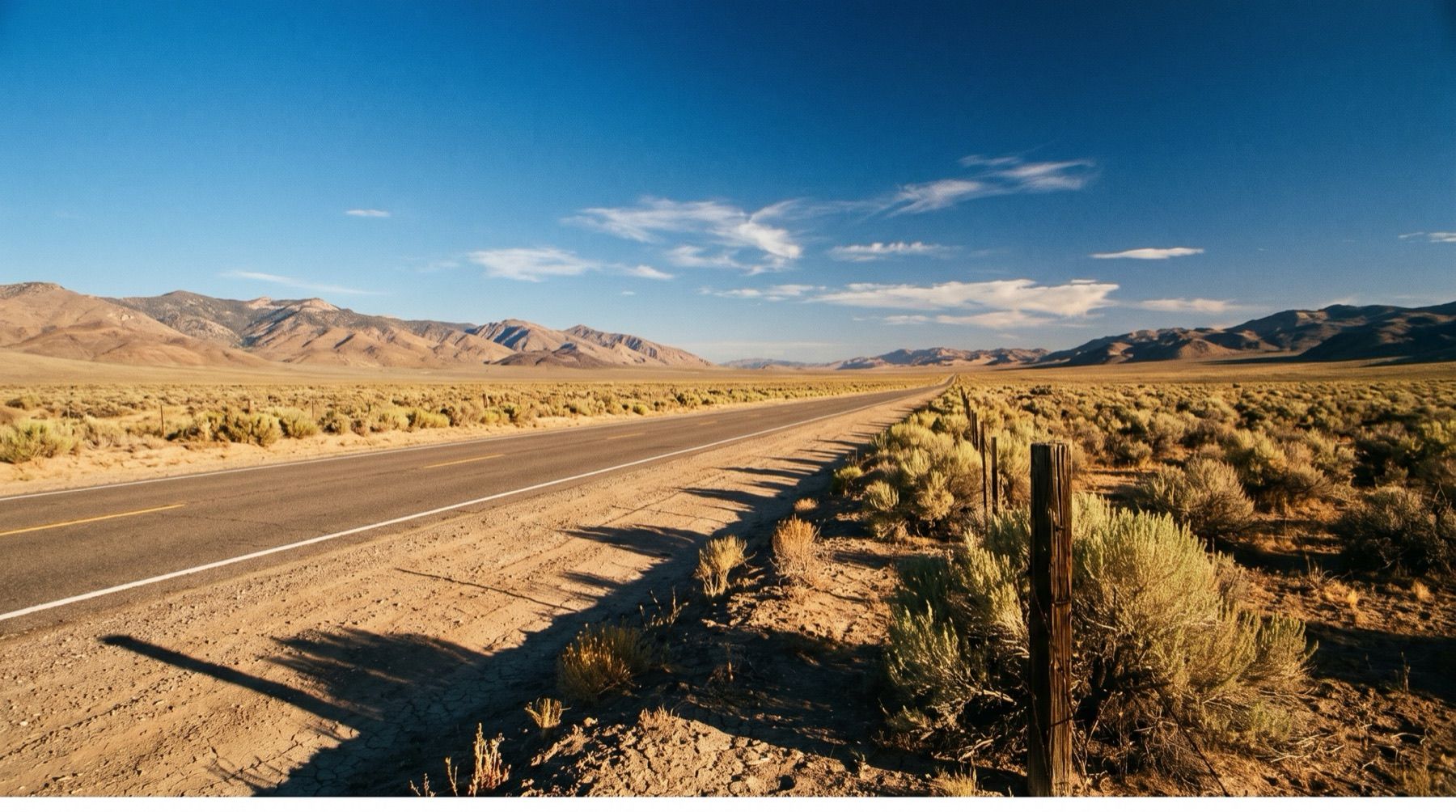
Sixty-five miles north along Highway 95, thousands of site workers made the daily commute to the town of Mercury. Every morning before dawn, headlights formed a continuous line out of Las Vegas. Workers called that treacherous two-lane stretch of highway "The Widowmaker."
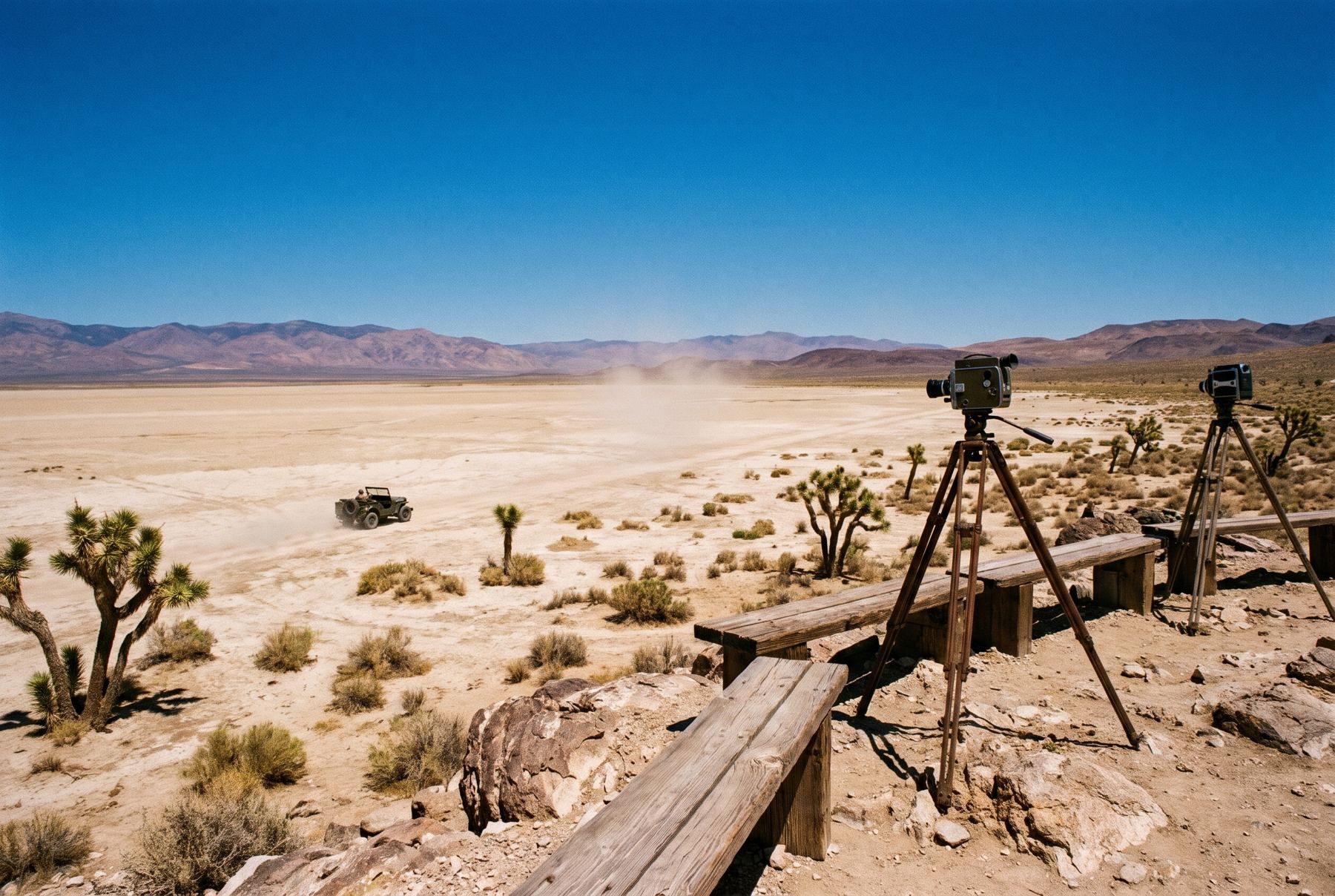
At the testing grounds, government cameras documented every detonation. While northern Nevada built its gaming economy around traditional resorts and Reno and Lake Tahoe Area Casinos, southern Nevada sold tourists the power of the atomic age.
The Proving Ground at Mercury
President Harry S. Truman created the continental proving ground on December 18, 1950. The federal government carved a 680-square-mile parcel out of the Nellis Air Force Gunnery and Bombing Range near Las Vegas, establishing the Nevada Proving Grounds.
In 1955, officials renamed the 1,375-square-mile reservation the Nevada Test Site. Early testing had taken place at Pacific island sites, but logistical costs pushed the Atomic Energy Commission back to the continental United States.
The first atmospheric test in Nevada, code-named "Able," fired on January 27, 1951, as part of the Ranger series. Los Alamos scientists designed the devices, which bombers dropped from Kirtland Air Force Base in New Mexico.
In October and November 1951, Operation Buster-Jangle tested military cratering effects. A shot named "Sugar" became the only test ever detonated directly on the desert surface in Nevada, digging a crater 21 feet deep and 90 feet wide.
Between 1951 and 1955, thousands of troops from the U.S. Army's Atomic Maneuver Battalion lived at Camp Desert Rock outside Mercury. Soldiers crouched in trenches during blasts, then marched across the desert toward ground zero.
News Knob and Doom Towns
Reporters and civil defense observers watched detonations from a rocky ridge above Yucca Flat known as News Knob. From that press gallery, cameras filmed mushroom clouds climbing above the dry playa of Frenchman Lake.
The distant mushroom clouds could be seen from downtown Las Vegas and became unique tourist attractions.
In 1953, the Upshot-Knothole test series examined civil defense destruction. For the March 1953 test named "Annie," workers built two furnished suburban houses at 3,500 and 7,500 feet from a 300-foot tower in Yucca Flat.
Workers filled the houses with donated automobiles, canned food, and clothed mannequins. The 16-kiloton blast obliterated the nearest home, and television networks broadcast the explosion live from News Knob.
Other tests examined military hardware and terrain. On May 8, 1953, the Encore test subjected 145 ponderosa pines brought from Kyle Canyon to a blast. On May 25, 1953, artillery crews fired a 15-kiloton shell from a 280 mm cannon on Frenchman Flat at an elevation of 524 feet.
Two years later, on May 5, 1955, the Apple-2 test detonated a 29-kiloton device atop a 500-foot tower. The blast shifted the foundation of an experimental house located 7,500 feet from ground zero.
The Shift Underground
The above-ground era left a sobering physical and human toll. On May 19, 1953, the test code-named "Harry"—dubbed "Dirty Harry" by downwind residents—produced the highest level of off-site contamination of any continental test.
Downwind ranchers reported harmed livestock, while milk supplies suffered contamination across parts of Nevada and Utah. From 1951 to 1992, test site employees remained bound by strict secrecy rules and could not speak publicly about their work.
On July 17, 1962, the test named "Little Feller I" of Operation Sunbeam marked the final near-ground atmospheric test in Nevada. On August 5, 1963, the United States signed the Limited Test Ban Treaty in Moscow, outlawing all atmospheric testing.
Testing moved below the desert floor. Crews drilled deep shafts across Yucca Flat, conducting 828 underground nuclear tests before a unilateral testing moratorium took effect in 1992. The final underground test, code-named "Divider," fired on September 23, 1992.
The Atomic Museum Today
Las Vegas sits 345 miles from Reno in a straight line. Drivers making the trip south along the Reno to Las Vegas Drive via US-95 pass the guarded Mercury exit 65 miles north of the city. Before setting out across the open desert, motorists should verify conditions on Road conditions and cameras.
The history of those 100 atmospheric blasts is preserved at the Atomic Museum, formerly known as the National Atomic Testing Museum. The museum opened in 2005 at 755 E. Flamingo Rd. in Las Vegas.
Visitors enter through steel doors designed to replicate a 1950s test site guard station. The museum houses more than 12,000 artifacts, including relics from the 1955 Apple-2 doom town and original Miss Atomic Bomb posters.
Inside the Ground Zero Theater, guests sit on hard benches modeled on military observation seats as recorded countdowns replicate the sound and motion of a desert detonation. It offers a direct window into the explosive legacy that helped define modern Nevada, a subject explored across many Nevada stories.