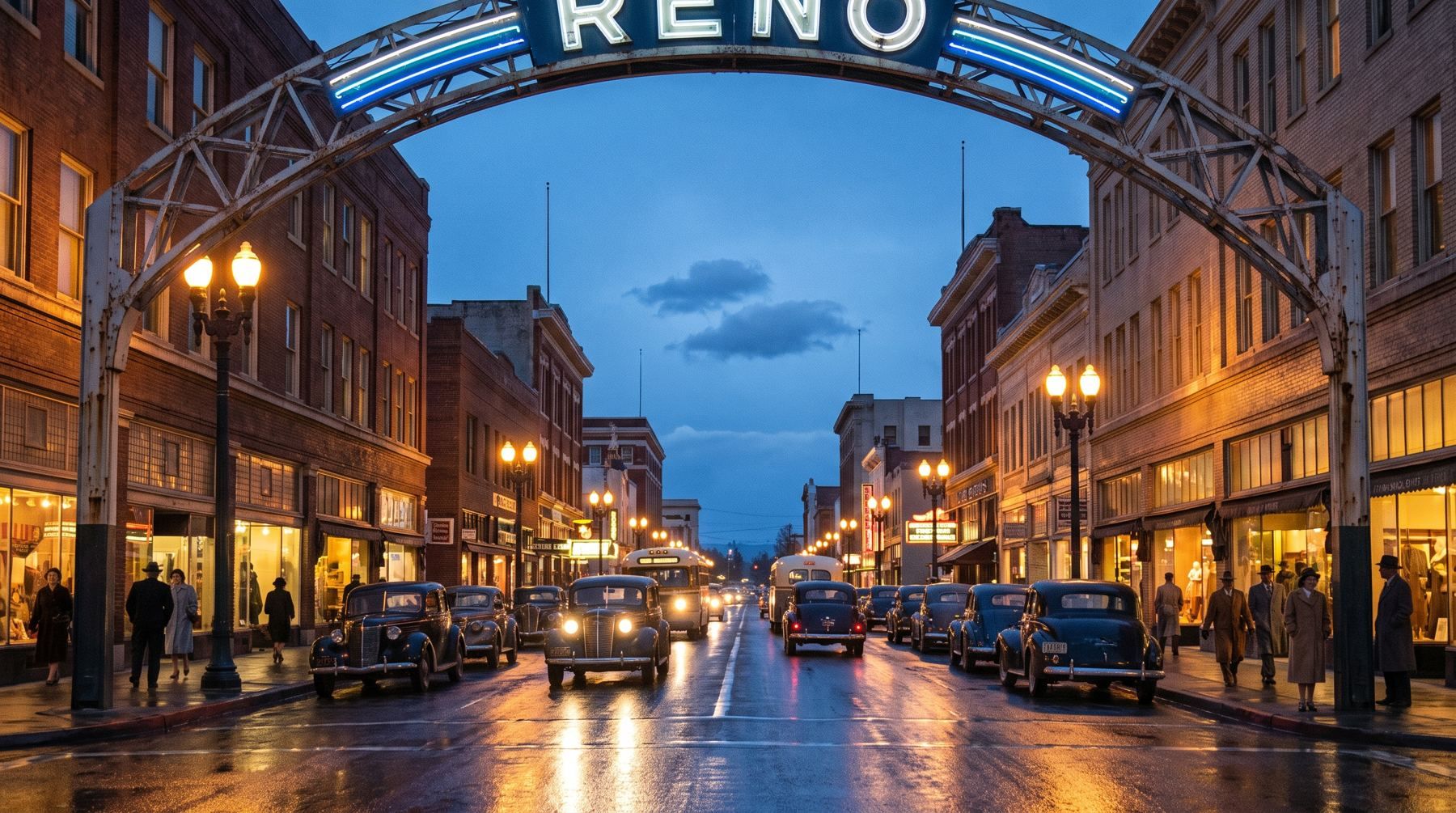
Reno’s primary civic monument started life as a temporary promotional display. City officials erected a steel arch across Virginia Street for an opening celebration on October 23, 1926, specifically designed to advertise the upcoming 1927 Nevada Transcontinental Highway Exposition.
The famous phrase stamped across the steel was not conceived by a Nevada resident. An entrant from Sacramento submitted "The Biggest Little City in the World" during a municipal slogan contest. Even stranger, the original 1926 frame survived to modern times on Lake Street only because movie crew members pulled it from storage in 1994 as a set prop for the film Cobb.
Free Whiskey and the Transcontinental Highways
The origins of the sign trace to early automobile travel. In the summer of 1913, organizers established the Lincoln Highway Association, announcing a continuous coast-to-coast route in September of 1913 that routed motorists straight through Reno along 4th Street. By 1915, motor tourists drove the corridor toward the Panama Pacific Exhibition in San Francisco. Federal road assistance arrived with the Federal Aid Road Act in 1916. In 1921, planners designated a second cross-country route, the Victory Highway, to honor veterans of World War I.
Nevada business leaders prepared a massive celebration to mark the completion of both roads. In the modern state highway network, the Victory Highway corridor corresponds to I-80 conditions and cameras and the Lincoln Highway route roughly aligns with US-50 conditions and cameras.
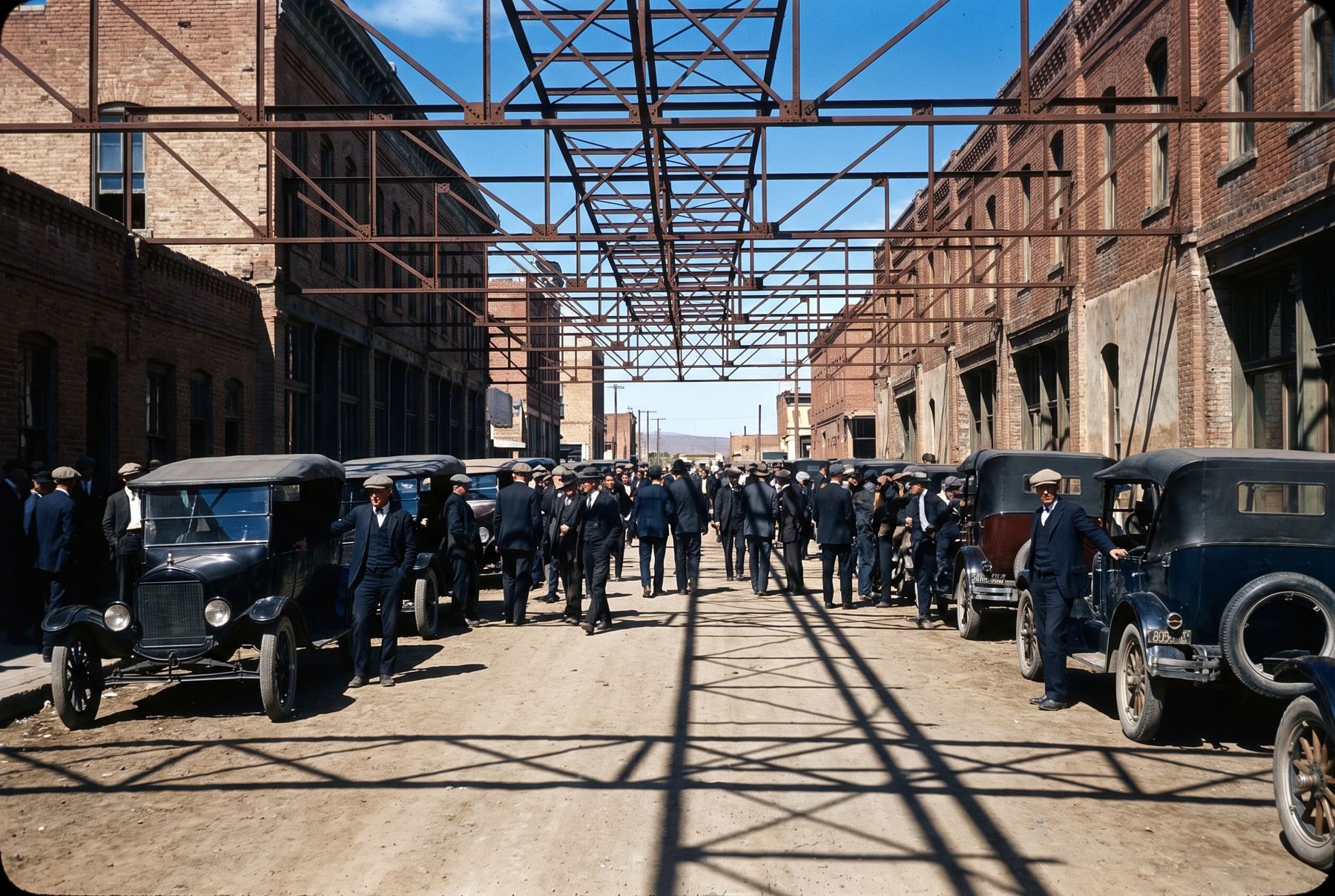
The promotional campaign launched on October 23, 1926. Eyewitness accounts recorded that officials provided free food and whiskey to visitors, residents, and dignitaries over the course of three days. The centerpiece of that street celebration was the metal arch standing at Virginia Street and Commercial Row.
The three-day party aimed to build attendance for the Nevada Transcontinental Highway Exposition, staged during the summer of 1927 across the grounds of Idlewild Park in west Reno. The exposition featured temporary exhibition structures along with the permanent Mission Revival-style California Building. When the exposition concluded, local officials chose to keep the Virginia Street arch permanently.
The Sacramento Contest and Green Neon
To complete the structure at Virginia Street and Commercial Row, civic promoters held a contest to select a permanent slogan. The winning submission, "The Biggest Little City in the World," arrived from a participant living across the state line in Sacramento.
The slogan reflected Reno's identity during an era when the town served as a cultural and transportation center. The transcontinental railroad had arrived in 1868, the year Reno was established. The University of Nevada was founded in 1874 and built its primary campus north of downtown in 1885. In 1927, the Nevada legislature reduced the residency requirement for divorces from six months to three months, triggering an influx of visitors detailed in How Reno Built a Global Industry on a Six-Week Law. Nevada subsequently legalized casino gambling in 1931.
The original 1926 arch displayed the Sacramento phrase until 1934, when local residents grew tired of the text. Workers removed the slogan that year and replaced it with a minimalist neon sign that spelled "Reno" in green neon letters.
That green neon sign remained in service for 29 years. In 1963, workers took down the structure, moved it to Idlewild Park, and eventually retired the metal framework to storage, replacing the downtown fixture with a new arch that restored the 1926 slogan.
Movie Crews and the Move to Lake Street
The 1963 replacement arch stood over Virginia Street until 1987, when city officials dismantled it and gave the steel framework to the municipality of Willits, California, for a new chapter in its history.
The original 1926 frame remained out of public view until Hollywood stepped in. In 1994, filmmakers producing the baseball biopic Cobb, starring actor Tommy Lee Jones, needed an authentic historic street arch for production sets. Movie crews located the 1926 components in storage and reassembled the framework.
The original 1926 Reno Arch survives today only because film crews reassembled the discarded frame as a movie prop in 1994.
After filming concluded, local residents expressed nostalgia for the vintage framework, persuading officials to preserve it rather than return it to storage. The city installed the 1926 arch on Lake Street near the Truckee River, close to the Renaissance Reno Downtown Hotel and Bill Harrah’s National Automobile Museum.
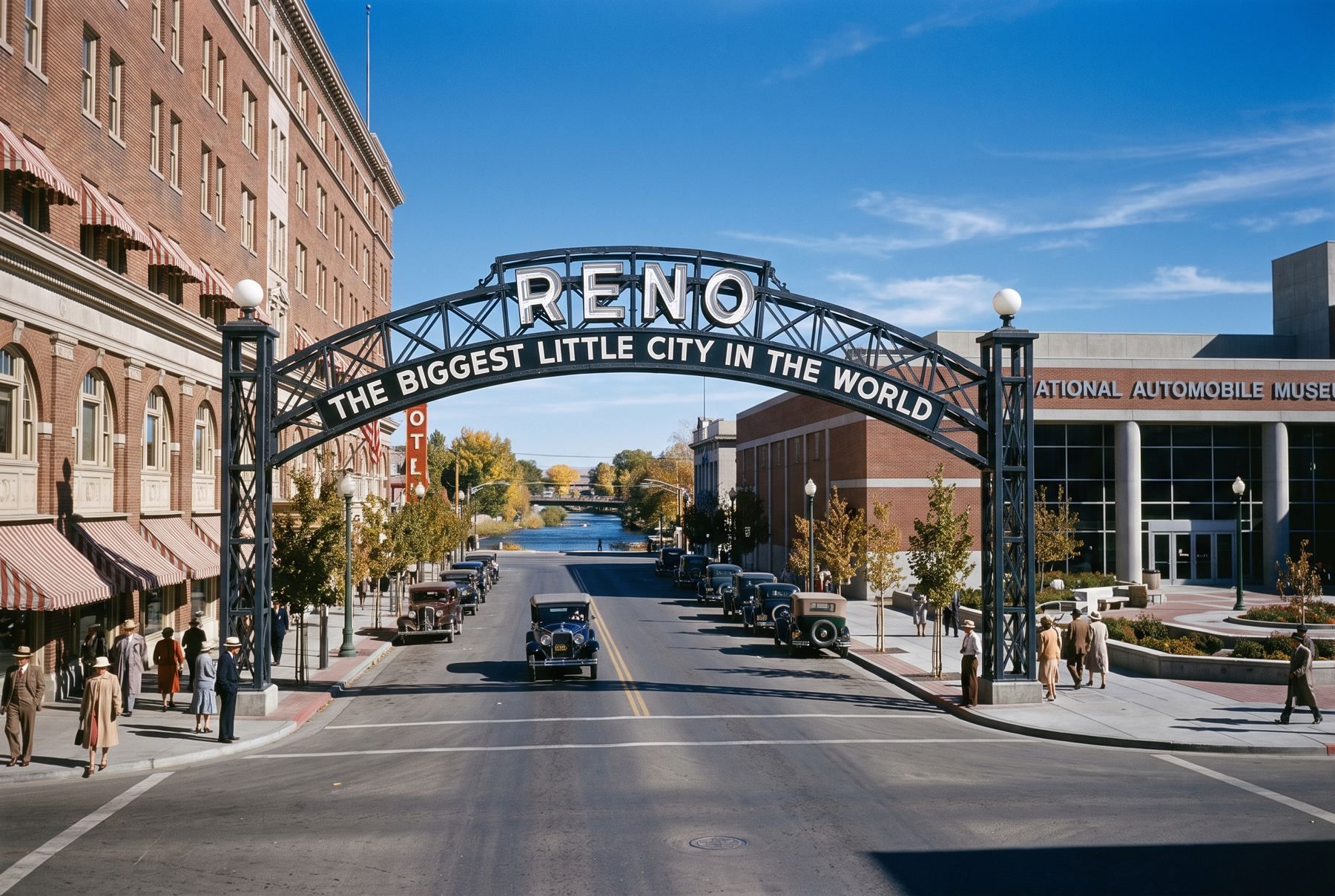
Virginia Street Under Silver and Blue Bulbs
Back on Virginia Street, the city commissioned an entirely new arch in 1987. Unveiled to public fanfare at Virginia Street and Commercial Row, this third iteration became the familiar gateway shown across television and movies.
The 1987 sign appeared in several major films, including Waking Up in Reno, Kingpin, and the comedy Sister Act. Production staff on Sister Act installed a commemorative plaque directly onto the arch framework, where it remains bolted in place.
When built in 1987, the sign lit downtown with red, white, and yellow light bulbs. That palette remained until 2017, when the Reno City Council voted to alter the lighting scheme. The council replaced the old lights with silver and blue bulbs to honor the University of Nevada, Reno Wolf Pack athletic teams.
Today, motorists and pedestrians finding Things to do around Reno and Tahoe encounter the third-generation sign directly over traffic at Commercial Row. While navigating Downtown Reno Parking: Tickets, Appeals, and Services, visitors can spot the arch by its designated municipal address: 255 ½ Virginia Street.