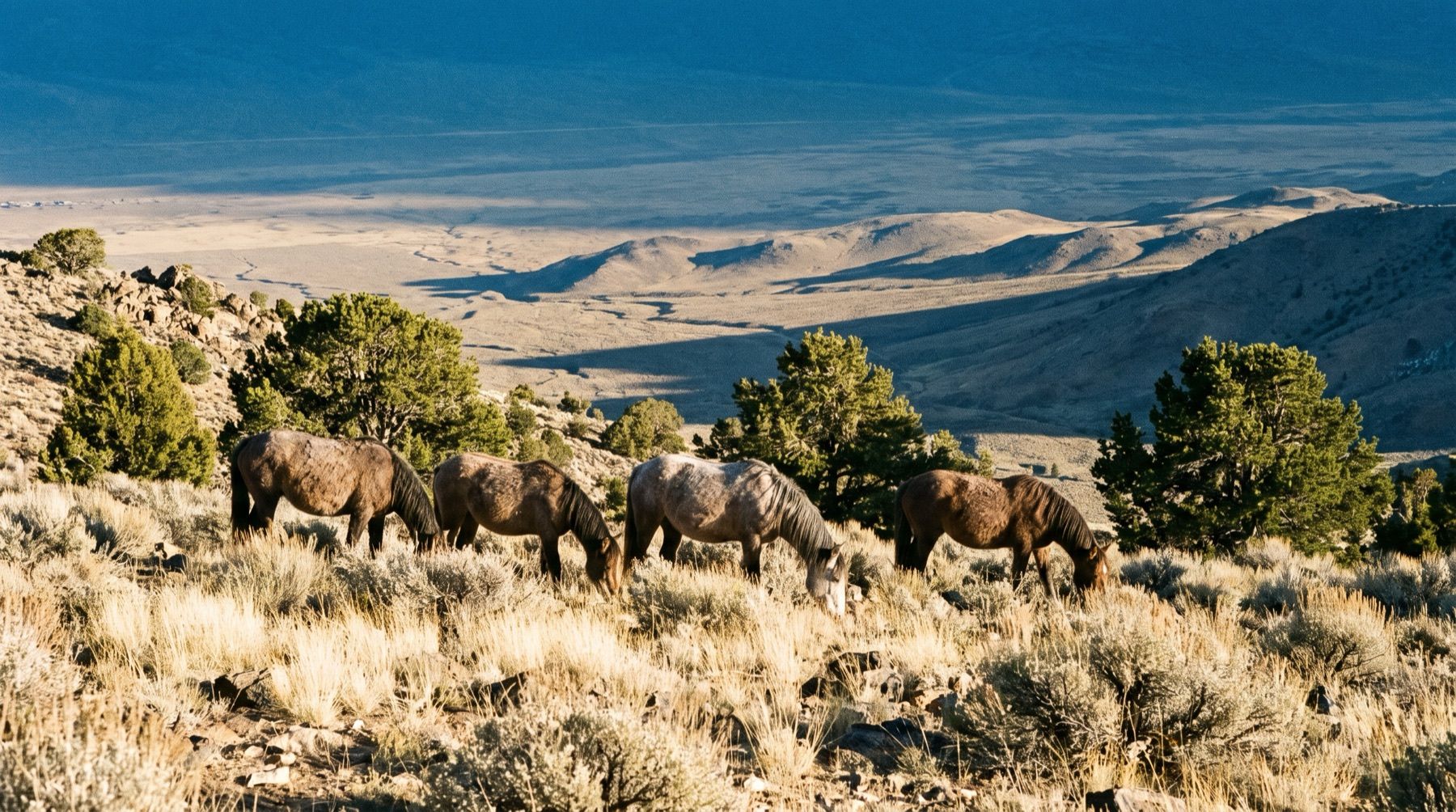
Nevada holds more wild horses than the rest of the western states put together. Across 48 million acres of public lands managed by the Bureau of Land Management, these herds roam open scrub and rocky basins.
Their federal protection traces directly back to an insurance secretary working in Reno. In 1950, Velma Bronn Johnston watched commercial roundups decimate herds across the state and decided to stop them.
The Reno Secretary and the Mustangers
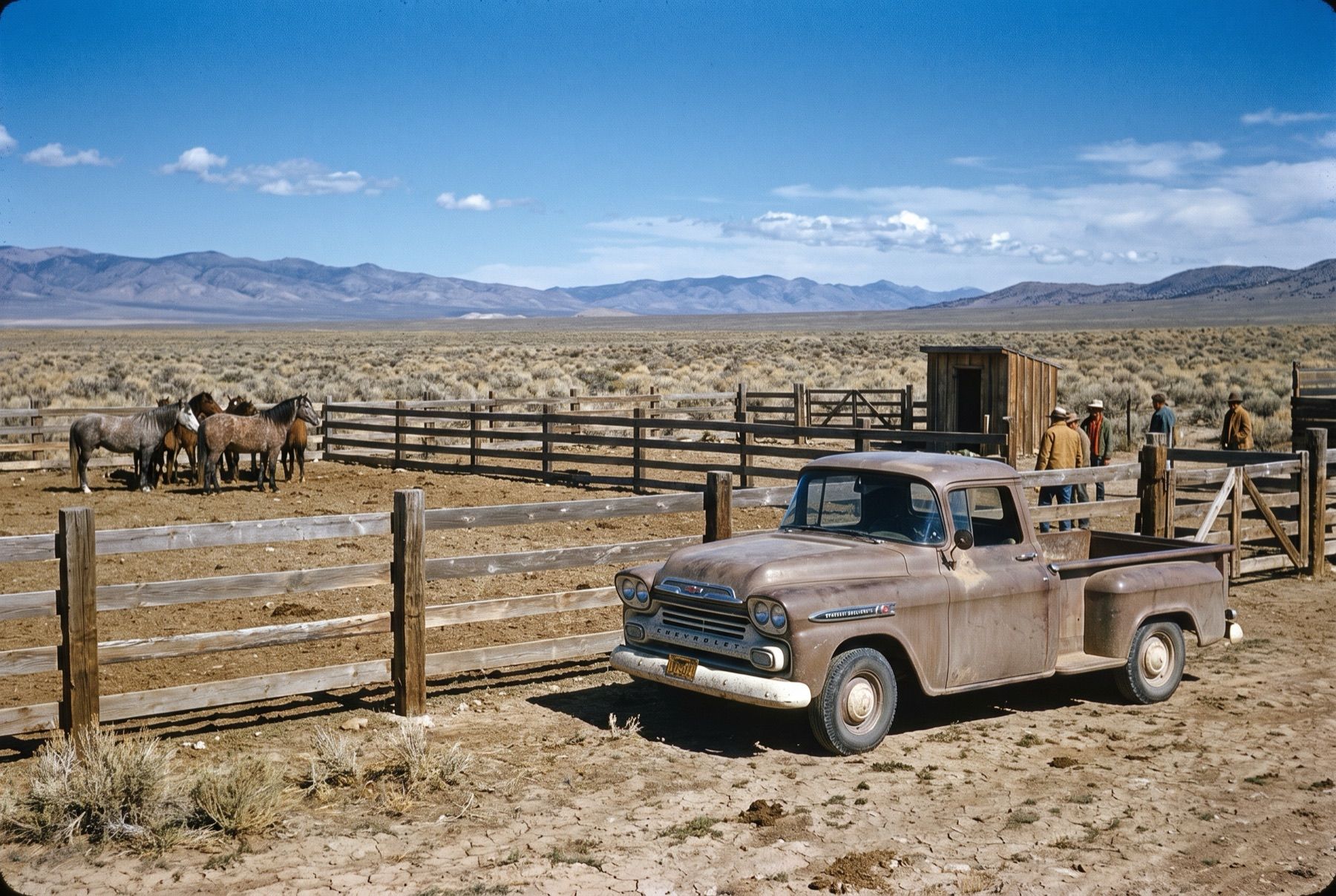
During the 1950s, commercial operators known as mustangers harvested wild horses across western rangelands for slaughter. Johnston became aware of the indiscriminate and ruthless treatment the animals suffered during these commercial captures. Her family owned a children's dude ranch, giving her a direct perspective on the animals.
Johnston earned the nickname "Wild Horse Annie" and launched a grassroots campaign from Reno. She mobilized newspapers and famously enlisted school children in letter-writing efforts. On July 15, 1959, the Associated Press reported on her growing movement: "Seldom has an issue touched such a responsive chord."
Nevada Representative Walter Baring took the cause to Congress in January 1959. He introduced a bill barring the use of motorized vehicles to hunt wild horses and burros on public lands. On September 8, 1959, President Dwight D. Eisenhower signed Public Law 86-234, widely known as the Wild Horse Annie Act.
The Unanimous Law of 1971
The 1959 law had a major flaw. It banned trucks and aircraft from hunting wild horses, but it did not include Johnston's recommendation that Congress create a formal program to protect, manage, and control the animals.
By 1971, the encroachment of man and continued pressure from mustangers had significantly reduced horse numbers on public lands. Johnston renewed her campaign, organizing another national wave of letters and public protests. The pressure forced a decisive federal response.
Congress passed the Wild Free-Roaming Horses and Burros Act without a single dissenting vote.
Congress passed Public Law 92-195 unanimously. President Richard M. Nixon signed the Wild Free-Roaming Horses and Burros Act into law on December 18, 1971. The statute gave the Bureau of Land Management and the U.S. Forest Service the responsibility to manage, protect, and control wild horses and burros on public rangelands. Since 1971, Congress has amended the statute on 4 separate occasions.
The Public Domain and Nevada Management
Federal control of these ranges dates back more than a century before the 1971 law. In 1846, the Treaty of Guadalupe Hidalgo transferred the territory that became Nevada from Mexico to the United States. When Nevada gained statehood in 1864, its constitution disclaimed all unappropriated public lands. Those legal origins run parallel to events that shaped the state, such as when Nevada Telegraphed Its Entire Constitution to D.C. to secure quick admission during the Civil War.
Silver mining transformed the territory after the 1859 discovery near Virginia City, chronicled in The Comstock Lode Built San Francisco and Bankrolled the Union. Congress later passed the 1872 Mining Act, which still governs solid mineral mining on public lands. In 1934, the Taylor Grazing Act established grazing controls, leading to the Grazing Service in 1936.
In 1946, Congress merged the General Land Office and the Grazing Service into the Bureau of Land Management. In 1950, Region II moved its district grazing headquarters from San Francisco to Reno, setting up in the old post office building. Edmund R. "Tiny" Greenslet served as the first regional grazier before becoming Nevada's first BLM State Supervisor in 1954, retiring in 1958. Today, the BLM manages 63 percent of Nevada's land base.
The Virginia Range Herd Today
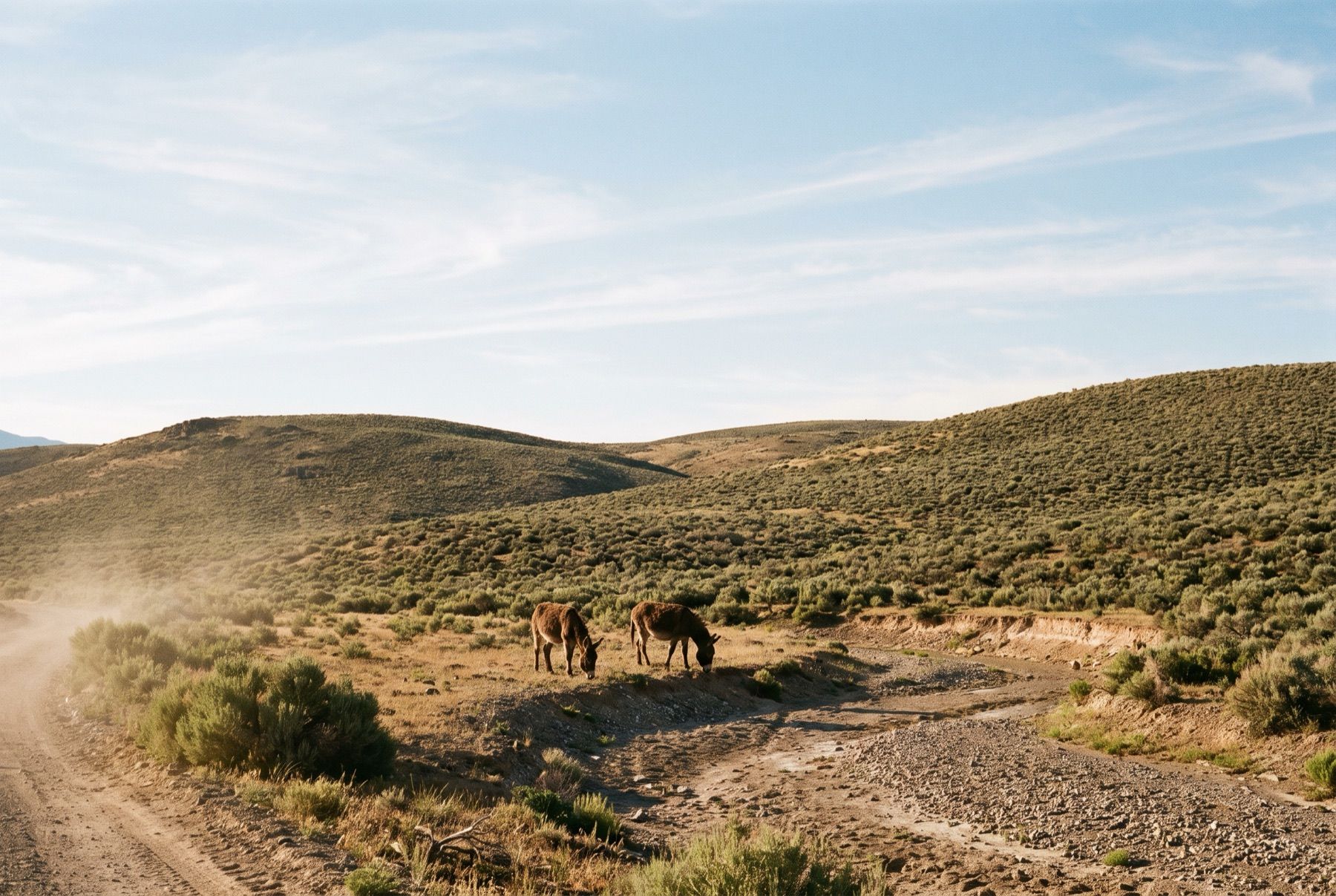
Today, BLM Nevada manages 83 wild horse and burro herd management areas covering approximately 15.6 million acres. The agency sets a combined appropriate management level of 12,811 animals statewide. These management zones stretch from the Dogskin Mountains to the Silver Peak and Pine Nut ranges. Travelers exploring Nevada stories across the Great Basin will see these federal herds along open highways.
Yet the wild horses living closest to Reno do not fall under the BLM. The Virginia Range sits 14 miles from Reno in a straight line, rising just east of the Truckee Meadows. Because of land status and historical ownership patterns, the Virginia Range horses are classified as estray animals managed by the state, not the federal government.
The Nevada Department of Agriculture oversees this population. On December 12, 2017, the Nevada Board of Agriculture directed the department to seek an outside partner to manage the animals. On January 30, 2018, the department issued a formal request for proposals with an application deadline of April 16, 2018. Former director Jim Barbee explained that the state sought an owner capable of keeping horses on the range while facilitating adoptions for animals that must be removed.
Visitors planning things to do around Reno and Tahoe often spot these bands grazing along the foothills just outside town. The horses in the Virginia Range remain governed by state agricultural rules, while millions of federal acres beyond them remain under the 1971 law won by Wild Horse Annie.