In 1898, gold miners in the Shoshone Mountains picked stone discs out of the dirt to prop up cabin hearths and serve dinner. They were working claims 126 miles in a straight line from Reno, digging three miles of underground tunnels into rock 6,840 feet above sea level.
They did not know that the plates on their tables were the backbones of 50-foot carnivorous marine reptiles. The creatures swam over central Nevada 225 million years ago, when a warm ocean covered the region long before the dry canyons formed.
The boom and death of Berlin
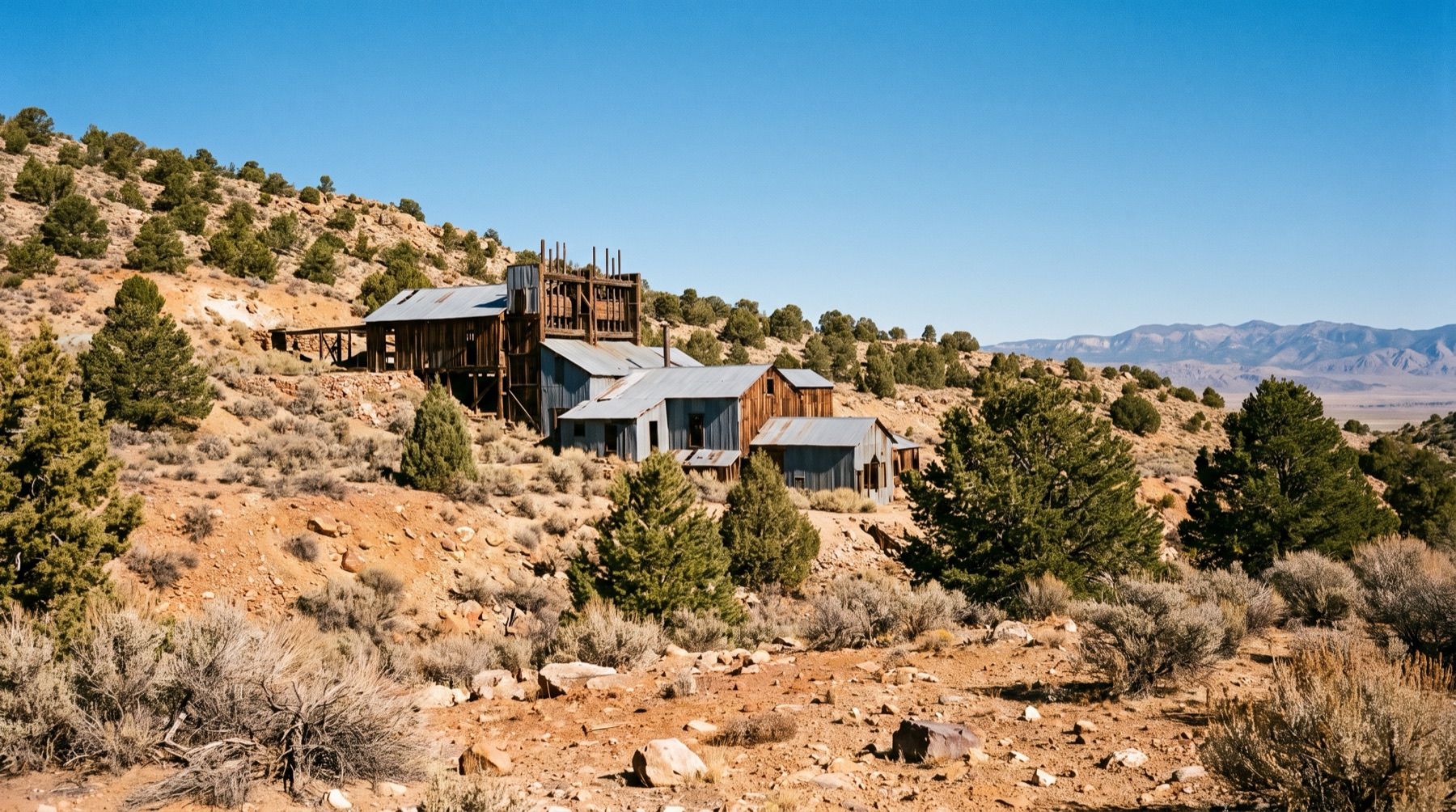
Prospectors first found silver in Union Canyon in May 1863, forming the small camp of Union. An assay report came out of nearby Berlin Canyon in 1869, but the Berlin Mine was not established until 1896. Two years later, the Nevada Company bought the mine along with surrounding claims, driving the town of Berlin into its peak era.
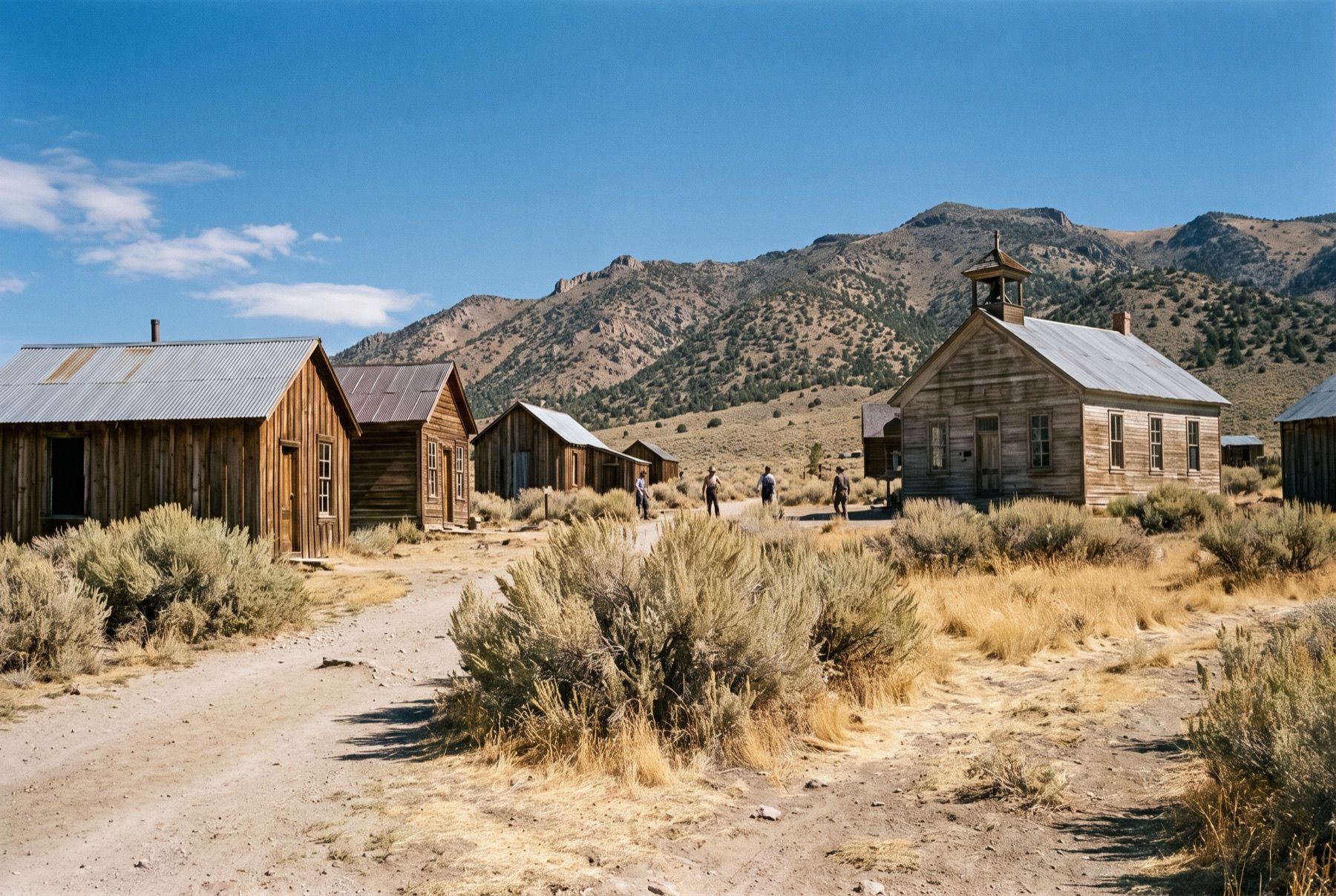
Between 1898 and 1908, Berlin and its Union suburbs supported 200 to 250 residents. The community included miners, woodcutters, charcoal makers, a doctor, a nurse, a forest ranger, and a prostitute. A 30-stamp mill crushed ore on the hillside, and children attended class in the local schoolhouse. Like other boom camps chronicled in Nevada stories, Berlin's fortune ended fast. Production ceased, and the settlement collapsed to its death by 1911.
During its working life, the Berlin Mine extracted 42,000 troy ounces of gold. Total production reached $849,000 at the historic rate of $20 per ounce, which equals about $2.3 million today. When the payroll vanished, residents walked away, leaving wooden buildings and graves in the cemetery under the pinyon pines and Utah junipers.
Uncovering the ocean in the desert
In 1928, Dr. Siemon Muller of Stanford University noticed naturally eroded rock on the hillside above the empty town and identified the exposed bones as ichthyosaurs. Formal paleontological excavations started in 1954 under Charles Camp from the University of California, Berkeley.
The Shoshone Mountains hold the remains of nearly 40 prehistoric marine reptiles that grew up to 50 feet long.
Camp determined that the specimens belonged to a previously unknown genus and species. He named the creature Shonisaurus popularis, meaning lizard from the Shoshone Mountains. Excavators eventually uncovered nearly 40 individuals. These marine reptiles lived during the late Triassic period alongside early dinosaurs, hunting mollusks with long toothy snouts and giving birth to live young in open water. Unlike the young, adult Shonisaurus had no teeth, leading researchers to hypothesize that they captured prey through suction feeding.
The state legislature named the ichthyosaur Nevada's official state fossil in 1977, amending the law in 1989 to specify Shonisaurus popularis. It remains one of the largest concentrations of giant ichthyosaur bones on earth.
Why forty giants died together
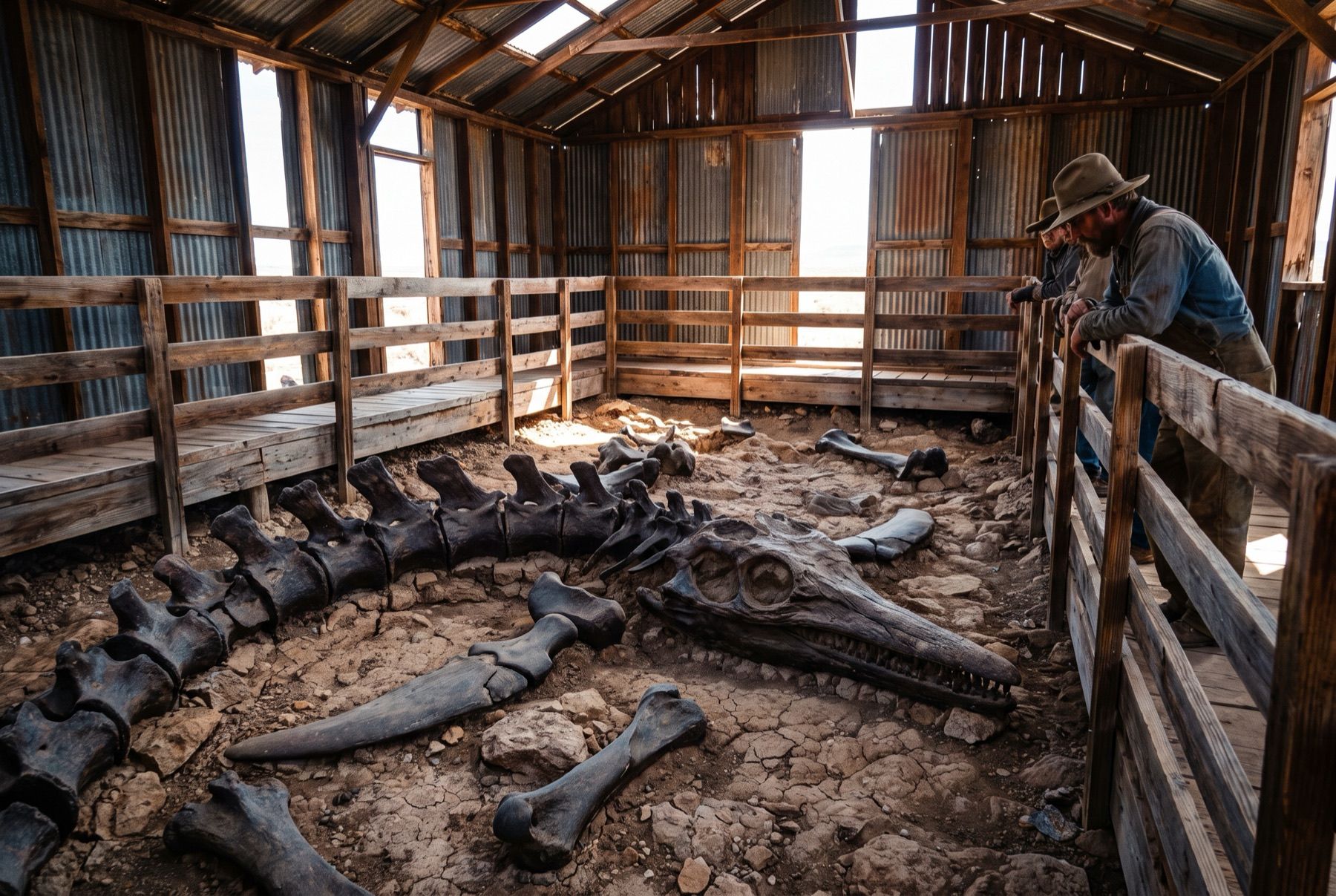
The fossil quarry displays at least nine large individuals that died in the same location at the same time. The skulls measure 5 to 6 feet long, belonging to animals that reached 40 to 50 feet from snout to tail tip, roughly the size of modern gray whales.
Scientists have debated how so many giant predators perished together. Early hypotheses suggested mass beaching during unusually low tides or toxic algae blooms. Recent geological research indicates the sediments accumulated in deep offshore water rather than on a shoreline, suggesting the school may have died from fast-acting food poisoning or low-oxygen water.
To preserve the fossils and the surrounding ghost town, the state created Berlin-Ichthyosaur State Park in 1957. A permanent Fossil House was constructed over the main excavation quarry, shielding the exposed skeletons while leaving them embedded in the original rock matrix.
The park today and how to visit
Berlin-Ichthyosaur State Park covers 1,540 acres in northern Nye County, with elevations rising from 6,840 feet to 7,880 feet. The townsite remains preserved in arrested decay. More than 80 interpretive signs explain the standing mills and machine shops, using historical text provided by Firmin Bruner, who grew up in Union and Berlin after his family arrived from Spain.
The park is open 24 hours a day, 365 days a year. Park entry is $5.00 for Nevada vehicles and $10.00 for out-of-state vehicles. The campground offers 14 units open year-round for $15.00 per night ($20.00 for non-Nevada vehicles), fitting RVs up to 25 feet. Seasonal drinking water runs from mid-April through the end of October. The park accepts cash or check only and cannot take credit cards.
Guided Fossil House tours cost $5.00 for adults, with kids 12 and under free. From April 18 to Memorial Day, tours run at 10 a.m. and 2 p.m. on Saturdays and Sundays. From Memorial Day to Labor Day, tours run daily at 10 a.m. and 2 p.m. From Labor Day to November 1, tours operate at 10 a.m. and 2 p.m. on weekends. When tours are closed, large viewing windows let visitors look directly onto the fossil bed.
From Reno, travelers heading east across the state can check road conditions and cameras before driving through central Nevada, and consult US-50 conditions and cameras when planning regional routes. The turnoff for the park lies 20 miles east of Gabbs on State Route 844, where gas, food, and phone services are available. No services exist in the nearby town of Ione. Drivers can connect this trip with other regional itineraries found in things to do around Reno and Tahoe.