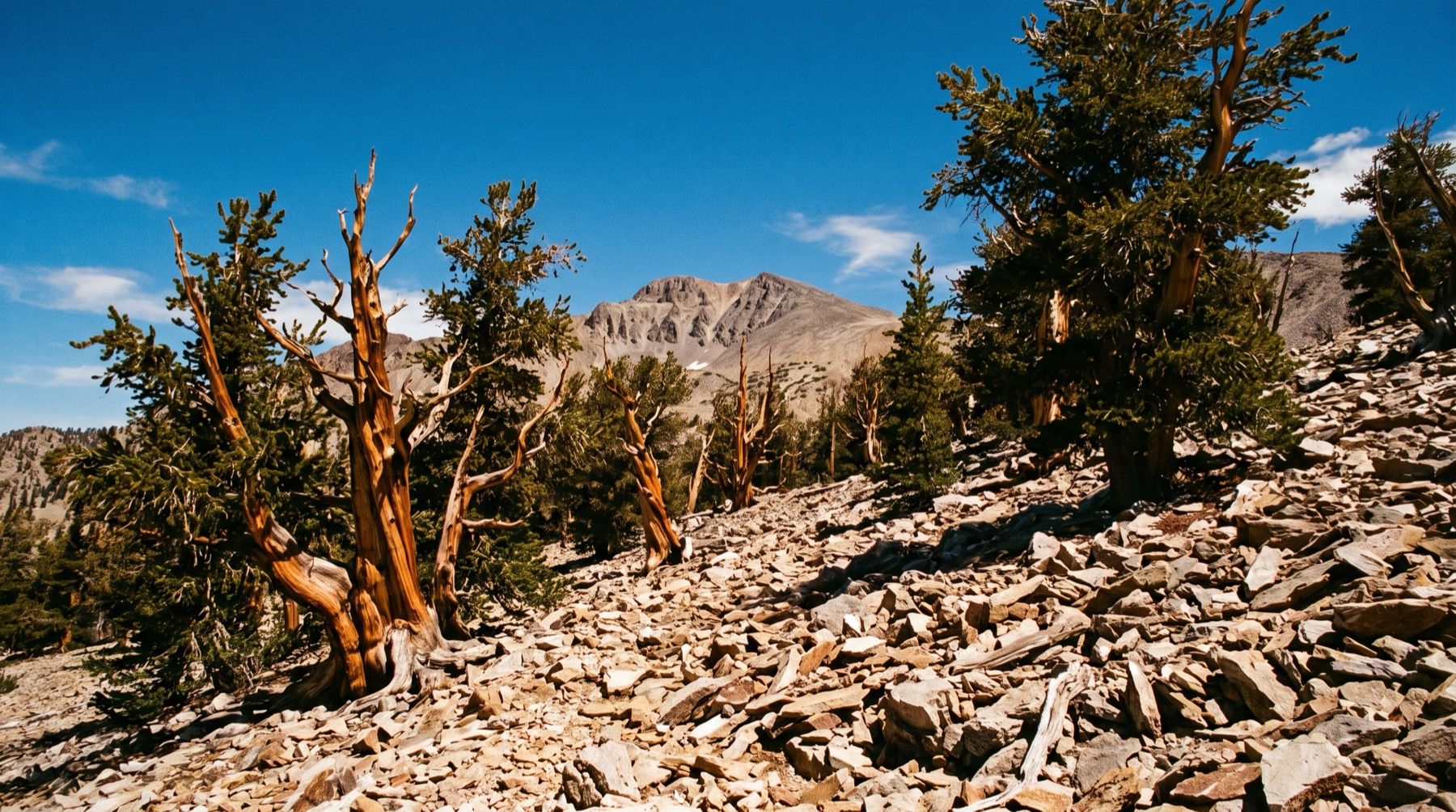
In the summer of 1964, a geographer named Donald R. Currey climbed the rocky moraines beneath Wheeler Peak in eastern Nevada. He was studying ice age glaciology and the ages of glacial features. To understand past climate patterns, he planned to examine the annual growth rings inside Great Basin bristlecone pines.
Currey selected a gnarled pine known to local mountaineers as Prometheus. Believing it was well over 4,000 years old, he prepared to take core samples. Instead, the tree was cut down, ending what was then the oldest known individual life on the planet.
Life on the High Limestone
Great Basin bristlecone pines, or Pinus longaeva, are the oldest non-clonal species on Earth. Clonal plants like the Pando quaking aspen grove in Utah reach an estimated 16,000 years by sprouting new stems from existing root networks. Bristlecone pines stand on their own trunks. They survive at high elevations where temperatures drop far below freezing, growing seasons are short, and fierce winds twist their limbs.
These harsh conditions force the trees to grow extremely slowly. In exceptionally cold years, a tree might not add a growth ring at all. This slow pace creates exceptionally dense wood that resists rot, fungi, insects, and erosion. Most groves in what is now Great Basin National Park take root between 8,000 and 11,200 feet, often anchored directly into cracks in limestone or dolomite ridges. The low density of vegetation around these rocky slopes also protects them from running forest fires.
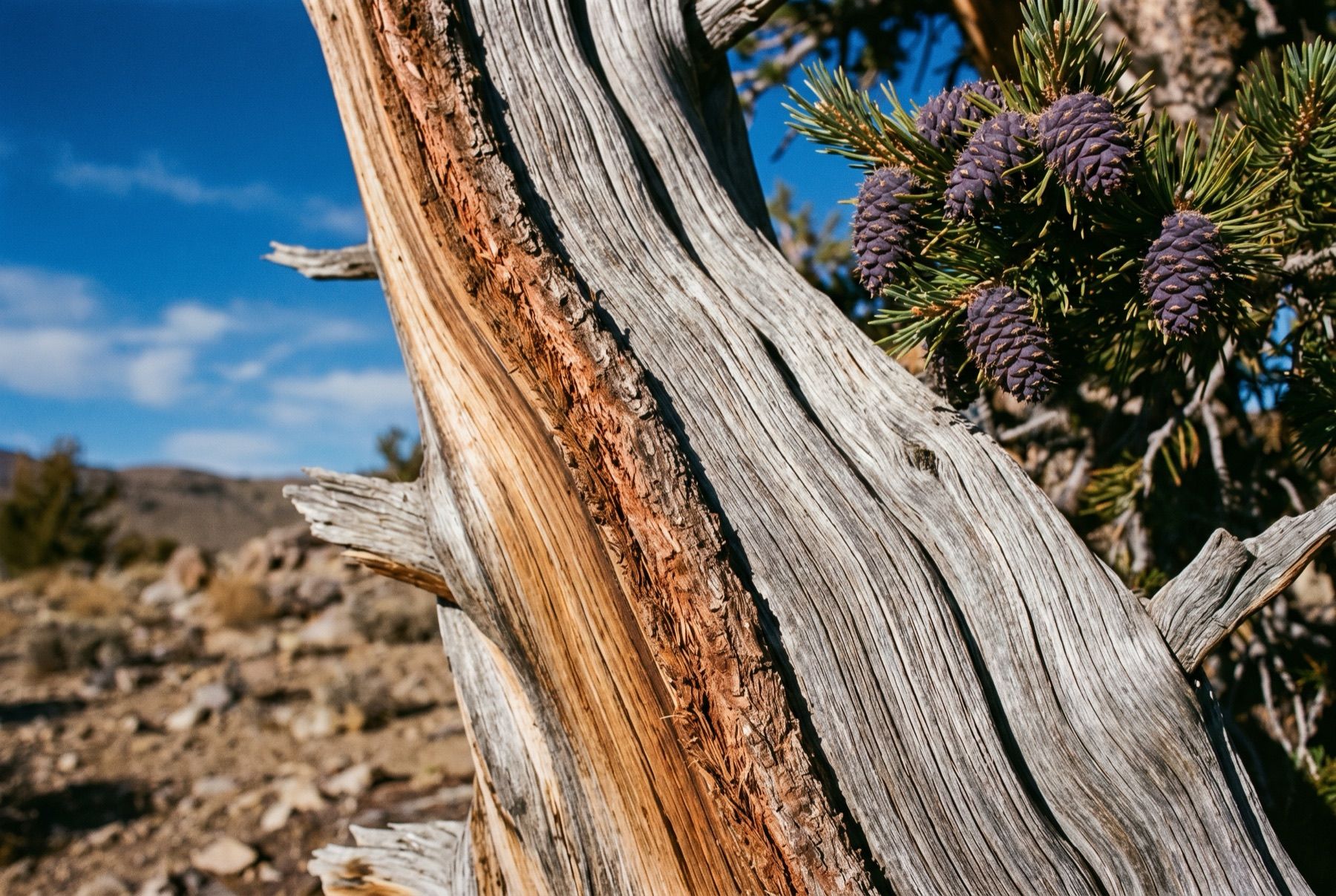
To survive through thousands of seasons, the trees rely on an adaptation called sectored architecture. Large individual roots feed only the portion of the trunk and crown directly above them. If soil erosion exposes and kills a root, only that corresponding strip of the tree dies. The rest stays alive, leaving living stripes of bark running up an otherwise bare, weathered trunk. Long after sections die, the wood erodes rather than rots, creating sculpted, skeletal trunks that look completely dead.
The Cutting of Prometheus
Currey held permission from the United States Forest Service to take core samples from pines in the grove beneath Wheeler Peak. He wanted to measure ring widths to identify favorable and unfavorable growing years. Because bristlecone pines endure for millenia, they act as climatic vaults containing thousands of years of weather data. This record remains central to the study of long-term climate change.
Accounts differ on what took place once Currey began work on Prometheus. Some records state his increment borer snapped off inside the dense trunk. Others indicate he lacked the proper tool to core a tree of that size, or that the borer was too short. Other accounts suggest he sought a complete cross section to examine the ring sequences properly. Whatever the immediate cause, Currey received permission from the Forest Service to fell the pine.
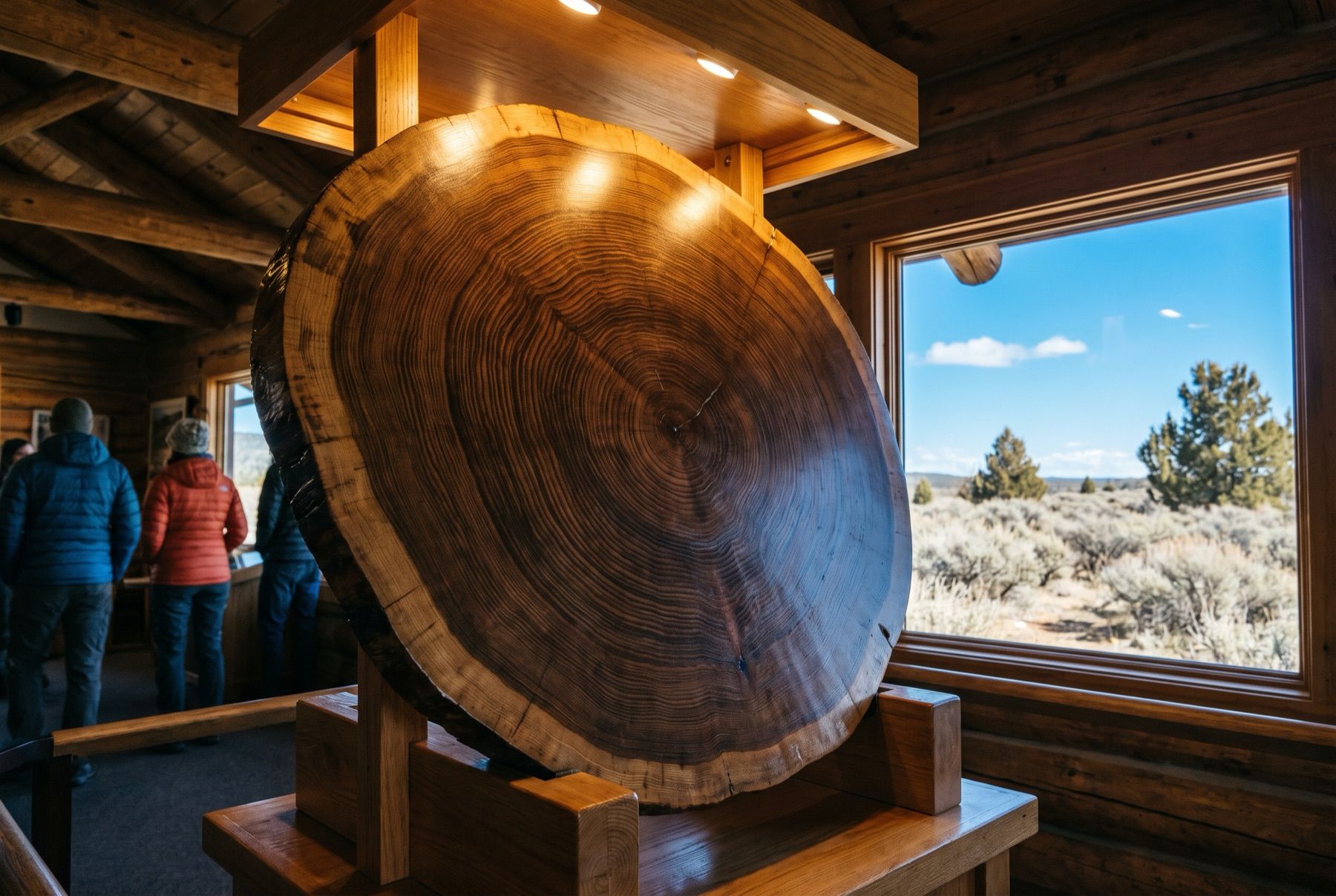
When researchers counted the rings on the cross section, they tallied 4,862 growth rings. Because harsh seasons often prevent ring formation, scientists estimated the tree's actual age at 4,900 years. At the time of its felling, Prometheus was the oldest dated tree in the world, surpassing a 4,847-year-old bristlecone pine recorded in California's White Mountains.
When researchers counted the cross section, Prometheus contained 4,862 rings and had lived an estimated 4,900 years.
The Aftermath and New Discoveries
The loss of Prometheus caused widespread concern and led to lasting changes. Bristlecone pines now receive strict protection on federal lands, and all downed wood in the park must remain untouched where it falls. The data collected from the tree advanced research in paleoclimatology and helped refine carbon dating techniques relied upon by archeologists and paleontologists.
Prometheus held the world record for nearly half a century. In 2012, researchers dating another bristlecone pine in the White Mountains confirmed an age of 5,065 years. Scientists expect that older, unstudied trees still stand on high Great Basin ridges.
For those exploring the wider state, the ancient history preserved in Nevada's stone and soil extends across eras. Visitors tracking Nevada stories can find marine fossils at Berlin-Ichthyosaur State Park or follow the overland routes highlighted along the corridor of US-50 conditions and cameras. That same highway connects travelers driving to Ely and Great Basin National Park from Reno.
Visiting the Wheeler Peak Grove
Wheeler Peak sits 297 miles from Reno in a straight line, rising to an elevation of 13,065 feet. The national park was established later, in 1986. Today, the stump of Prometheus still rests on the quartzite moraine where Currey worked in 1964.
Hikers can visit the Wheeler Peak Bristlecone Grove on a 2.8-mile round-trip trail. The route starts at the Bristlecone Trailhead at the end of the Wheeler Peak Scenic Drive, beginning at 9,890 feet and gaining 600 feet of elevation. The hike takes between 1.5 and 3 hours. Vehicles longer than 24 feet cannot drive past the Upper Lehman Creek Campground along the paved, 8-percent grade scenic road.
Visitors can distinguish bristlecone pines from neighboring limber pines by examining their foliage. Bristlecone needles measure about 1 inch long and grow in dense packets of five that wrap around branches like a bottle brush. Limber pine needles are longer, measuring 1.5 to 3 inches, and cluster only near the branch tips. Bristlecone cones feature a deep purple color when young and have scales tipped with claw-like bristles.
For those who prefer to inspect the rings directly without hiking the moraine, a cross section slab of Prometheus, known to researchers as a cookie, is on display at the Great Basin Visitor Center in Baker.