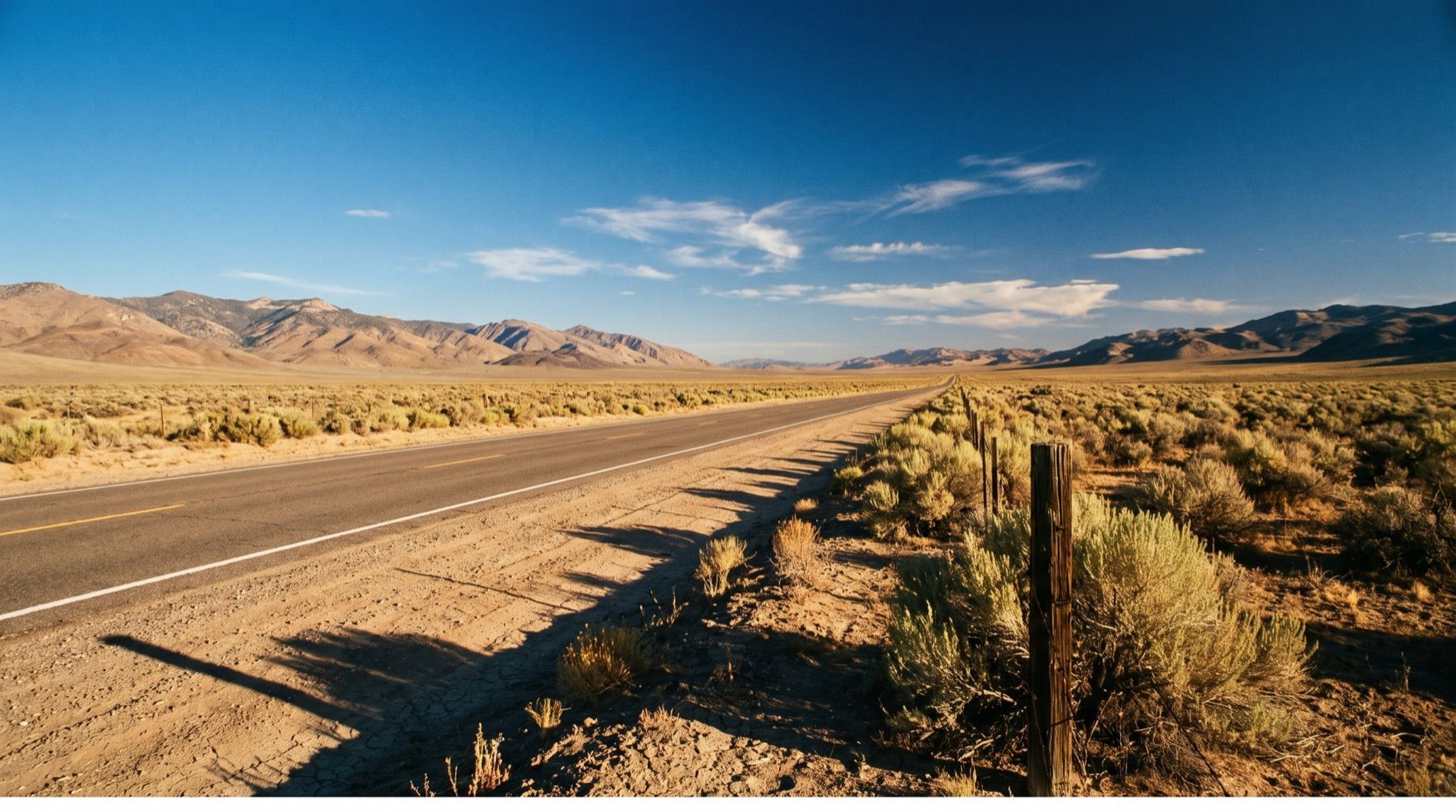
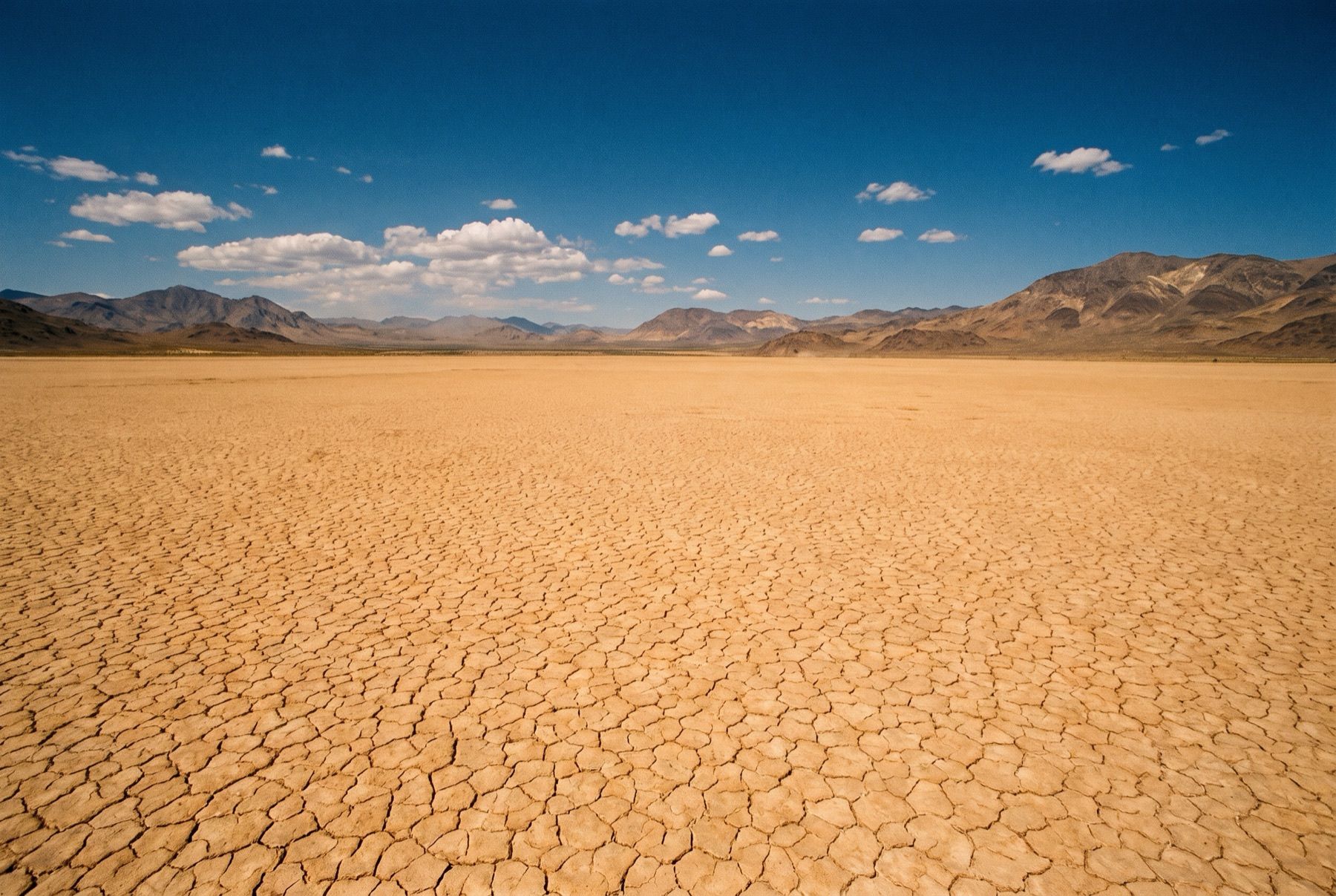
The flattest open ground in North America lies on an ancient lakebed 93 miles from Reno in a straight line. There are no paved lanes, no guard rails, and no fences across approximately 200 square miles of dried silt.
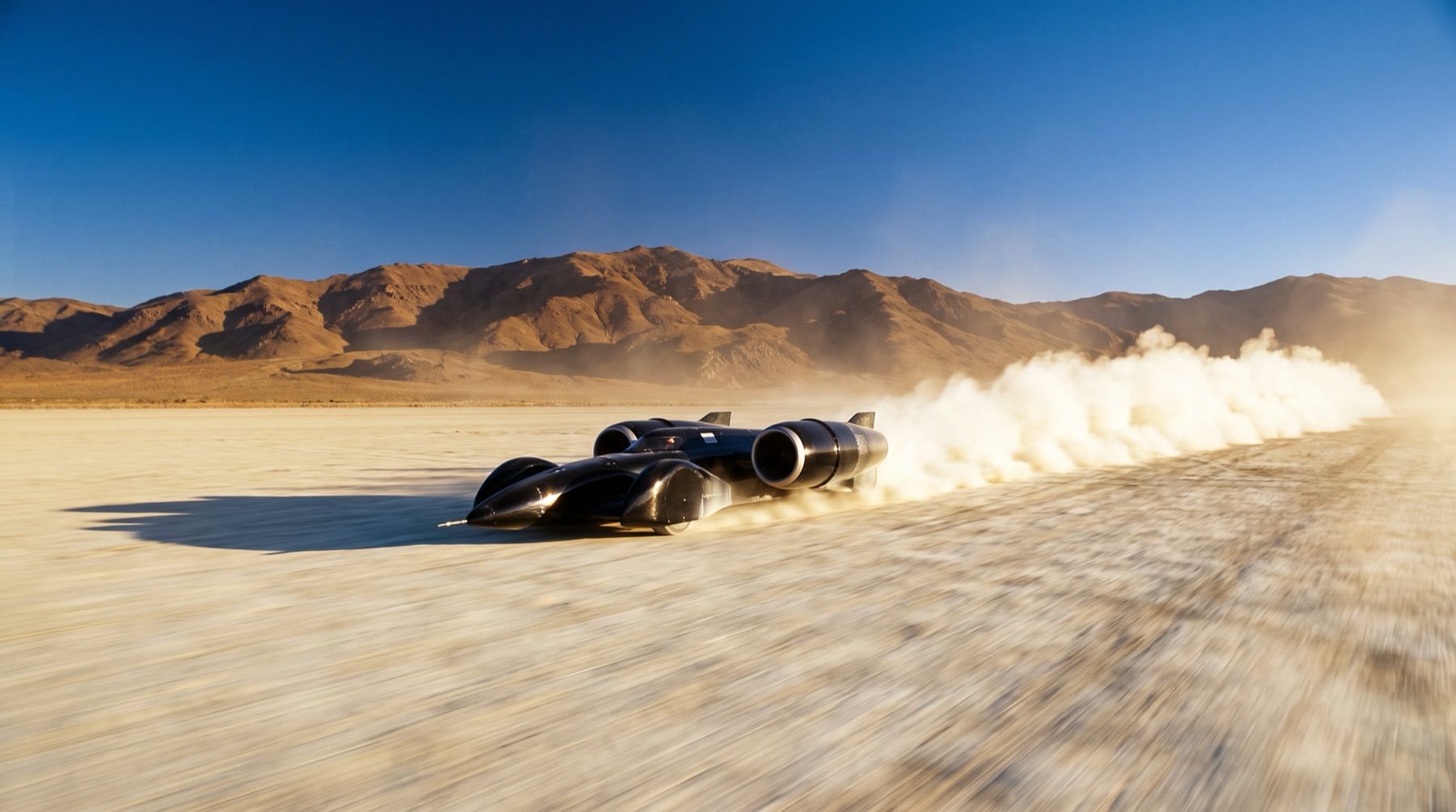
In 1997, a British team brought a 20,000-pound vehicle named Thrust SSC to that expanse. Driver Andy Green pointed the machine across the hard mud, accelerated through the measured mile, and reached 763.035 mph. It was the first time any land-based vehicle broke the sound barrier.
The Bed of Ancient Lake Lahontan
The tabletop surface of the Black Rock Desert playa formed thousands of years ago beneath the water of Lake Lahontan. Around 15,000 years ago, that Ice Age lake reached 500 feet in depth across northern Nevada, dropping fine sediment to the floor. When the water evaporated, it left behind an expanse of silt so level that old wave-cut lake terraces still ring the surrounding mountains.
Today, winter rains and melting snow temporarily pool across the mud, hatching fairy shrimp whose dormant eggs survive in the dry crust for years. When the surface dries out under the summer heat, it hardens into an open expanse. Much like Pyramid Lake Holds the Ancient Skeleton of Lake Lahontan, the playa is a direct remnant of that glacial inland sea. The sheer scale and flat surface make it one of the few places on Earth where a high-speed vehicle can navigate for miles without striking an obstacle.
Pushing Past the Speed of Sound
High-speed racers have long prized Nevada lakebeds. While wind-powered craft have chased wind records at places like Ivanpah Dry Lake, the Black Rock Desert offered the raw acreage needed for sheer jet power. The town of Gerlach, located about 100 miles northeast of Reno, previously watched land speed runs take place on the playa in 1983. In 1997, the stakes climbed higher when the British team arrived to challenge the sound barrier.
Thrust SSC needed miles of level earth just to spool its engines and miles more to roll to a stop. On its run, the car crossed the playa at 763.035 mph, travelling 2 percent faster than the speed of sound. A sonic boom cracked across the desert floor, marking the first time a car had ever gone supersonic.
In 1997, Thrust SSC reached 763.035 mph on the flat silt of the Black Rock Desert, becoming the first supersonic car in history.
Emigrant Trails and Rocket Launches
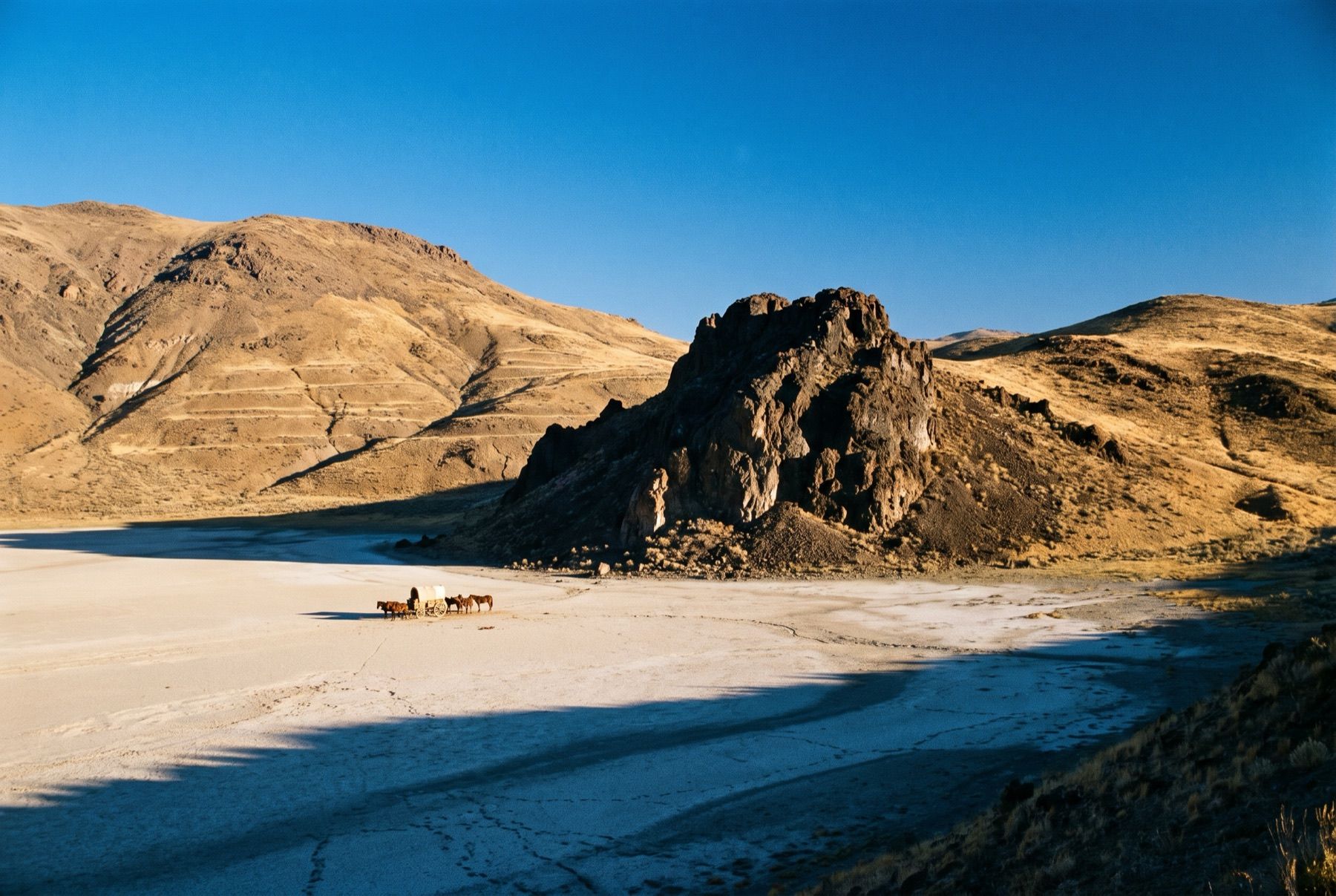
High-speed machinery is only one chapter on the playa. American Indians inhabited the Great Basin around the Black Rock Desert 10,000 years ago. In the early 1850s, thousands of pioneers followed the Lassen-Applegate Trail, an offshoot of the California Trail, braving boiling hot springs, discarded gear, and dead oxen. Historical markers along the Applegate and Nobles trails preserve their journal entries. The Black Rock Point outcropping served as their primary navigation beacon across the waterless wastes.
Decades later, the playa began attracting experimentalists. In 2004, an amateur rocket launched from the desert floor climbed 72 miles high, becoming the first amateur rocket to reach space. The southern end also hosts the annual Burning Man event, drawing tens of thousands who raise a temporary city on the mud each August, an influx detailed in Burning Man Logistics: Reno Airport and Driving to the Playa.
The High Rock Country Today
Congress established the Black Rock Desert-High Rock Canyon Emigrant Trails National Conservation Area on December 21, 2000. Managed by the Bureau of Land Management Winnemucca District, the protected expanse covers 800,000 acres, encompassing 10 wilderness areas and 120 miles of emigrant trails, with 175 miles of intact historic trail segments.
The town of Gerlach, founded in 1906 during the construction of the Western Pacific Railroad Feather River Route, remains the staging hub for trips out to the mud. In the 2000 census, Gerlach and neighboring Empire together recorded 499 residents. The settlement still lacks streetlights and sidewalks, and visitors passing through can stop at Bruno's Country Club for ravioli before heading north into the backcountry. For other regional history, readers explore Nevada stories and the heritage preserved by the Historic Preservation and Walking Tours in Reno and Truckee.
Before heading out from Reno, motorists should verify conditions via Road conditions and cameras. The Black Rock Field Office at 5100 E. Winnemucca Blvd. in Winnemucca and the seasonal Black Rock Station at 200 Transfer Road in Gerlach advise that the area has no cell phone reception. Motorized travel off designated roads is strictly prohibited everywhere except the unvegetated playa floor. Driving on the lakebed during wet weather will sink vehicles to their axles in mud, stranding drivers miles from pavement.