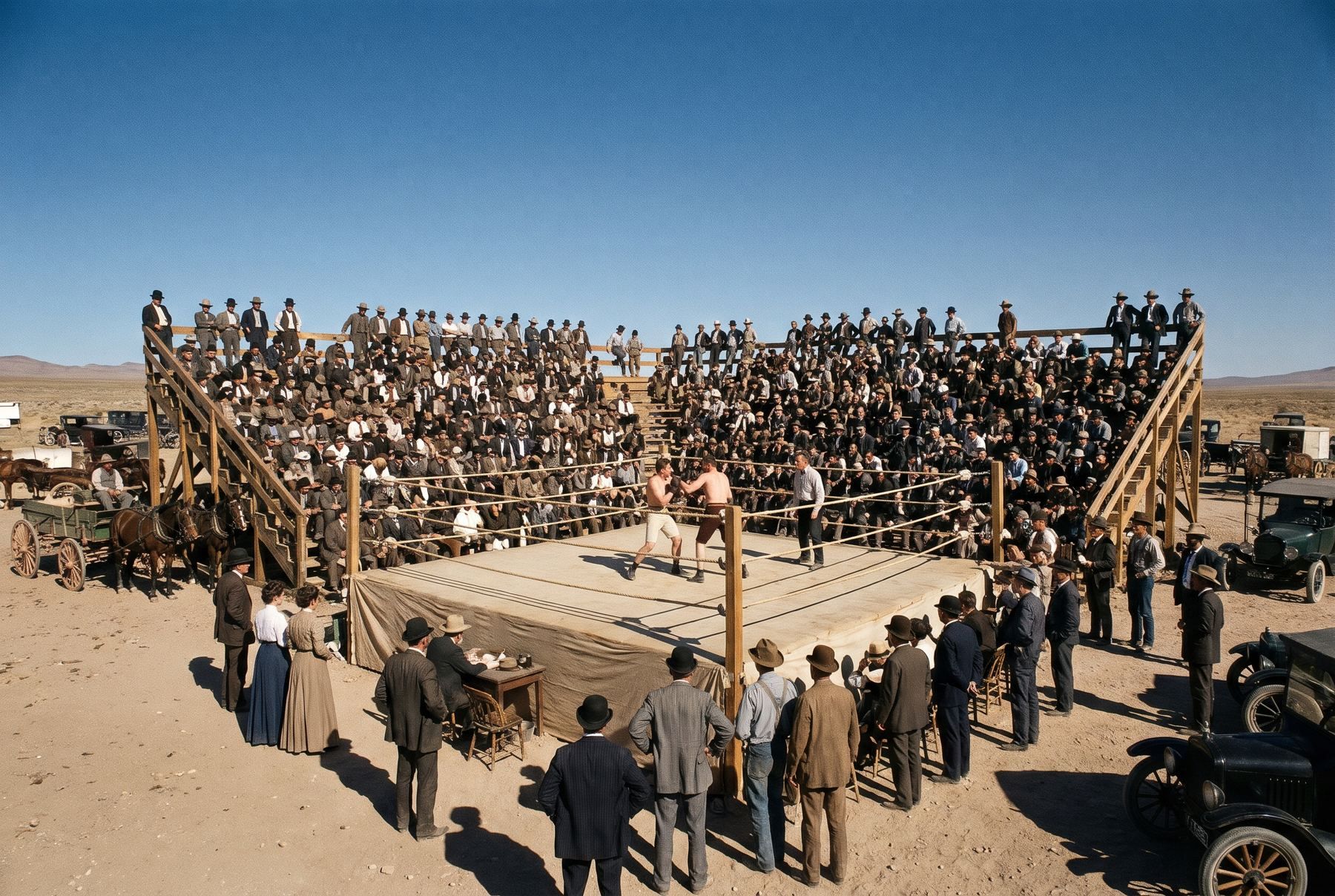
On September 3, 1906, the thermometer in Goldfield climbed toward the century mark. Inside a hastily built open-air arena, two lightweights touched gloves in the center of the ring.
Joe Gans was the reigning lightweight champion and America’s first Black boxing champion. His challenger was Oscar “the Battling Dane” Nelson. Nelson had the vocal backing of the 6,072 spectators packed onto the wooden benches, while Gans had to win over a town that doubted him.
The Saloonkeeper and the Gold Stocks
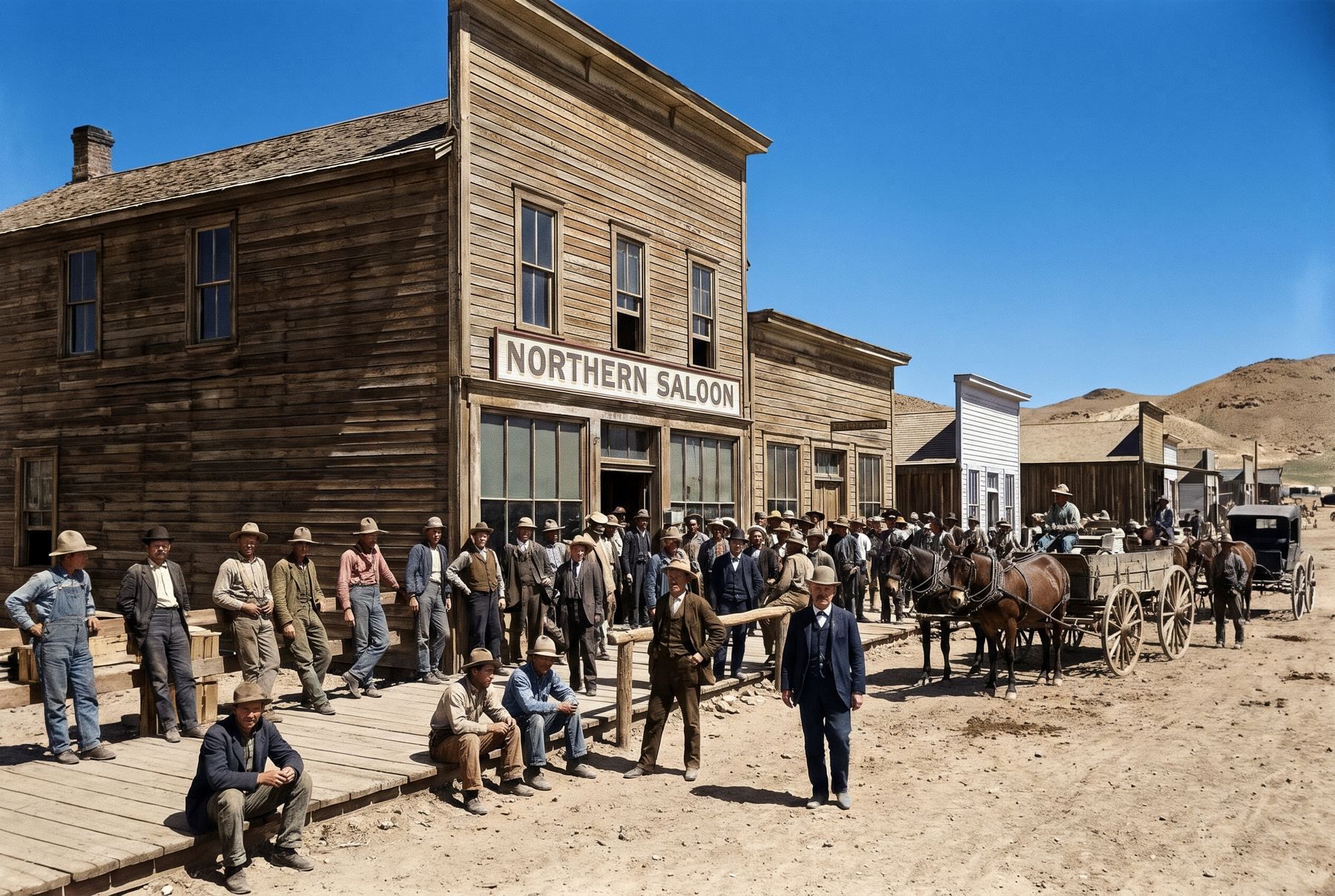
The bout was organized by Tex Rickard, owner of the Northern Saloon in Goldfield. Rickard arrived early in the boom after gold was discovered in 1902. His saloon eventually featured a counter requiring 80 bartenders. When Rickard proposed staging a lightweight championship on the dirt streets of Goldfield, many local businessmen balked at the idea.
Rickard ignored the naysayers and raised a purse of around $30,000 from local mining men. Some accounts put the total as high as $33,500. Under the contract, Nelson secured two thirds of the purse, while Gans agreed to just one third.
Staging the fight had an ulterior motive: luring people to town to buy mining shares. In 1906, investors poured more than 80 million dollars into Nevada mining stock. Inside the official fight program, Geo. F. von Polenz & Co. advertised a listed stock that would “DOUBLE in price in the next 30 DAYS.” The program also listed the 60-plus members of the Goldfield Stock Exchange.
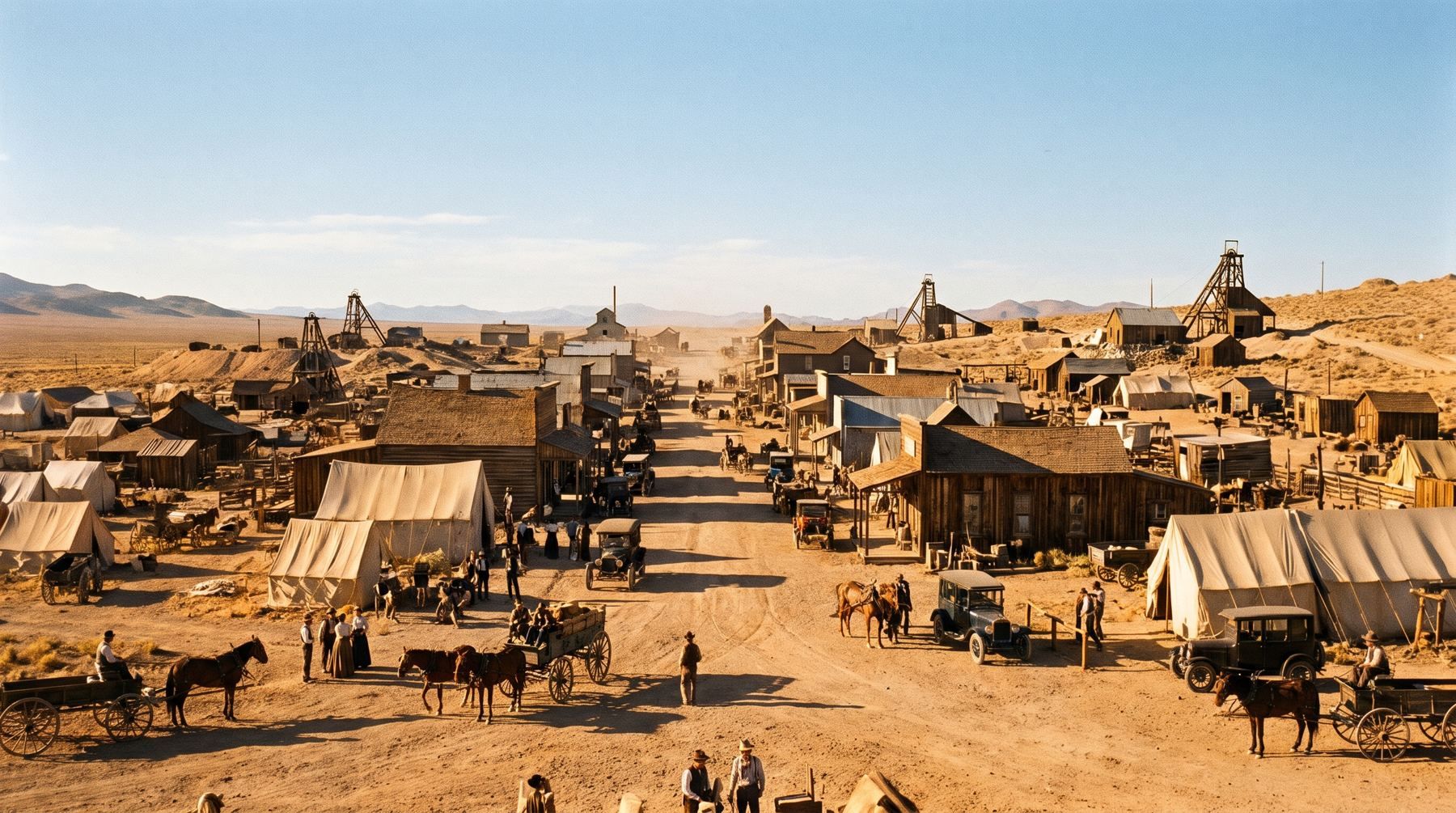
Goldfield was then Nevada's largest community, holding between 15,000 and 20,000 residents. The boom helped reverse the long depression that had followed the decline of the Comstock Lode. Newspapers estimated the incoming crowd at 15,000, though the paid turnstile count settled at 6,072.
Forty-Two Rounds Under the Sun
Local newspapers had originally labeled Gans “the Rank Faker,” while cheering Nelson as the favorite. Nelson attacked aggressively from the opening bell. Yet Gans, who held the lightweight crown from 1902 to 1908, countered with sharp defensive technique. Nelson absorbed tremendous punishment, but continued to press forward through the middle rounds.
As the contest stretched past thirty rounds, Nelson began bleeding heavily from his nose and ears. Gans scored with continuous combinations. Watching Gans systematically outbox the challenger, the spectators slowly shifted their allegiance. Gans's clean boxing began turning hostile fans into admirers, creating one of the landmark Nevada stories of early sports.
The 42-round marathon in Goldfield stands as the longest championship bout recorded under Marquis of Queensberry rules.
Spectators across the state followed the action through telegraph dispatches. In Reno, crowds stood outside the offices of the Daily Nevada State Journal and the Reno Gazette-Journal. Wire bulletins reported each exchange, describing Gans peppering Nelson’s face with trip-hammer punches.
The Low Blow in the Forty-Second
The battle dragged on for nearly three hours under the desert sun. By the forty-second round, Nelson was exhausted and hopelessly behind on points. Desperate to stop the pummeling, Nelson landed a deliberate low blow that dropped Gans to the canvas.
The referee disqualified Nelson immediately, awarding Gans the victory. Gans left the ring having earned the title “the Old Master.” E.L. Houchin reported in the Daily Nevada State Journal that spectators praised the cleanliness of Gans’s game and Nelson’s ability to take punishment.
Rickard hired a camera crew to preserve the contest on film. The footage played in packed movie houses across the country for years. In 2006, boxing memorabilia collector Gary Shultz noted that the film debunked longstanding desert myths, including claims that muleskinners lashed Gans’s legs with bullwhips or that gamblers threw marbles into the ring.
The Town and the Ring Today
Rickard collected almost $70,000 in gate receipts from the match. That record stood as the highest grossing American boxing gate until the 1910 Jeffries-Johnson bout in Reno, staged after Reno became Nevada's first gambling capital. Gans and Nelson fought twice more, with Nelson winning both. Gans battled tuberculosis during these bouts and died from the disease a year after their third meeting.
Goldfield's mining bonanza soon faded. The town’s mines produced around $90 million in gold through 1960, including $650,000 produced by the Florence Mine over a handful of months. But by 1910, Goldfield’s population fell to 5,400, then dwindled to 1,500. A flash flood hit in 1913, and a 1923 fire started by a bootlegger's still destroyed most of the commercial district.
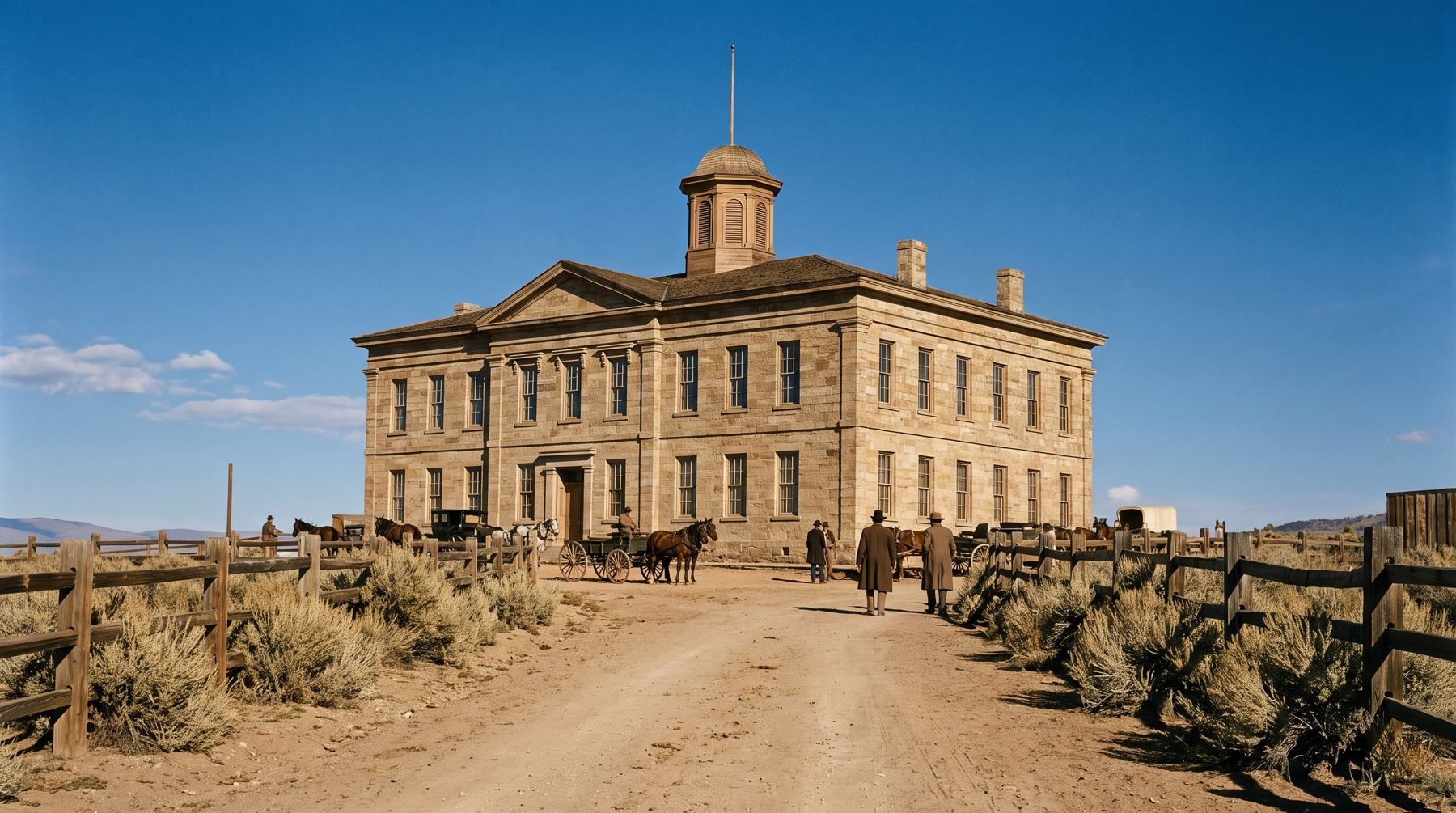
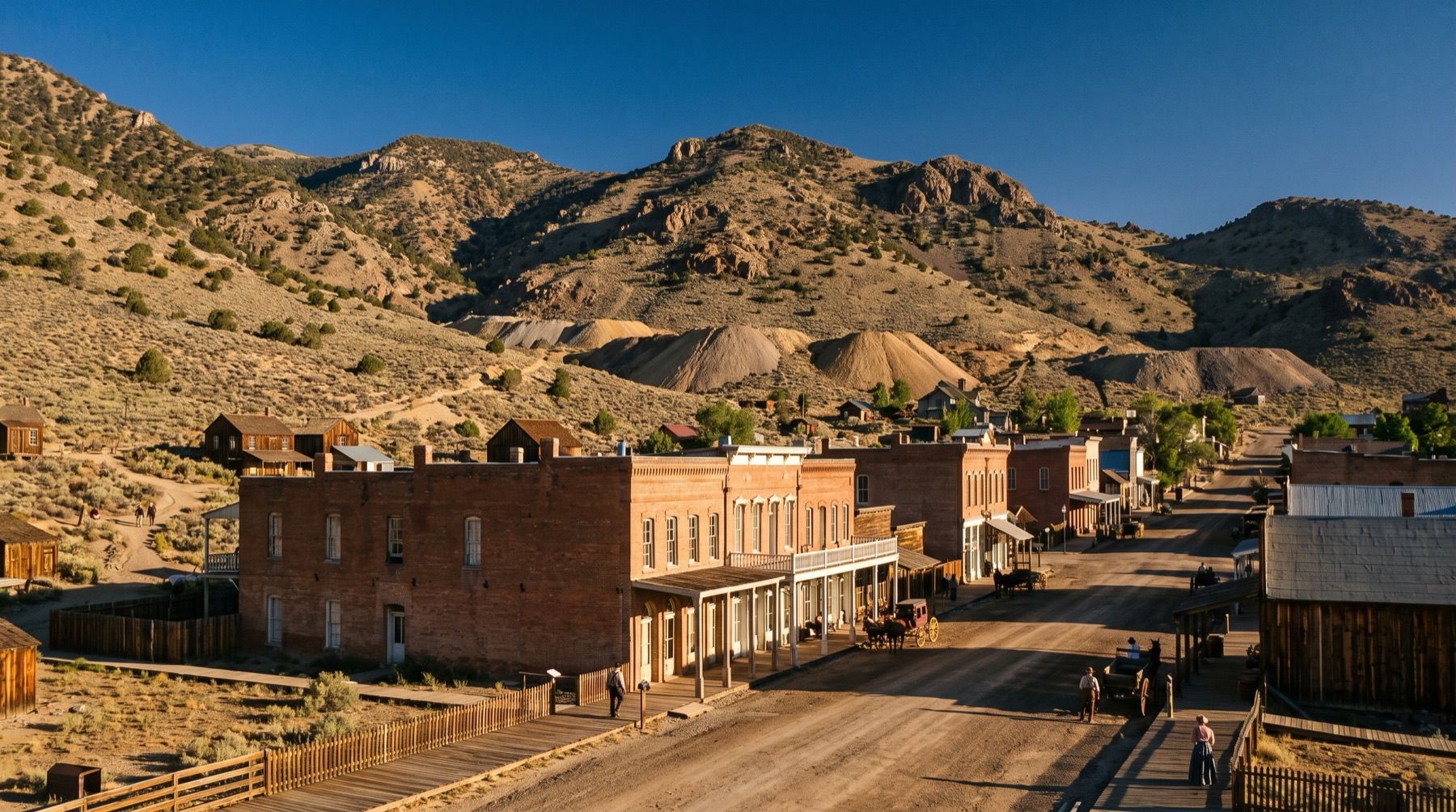
Today, Goldfield survives as a living ghost town of around 250 residents. It lies 188 miles from Reno in a straight line. Travelers driving south along the Reno to Las Vegas Drive via US-95 can view the 1907 Esmeralda County Courthouse, see the 1908 Goldfield Hotel, or tour The Upended Junkyard of Goldfield's Car Forest.
On September 16, 2006, Goldfield marked the centennial of the bout with six college matches between UNR and UNLV boxers. Ringside officials signaled each round using the original bronze bell from the 1906 championship.