In 1904, two prospectors climbed into the bare hills 5 miles from an isolated ranch where a man named Beatty lived with his family. Frank "Shorty" Harris and Ernest "Ed" Cross found quartz layered with green rock and loaded with gold. Within months, thousands of people arrived to stake over 2,000 claims across a 30-mile zone.
By 1907, Rhyolite had electric street lamps, concrete sidewalks, an opera house, and a stock exchange. By 1916, the power company cut the lines, and by 1920, the census counted 14 people living among the empty stone walls.
The Bullfrog Rush and Instant Metropolis
Harris declared that the quartz was "just full of free gold" and claimed the area would become the banner camp of Nevada. People fled older boomtowns like Goldfield and Tonopah. Men pushed wheelbarrows for 75 miles across the desert to reach the site. Four daily stagecoaches connected the Bullfrog Mining District to regional mining centers. Settlers organized camps named Bullfrog, Jumpertown, and Amargosa before centering on Rhyolite, named after the silica-rich volcanic rock underfoot.
Water had to be hauled 5 miles from Beatty. Wood was scarce, but construction proceeded at breakneck speed. Six months after starting as a two-tent camp, the town grew into a settlement of 5,000 people. The commercial core rapidly accumulated 19 lodging houses, 16 restaurants, a public bath house, and 50 saloons with 35 gambling tables. Parents sent 250 children to a newly built school, and miners relied on their own union hospital.
Money, Power, and Poured Concrete
Steel magnate Charles Schwab entered the district in 1906, buying the Montgomery Shoshone mine for a reported 2 to 6 million dollars. Its original owner, Bob Montgomery, had claimed he could dig $10,000 of ore from the ground every single day. Schwab's capital brought the Las Vegas and Tonopah Railroad to town, terminating at a station built in 1908. Soon, three separate rail lines converged on the settlement.
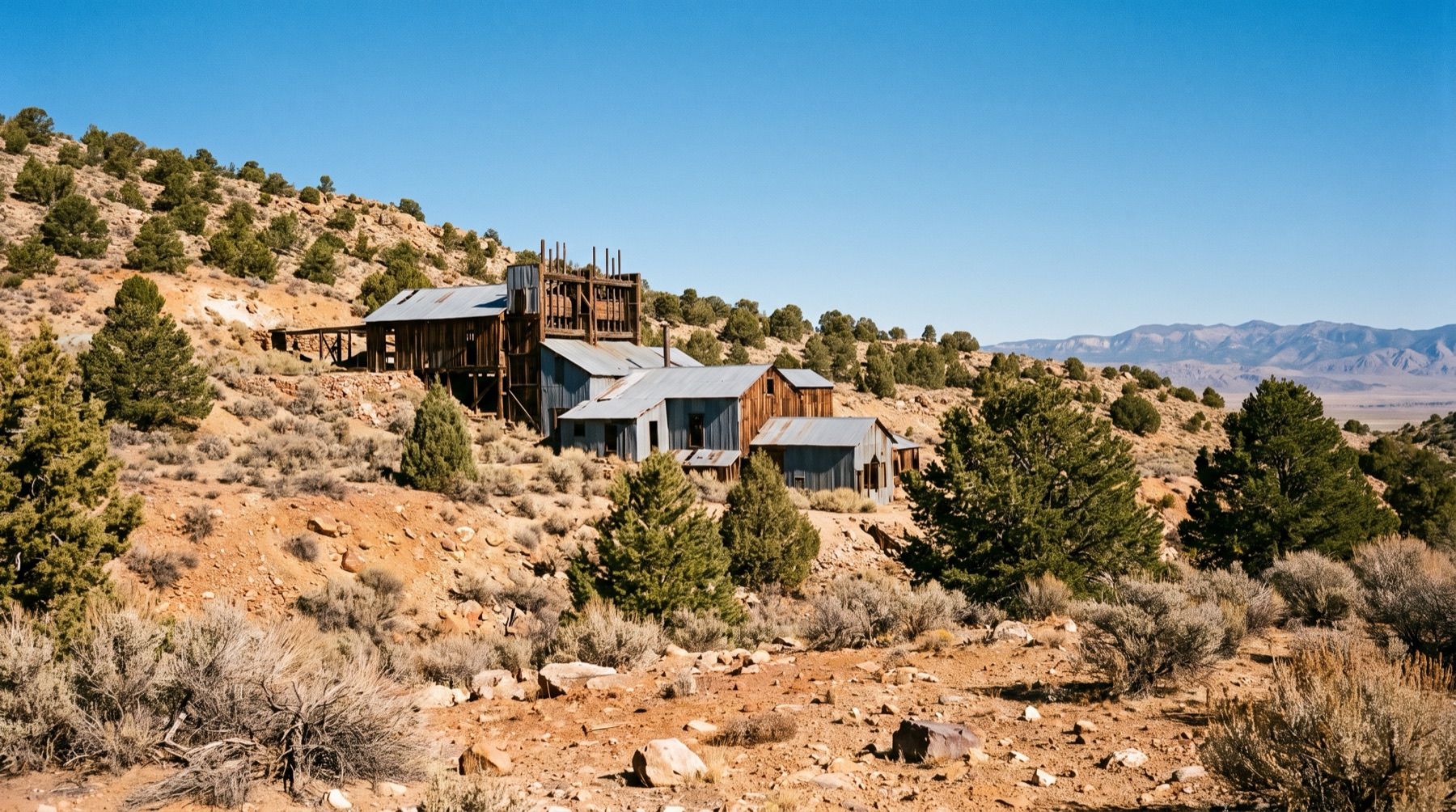
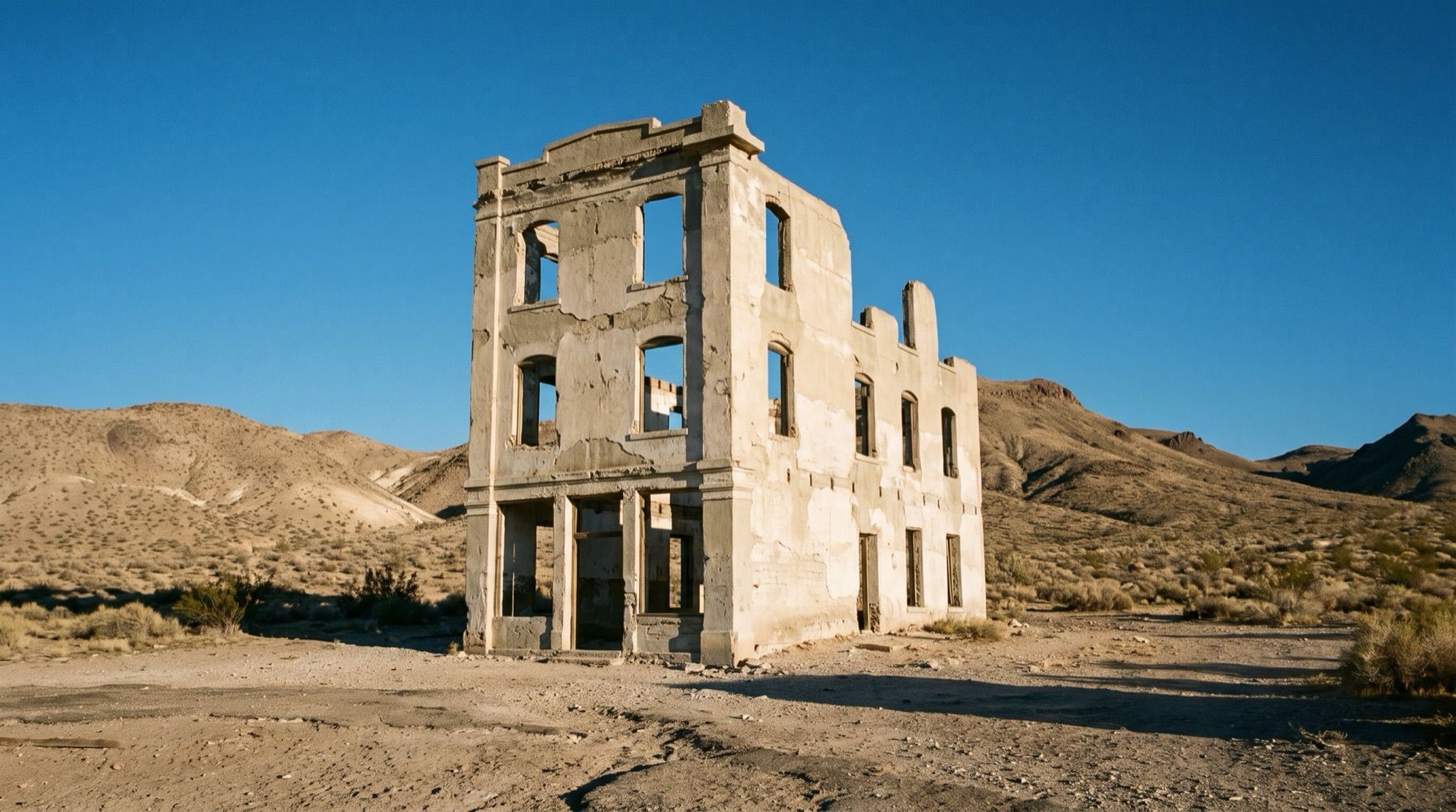
In April 1907, electrical lines arrived. By August 1907, the Montgomery Shoshone mine completed an industrial mill designed to crush and process 300 tons of ore a day. The installation ran a crusher, three giant rollers, more than a dozen cyanide tanks, and a reduction furnace. Downtown, merchants erected stone and concrete buildings, including a three-story bank building that cost $90,000.
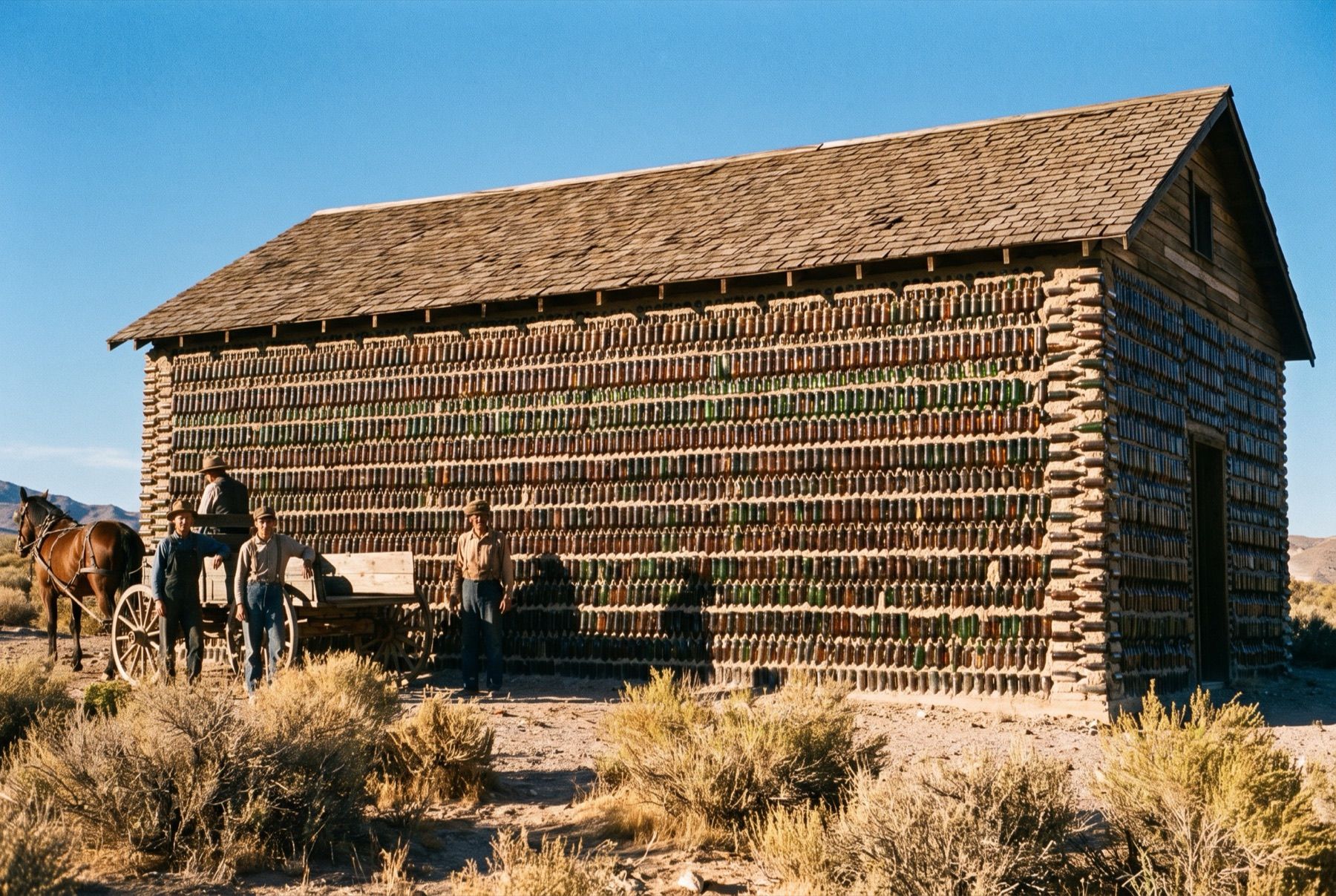
Civic life matched the industrial expansion. Residents organized baseball games, whist parties, tennis matches, basketball games, and Sunday school picnics. A local symphony performed, while Saturday night variety shows packed the opera house. In 1906, Countess Morajeski opened the Alaska Glacier Ice Cream Parlor, and miner Tom T. Kelly finished a home made from 50,000 beer, liquor, and medicine bottles.
The Quick Panic and Desert Salvage
The town produced more than $1 million in ore across three years before failing mines emptied the district.
The 1906 San Francisco earthquake damaged California's financial markets and choked outside capital. The financial panic of 1907 struck months later, dealing a fatal blow to high-risk desert mining. The district's rich surface ore vanished faster than anticipated. Banks closed doors, and the local newspaper, the Rhyolite Herald, folded alongside local merchants.
By 1910, mill output had slowed to $246,661, and the town held just 611 residents. On March 14, 1911, the directors of the Montgomery Shoshone mine and mill voted to end all operations. Rail service dwindled until the Las Vegas and Tonopah Railroad abandoned its depot in 1917. In 1916, technicians turned off the town's electricity for the final time.
Because desert lumber and masonry were expensive to import, salvagers stripped the empty buildings. Crews dismantled homes to haul them 6 miles into Beatty, where salvaged timber built the community schoolhouse. Workers hauled the Miners Union Hall away intact to serve as Beatty's town hall. In 1913, movers dragged an original bar top south to Goodsprings, installing it inside the Pioneer Saloon.
The Ruins on State Route 374
Rhyolite stands 243 miles from Reno in a straight line, accessible south via the Reno to Las Vegas drive via US-95 to Beatty. From Beatty, drivers take State Route 374 west for 6 miles, turning north on a paved road toward the ruins. The site is 35 miles from the Furnace Creek Visitor Center and sits on federal and private land outside Death Valley National Park.
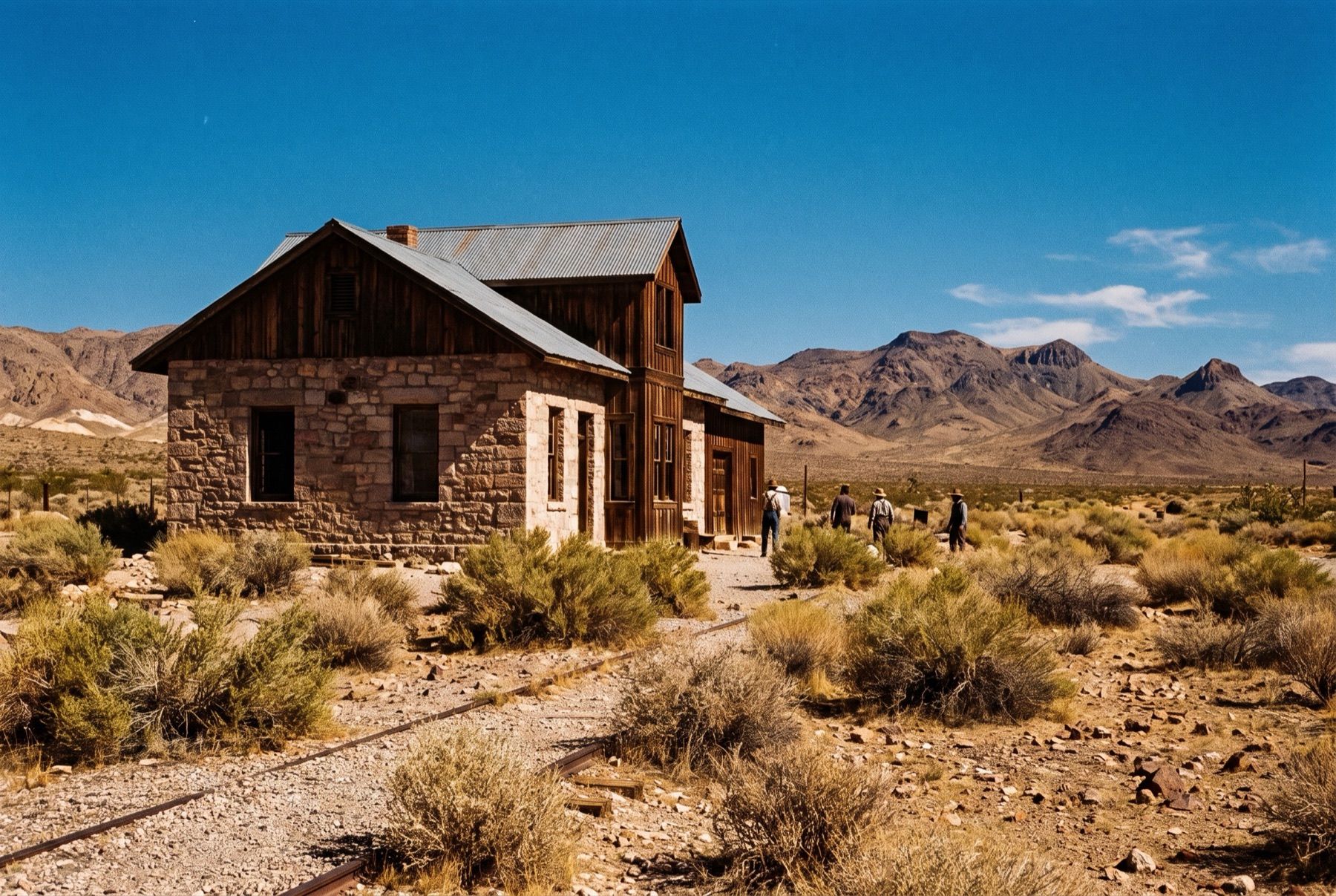
The concrete shell of the three-story bank building still stands, alongside iron bars from the town jail. Paramount Pictures restored Tom Kelly's bottle house in January 1925 to film the 1926 movie The Air Mail, and the glass structure remains preserved. The 1908 railroad depot also survives intact under private ownership.
Just south of the ruins lies the Goldwell Open Air Museum, established after Belgian artist Albert Szukalski mounted plaster figures depicting "The Last Supper" on 7.8 acres in 1984. Travelers touring the region can cross central passes on US-50 before heading south, pairing the ghost town with other regional histories like the Comstock Lode or other Nevada stories from the state's sudden mining booms.