The National Park Service tracks more than 40 conflicting accounts of who found Lehman Caves. In one story, Absalom Lehman’s horse broke through the desert crust. In another, his brother Ben felt a cool wind blowing out of a clump of brush.
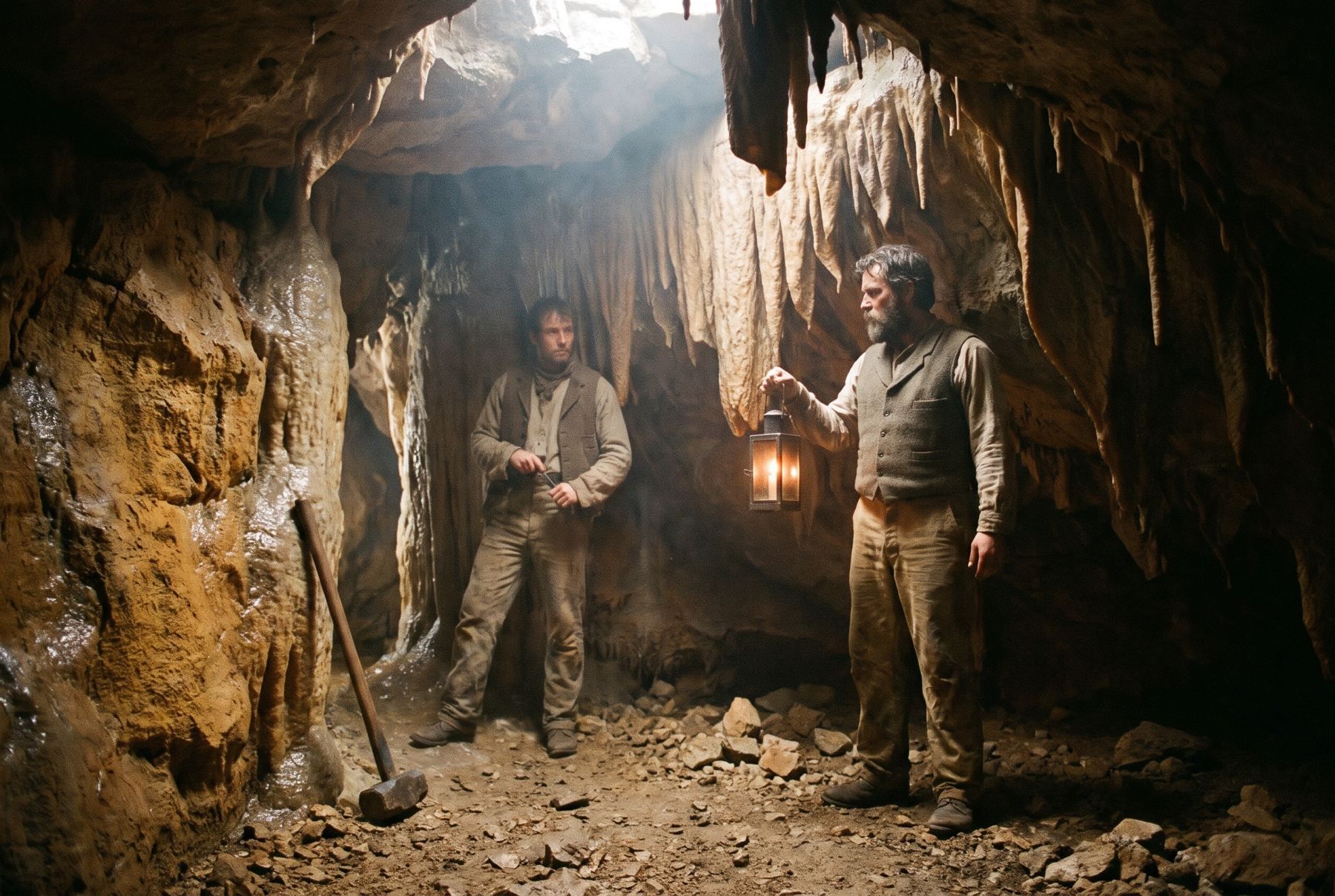
The initial explorations were violent by modern standards. When stalactites and stalagmites choked off a passage after 200 feet, the first visitors simply went back outside for sledgehammers. They smashed their way through the rock.
The Sledgehammer Rush of 1885
Absalom Lehman was a Pennsylvania native who mined across the American West and Australia. In the late 1860s, he settled along Weaver Creek in the South Snake Range to raise cattle. By 1885, he was exploring the underground caverns beneath his land.
On April 15, 1885, the White Pine Reflex in Ely reported the find near Jeff Davis Peak. The newspaper announced that stalactites hung from the roof and stalagmites rose from the floor. The paper noted the explorers would break through barriers with sledgehammers to reach new chambers.
Snake Valley neighbors rushed in right behind him. The early exploration parties included Ben Lehman, William Burbank, Dan Simonsen, E.W. Clay, Ed Lake, William Atkinson, Isaac Gandy, George Robison, D.A. Gonder, P.M. Baker, and Nettie Baker. Nettie was probably the first white woman to view the chambers.
Word moved quickly across the state. Approximately 800 visitors toured the caverns before September 1885. Wagonloads of stalactites and stalagmites were hauled across Nevada to appear on display at the state fair in Reno.
Lehman sold his ranch so he could move next to the opening. He died in 1891 before finishing his planned house by the mouth. His land claim was never legally filed with the government.
Cabins, Chauffeurs, and Seven Hundred Coins
President Warren G. Harding declared the site Lehman Caves National Monument on January 24, 1922. The U.S. Forest Service took charge of the monument, but staff rarely visited the property. Private custodians handled the cave.
Clarence Rhodes, a former restaurant operator and chauffeur to Nevada's governor, bought 50 acres around the mouth in 1920 with his wife, Beatrice. The Forest Service granted them a formal permit. Clarence kept the entrance fees as his income.
The Rhodes family charged one dollar for adults, nothing for children under twelve, and five dollars for groups of twelve or more. Tours lasted three hours or longer through the cold dark. Visitors initially carried candles, then carbide lanterns.
Bea Rhodes became the first woman known to lead commercial tours through the cave. In 1921, she guided 48 guests. The tally climbed to 287 in the second year, 700 in the third, and 3,800 visitors in 1924.
One wishing pool yielded 700 discarded objects, including coins, a woman's garter, and an American flag.
Visitors left behind heavy debris. When New Deal work programs arrived in the 1930s, crews removed trash, lumber, and broken formations. A single pool in the Wishing Well chamber produced 700 submerged objects.
Secret Annexes and Hollywood Cameras
Executive Order 6166 moved the monument to the National Park Service on June 10, 1933. Otto T.W. Nielsen arrived in 1934 as the first ranger in charge, reporting directly to Zion National Park in Utah.
The original entrance required climbing down a 60-foot stairway into the dark. In 1939, workers finished digging an entrance tunnel to bypass the steep pit. Work crews installed electric cave wiring that began operating in April 1941, followed by dependable generators in 1949.
Explorers continued finding untouched spaces. In 1947, laborers Tom Sims and John Fielding opened the 200-foot Lost River section. Five years later, an employee cleared a boulder to reveal the Gypsum Annex. By 1960, speleologists had mapped over 8,000 feet of passageways.
Celebrity visitors soon arrived. In 1962, mountaineer Sir Edmund Hillary toured the passages with his family. Hollywood arrived as well. In 1965, film crews used the chambers to shoot The Wizard of Mars, later retitled Horrors of the Red Planet.
Lehman Caves and the Park Today
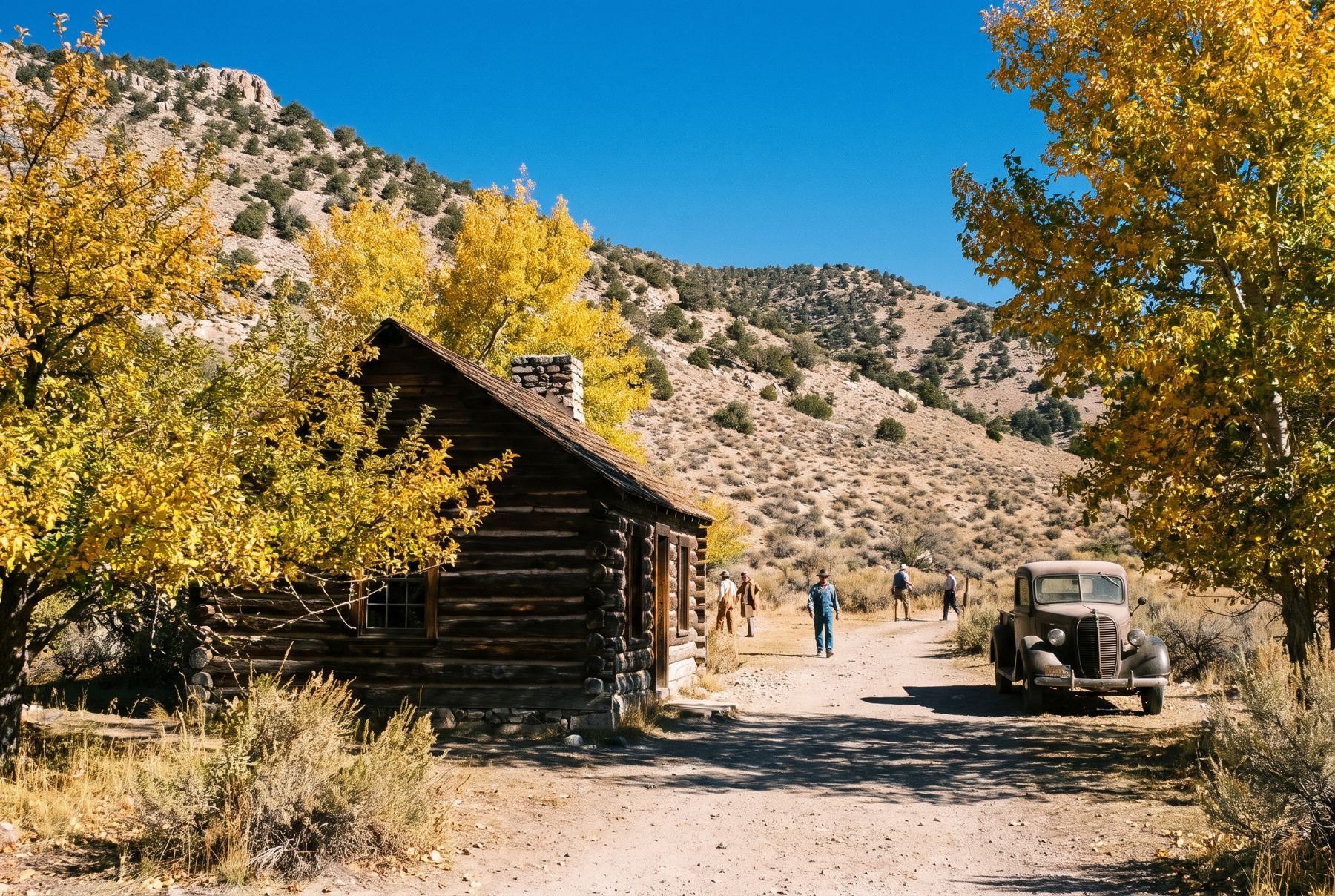
In 1986, Congress absorbed the monument into Great Basin National Park. The system sits 301 miles from Reno in a straight line, accessible from US-50 conditions and cameras near the small town of Baker. For travelers planning the trip, driving to Ely and Great Basin National Park from Reno leads straight toward How Highway 50 Became the Loneliest Road in America.
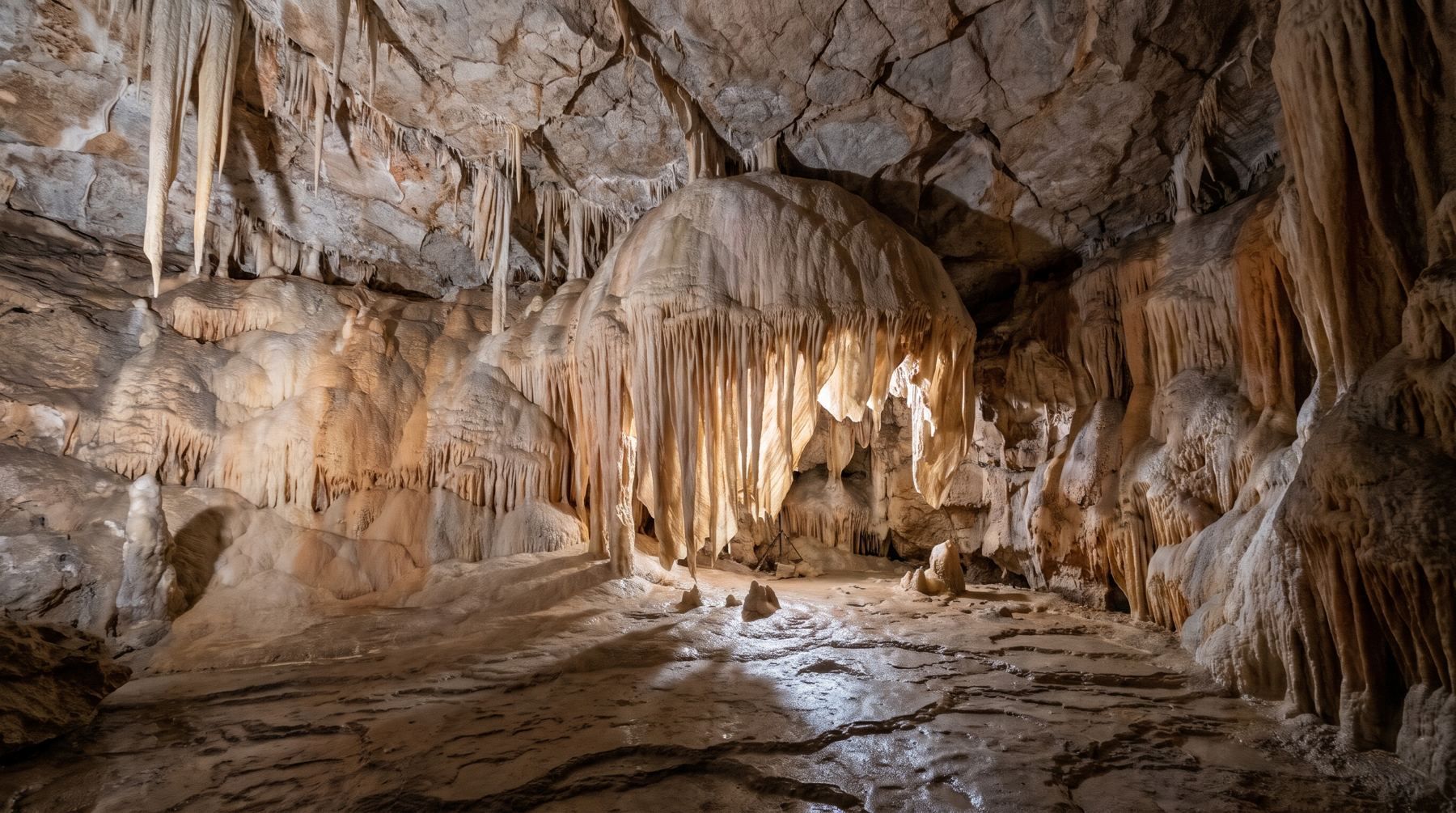
Despite the early damage from sledgehammers, the limestone still preserves rare geologic oddities. The cavern contains more than 300 cave shields, possibly more than any other cave on Earth. One stalagmite inside has been dated to 2.2 million years old.
Shields form as mineral water seeps through fine bedrock fractures under capillary pressure. The water deposits two parallel plates of calcite that grow outward like discs. The famous Parachute Shield hangs inside the Grand Palace chamber draped in stone folds.
Park rangers run guided trips every day except Thanksgiving, Christmas, and New Year's Day. Routes include the 30-minute Gothic Palace Tour, the 60-minute Lodge Room Tour, and the 90-minute Grand Palace Tour. Above ground, visitors can branch out to other Nevada stories across the South Snake Range, including How Wheeler Peak Lost the Oldest Living Tree on Earth.