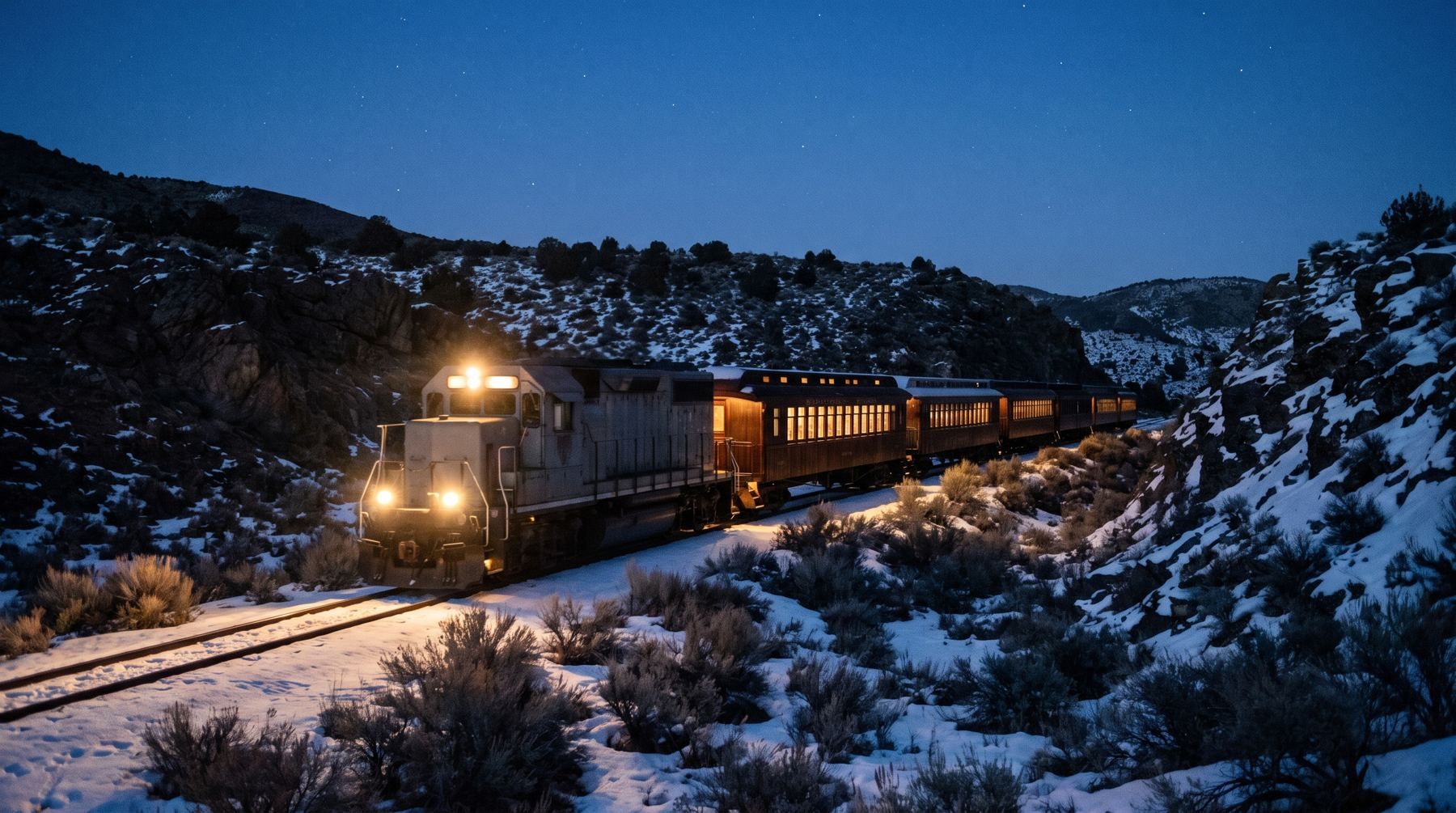
On Thursday through Sunday evenings in November and December, a diesel train pulls out of a depot east of Carson City. The historic Virginia & Truckee Railway, a short line that ran its last train in 1950, now runs its busiest trips of the year in total darkness. Operating as the Polar Express, these trains transport passengers on a one-hour round-trip holiday excursion to a simulated North Pole and back.
The revived railway is run by a state commission that rebuilt the tracks through the rugged canyons of the Comstock. Today, instead of carrying silver, it carries families in pajamas, and its winter seats go quickly. To secure a spot, groups must purchase seats by the whole two-person bench, as half-benches are not sold.
The Silver Road of the Comstock
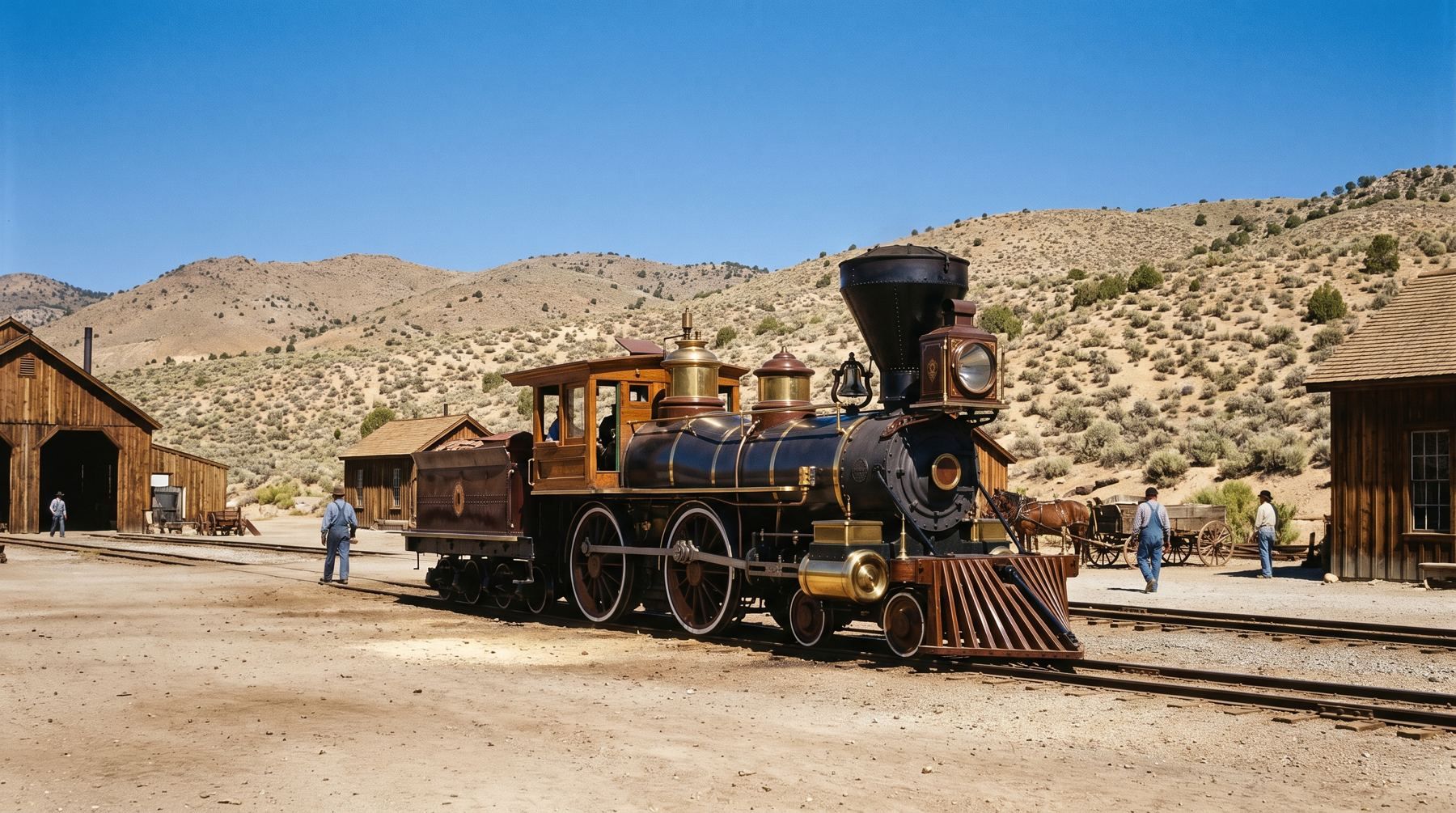
The history of the Virginia & Truckee is rooted in the mining boom of Northern Nevada. In March 1868, William Sharon and his Bank of California partners incorporated the railroad company to carry heavy silver ore from the mines of the Comstock Lode Built San Francisco and Paid for a War to the reduction mills along the Carson River. Transporting the ore by freight wagons was too slow and expensive to sustain the massive output.
Designing a line to climb the steep terrain around Virginia City fell to surveyor and construction engineer Isaac James. He designed a route that descended 1,600 feet in thirteen and a half miles from Virginia City to the river mills, holding the maximum grade to 2.2 percent. To make this descent safely, the tracks turned so frequently that they completed the equivalent of seventeen full circles. Chinese laborers completed the grading work, which began in February 1869.
By November 29, 1869, the first twenty-one miles connected Virginia City to Carson City. The line was expanded thirty-one miles to Reno, connecting the Comstock to the transcontinental Central Pacific Railroad on August 24, 1872. At the height of the Big Bonanza in 1873, the V&T was highly successful, operating twenty-four locomotives and up to forty trains a day on a single track.
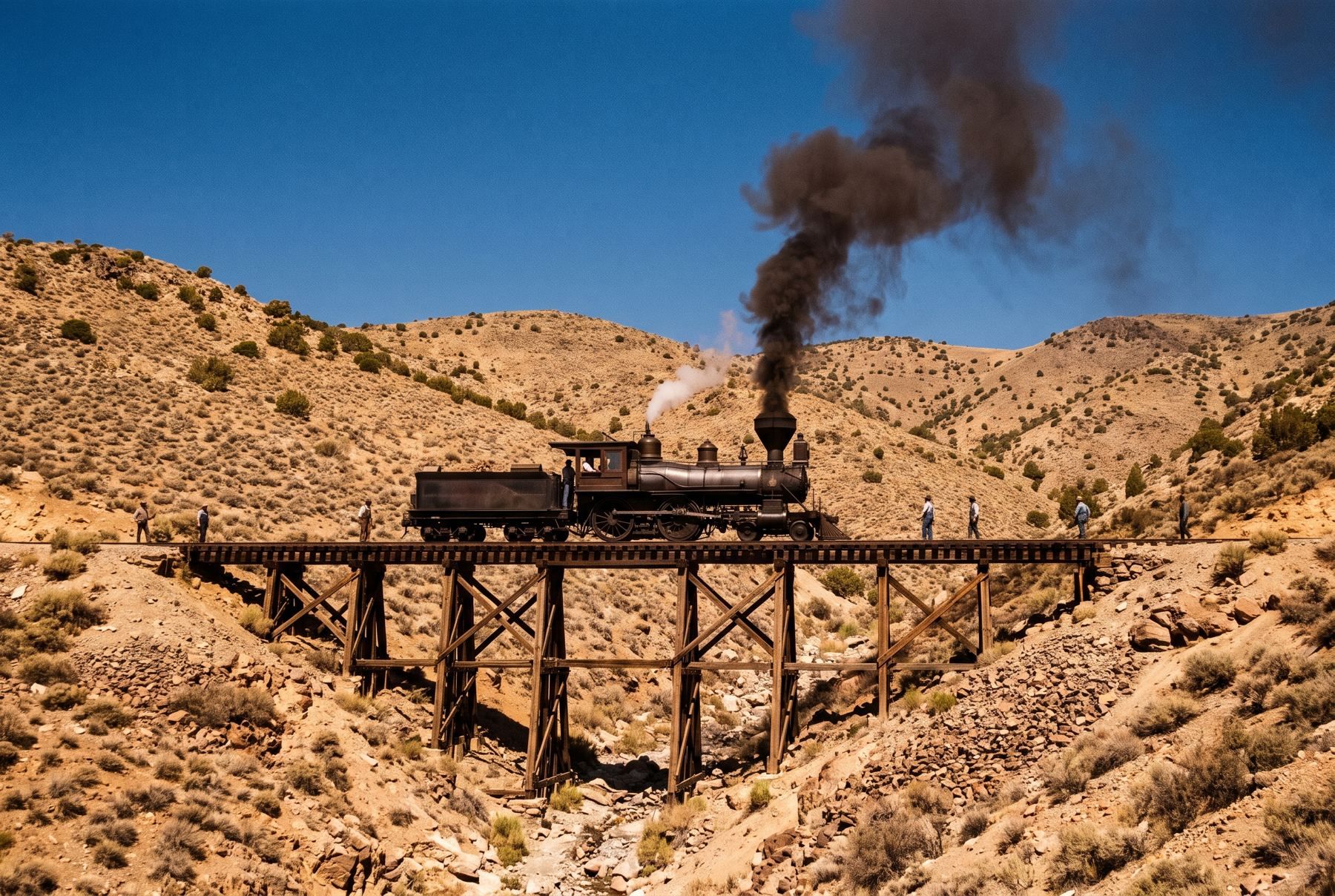
Decline and Hollywood Rescue
The boom collapsed after 1878. The railroad survived on a reduced scale, hoping for new strikes. In 1880, its owners incorporated the 293-mile Carson and Colorado Railroad from Mound House to Keeler, California, but it struggled to find traffic. The V&T sold this line to the Southern Pacific Railroad in 1900, right before the Tonopah and Goldfield booms began, but the Southern Pacific quickly bypassed Mound House.
A fifteen-mile extension south to Minden in 1906 transformed the V&T into an agricultural carrier. However, regular passenger service between Virginia City and Reno ended in 1929. Ogden Livingston Mills funded the operating losses until his death in 1937. The railroad filed for bankruptcy in 1938, and the original track between Virginia City and Carson City ceased operations that year.
The railroad survived another twelve years, supported by rail fans and by selling historic equipment. As detailed in the history of how Hollywood's Favorite Locomotives Came from Carson City, film studios bought the rolling stock to use in movies. The final run on the historic line took place on May 31, 1950.
Rebuilding the Comstock Route
The revival of the railway began in 1972 when Robert Gray acquired a portion of the right-of-way. He laid the first tie in 1974 and began running tourist trains three years later from Virginia City to Gold Hill. In the early 1990s, Storey County, Carson City, and state officials formed the Nevada Commission for the Reconstruction of the V&T Railway to rebuild the 24-mile route to Carson City.
The commission estimated the reconstruction cost at $25 million. Funding came from a sales tax increase of one-eighth of a cent in Carson City, a 2 percent room tax increase, and a $100,000 annual commitment for twenty years from the local visitors bureau. In 2005, the state awarded a $3.8 million contract to extend the track south from Gold Hill, which required filling in the massive Overman Pit, a defunct open-pit mine.
The commission bought a 1914 Baldwin steam locomotive from a defunct California tourist railroad for $420,000, aided by $500,000 from the legislature. The Nevada Department of Transportation donated a railroad bridge, formerly used in Southern Nevada, to carry the line over U.S. 50. The railroad's earlier life is one of the Nevada stories on this site.
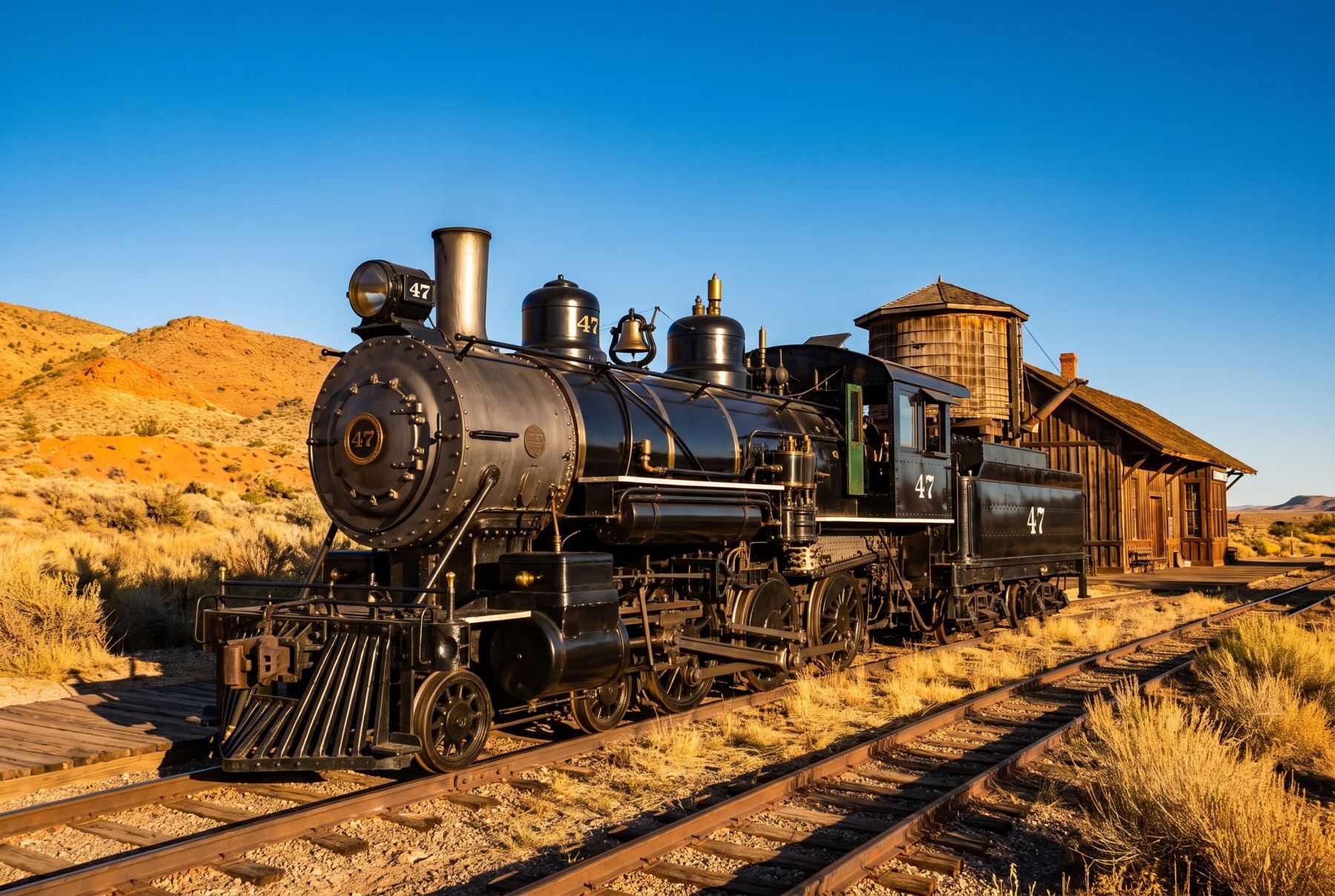
The Winter Run from Eastgate Depot
While daytime historic excursions run from Memorial Day through October, the train shifts to night runs in November and December. Operating as the Polar Express, this ride has become one of the signature Christmas Events, Lights, and Tree Recycling in Reno-Tahoe attractions.
Passengers board the train at the Eastgate Depot, located at 4650 Eastgate Siding Road in Carson City, which is 24 miles from Reno in a straight line. Guests are encouraged to arrive in pajamas to watch costumed actors perform the story during the one-hour round trip. Guests receive hot cocoa and a cookie, and children receive a silver bell from Santa at the North Pole stop.
Tickets go on sale in September. Seating is assigned, and coach cars hold 70 passengers. Seats are sold as two-person benches, with no half-benches available. Groups can also book the VIP Family Lounge inside the restored 1907 Ardelle Mae parlor car for up to 12 passengers, or a VIP Private Table for four adults.
Strollers, walkers, and large diaper bags are not allowed on the train due to limited storage and must be left at the depot. Wheelchair ramps are available with advance notice. To reach the depot from the north, check US-50 conditions and cameras before driving, and consider a broader Carson City Day Trip From Reno: Routes, Museums, and Parks to explore the capital before your evening departure.